
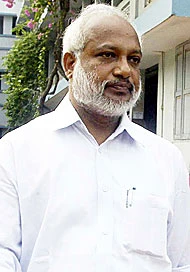
THIRUVANANTHAPURAM, 24 May 2008 — The Kerala government has launched an initiative to make the state, which tops the literacy charts, a destination for higher learning too, especially in technical education, according to the state’s Education Minister M.A. Baby.
“The federal government has already cleared projects worth Rs35.3bn to set up centers of excellence within two years. We are committed to ensure the quality of technical and professional education,” he said.
One of the two central universities allotted to Kerala will be located in the northern Kasargod district while a campus of the Aligarh Muslim University would be set up in Malappuram district with a total investment of Rs4bn.
The Cochin University of Science and Technology would be upgraded to the Indian Institute of Engineering Science and Technology, which would almost be on par with the Indian Institute of Technology. Other institutions coming up or being expanded in the state are the Indian Institute of Space Technology (IIST) of India’s national space agency, Indian Institute of Science Education and Research (IISER), Indian Institute of Information Technology (IIIT), revamped Rajiv Gandhi Center for Biotechnology (RGCB) and an open university.
“We have invited Prime Minister Manmohan Singh to lay the foundation for these institutions and he has agreed to come. We are expecting his visit soon,” the minister said.
He also said the state government would be providing schoolchildren with health cards and free textbooks from the next academic year. The textbooks will be in two parts for the two terms in a year in order to lighten the backpacks.
“We will be initiating a number of programs to ensure the physical and mental health of the schoolchildren,” Baby, whose liberal evaluation resulted in sharp increase in pass percentage in Class X Board exams this year that earned him widespread criticism, said.
Recent studies by the Cochin branch of the Indian Academy of Pediatrics had found that children in the kindergarten level had been using 4.5-kg bags containing books, lunch and snack boxes and water bottle. They wanted to cut the weight at least by half. Three years back, the State Human Rights Commission also directed authorities to initiate steps to reduce the weight of schoolbags.
“The entire student community would be checked by doctors, based on which the health cards would be issued. We are keen to ensure the quality of education as well as the health of the students and that they are less burdened,” Baby said. “It would help detect if any student was suffering from serious physical or mental maladies, so that they could be treated before the problem goes beyond control. The health card is also meant to put across the message that proper health care is a fundamental right of every child,” the minister said.
From the coming academic year, students of all classes up to the Class VIII will get free textbooks. “This concession is now available to girls and students from the Dalit sections,” he said.
He justified the high pass percentage saying it was a result of constant efforts by teachers to improve standards and pointed out that those who criticized the high percentage of pass were mum at similar performance at the CBSE exams.
He said a regular increase was the result of the grading system in 2005. The pass percentage was 58.49 percent in 2005, 68 percent in 2006 and 82.29 percent in 2007 and 92.3 this year.
He said the government had no plans to take over the running of private colleges with government aid. “We would but lay some strict rules for recruiting staff and the teachers should appear for an eligibility test. We will also ensure that the community quota norms are followed strictly,” he said.
He said Kerala was the first state to train the entire batch of half a million students who appeared for the Class X exams on free software, completely doing away with the right-protected operating systems like Microsoft. All schools in the state would be wired to high-speed broadband Internet connectivity this year. “With a 12-hour satellite channel for education already in place, the government-run schools are slowly becoming virtual classrooms. We are now moving from IT education to IT-enabled education in our schools,” he said.
The VICTERS (Virtual Classroom Technology on EDUSAT for Rural Schools) program run by the IT@School project has been able to reach IT-enabled education to 54,000 teachers and 2.5mn students through the EDUSAT project hooked to by 1,500 schools.
“The satellite-based educational channels will also be used to expose the children of Kerala to educational and cultural values. This trend of commercialization is a predominant trait in some states and in many places around the world,” he said.
The minister said the government was planning to increase the number of working days in academic institutions. “We will ensure that educational institutions are not given a holiday when a past education minister dies. Even now the number of working days in a year in educational institutions here is appallingly low when compared to other states,” he said.