SRINAGAR, India, 25 May 2008 — A strike called by the hard-line separatist leader Syed Ali Shah Geelani to protest the visit of President Pratibha Patil crippled life across Kashmir yesterday.
The strike, which evoked a complete response in the summer capital of Srinagar and other Kashmir Valley towns, closed shops and businesses. Most state government offices and educational institutions were closed.
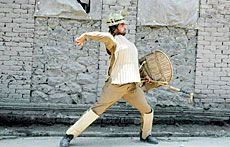
While most people stayed indoors, around 150 protesters gathered in the streets, threw stones and shouted slogans before police fired tear gas. “We want freedom. Indian troops go back,” the protesters shouted.
One policeman received minor injuries in the clash near the grand mosque in Srinagar, said Prabhakar Tripathi, a spokesman for the paramilitary Central Reserve Police Force.
Soldiers tightened security by setting up checkpoints at street crossings, while police and paramilitary soldiers patrolled the area to prevent protests.
The strike was backed by a Pakistan-based alliance of Kashmiri fighters called the United Jihad Council.
“We appeal to people to observe a complete strike on Saturday to protest against Indian president’s visit,” Geelani said. “The strike would be a mark of protest against the Indian occupation of Kashmir.”
The president began her five-day visit to Jammu and Kashmir yesterday. She visited the Line of Control separating Indian Pakistani portions of Kashmir and north Kashmir’s Baramulla town, where she addressed a meeting of Indian Army officers and troops.
She warned that India would retaliate “resolutely and firmly” against any violations of the heavily militarized border. “I’m confident that any violation of our borders will be dealt with resolutely and firmly,” Patil said in the speech to soldiers.
Patil will visit the tourist resort of Gulmarg today. In Jammu, the president will open the Jammu University campus at Bhadarwah.
She will also open the Kashmir Studies Center, University of Kashmir here tomorrow. Kashmir is divided between India and Pakistan, but both claim all of it. More than a dozen groups have been fighting Indian forces since 1989. More than 68,000 people, mostly civilians, have been killed in the conflict.
Officials say rebel violence is waning after India and Pakistan began a slow-moving peace process in 2004.
“I am glad that after a difficult period Jammu and Kashmir is progressing well on the road to development and peace,” Patil said in a speech at the Sher-i-Kashmir Institute of Medical Sciences in Srinagar yesterday.
— With input from agencies