JEDDAH, 28 May 2008 — Expatriates from various African states celebrated the 45th anniversary of the Organization of African Unity (OAU) here on Monday night.
“On this auspicious occasion, I would like to salute the memory of the OAU’s founding fathers for the common vision they had of a unified and strong Africa,” Souleymane Thiam, consul general of Senegal and dean of the Group of African Consuls General, told the gathering at Le Meridien Hotel.
The event’s chief guest was Mohammed Ahmed Tayeb, general director at the foreign affairs office in the Makkah region.
“This is a momentous day, which reminds all the sons and daughters of Africa that they are duty-bound to the African Continent, their motherland,” said Thiam.
“In spite of conflicts ravaging in different parts of the continent, Africa is undergoing major political and economic changes. Its economic outlook is brighter than before, as it continues to sustain the growth momentum of previous years, recording an overall GDP growth rate of 5.7 percent in 2006. African countries are becoming more innovative in terms of resource mobilization and also in designing sound policies to tackle poverty, unemployment and meet the millennium goals. Despite the well-founded optimism such news generates, we must acknowledge that enormous difficulties still lie ahead,” he added.
“We are celebrating the anniversary in a very unsettling international and African context characterized by spiraling oil prices and a continued fall in the US dollar,” he added.
From $29 in December 2003, the price of a barrel of oil is now being quoted at around $130. The ensuing energy price and monetary instabilities are destabilizing factors for African economies. On top of that, African economies are equally faced with problems linked to climate changes, the rising cost of cereals and other basic food items, ravaging epidemics and other ills such as illiteracy, he added.
The New Partnership for Development (NEPAD) has given our leaders hope that they might finally be in a position to tackle problems linked to environment, infrastructure, energy, new information technologies and the projected green belt, which is to run from Dakar to Djibouti and which aims to stop the expansion of the Sahara desert.
NEPAD will help in the development of necessary basic infrastructure, including roads, railway, ports, airports and hospitals. These are essential for the continent’s economic takeoff. It also aims to position Africa within the new global economy by fostering powerful regional trade groupings.
Referring to the support and assistance extended to the community by the Kingdom, he said: “This is a reflection of the excellent relations that exist between Custodian of the Two Holy Mosques King Abdullah and the community. Thanks to King Abdullah’s personal involvement, the 11th summit of the Organization of the Islamic Conference took place on African soil, in Dakar on March 13-14 this year. The summit was a resounding success for the Ummah. The aid and assistance that are annually extended during the Haj and Umrah seasons by the Ministry of Haj to the ever-increasing African pilgrims are to be applauded,” he said.
He urged Saudi investors to visit Africa and explore the continent’s enormous potential that is still untapped.
“On this Africa Day, we reiterate our collective desire to turn our dream into a reality — to bring peace, prosperity and democracy across the continent for the wellbeing of future generations,” he said.
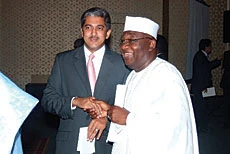
Souleymane Thiam, consul general of Senegal and dean of the Group of African Consuls General, right, and South African Consul General Mahdi Basadien greet each other during Africa Day celebrations in Jeddah on Monday. (AN photo)