
With the growth of festivals and events competing for business across the globe, managing those events to give the right public impression and work efficiently has brought about the rise of a new industry — event management.
From a simple press briefing through the Dubai Shopping Festival to the Olympic Games, all impact to a greater or lesser extent the communities — and occasionally countries — that host them. Major industries, charities, societies and groups will hold events of some type or size in order to market themselves, raise money or celebrate.
The need to present the event in a way that best suits the client’s perceived image or attract the target audience has, with the growth of branding and marketing, moved beyond the scope of competence of in-house managers. This has led to the growth of event management companies whose functions are to conceive, source skills and apply the concept of project management to company events.
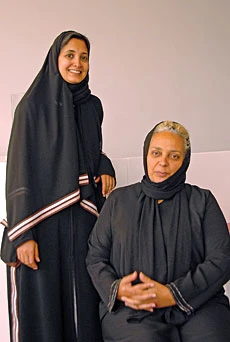
Tamara Al-Soleiman, founder and managing director of Events, said that intellectual and creative skills form the capital of the company and your assets are your imagination and creativity. They are very vulnerable to theft. “The fact that we design a project is no protection,” she said. “Like a painting or picture, you need to allow people to use it.”
“The local regard for this is that a proposal is just a bunch of drawings. But that’s my work, it takes no account of my knowledge, experience or hours of work,” she added.
“Here we are dealing with the realm of ideas,” said Noura Al-Saggaf, creative director. “Elsewhere, companies would charge a design fee — it doesn’t work that way here. The culture isn’t quite able to deal with that in this way.” She happily conceded that not all ideas were original. Photos, books and experience informed one — “but plagiarizing something outright is criminal.”
“It’s something that worries us — a drain on resources,” said Al-Saggaf. We have not had one of our projects stolen outright, but it worries us. We have had a case of one of our projects ending up on someone else’s CD presentation and list of credits.”
These concerns are the trappings of success and Events is a success by two women in a very competitive field. Al-Soleiman conceived the idea for the company — now 10 years old — after completing her degree in international business administration at the American University in Paris. “I didn’t want to sit around idly,” she confided. As well as being creative, she describes herself as “very much a dollars and cents person.”
The business started from very small beginnings. Friends, she said were planning a fashion show for a French couturier. She volunteered to design and organize it, came up with a design and from the successful outcome raised the seed money to begin a professional service.
At the same time, Al-Saggaf was in the UK making films, documentaries. “I don’t know how, but the Janadriyah committee for the centenary celebrations found me,” she said. They wanted a large-scale theatrical production for women and she agreed — through Tamara’s company. The event when mounted involved a cast of 147 and an organizing crew of 45.
“That was the starting point — took on a few projects from there — built something of a reputation and consciously stayed with event design and management,” she mused. “We did not want to go into marketing.”
Establishing a company that was owned and run solely by women was difficult. The company was in Al-Soleiman’s name. Various authorities insisted that the company needed a male director, who was a member of the family and/or married and Saudi. Neither woman is married and it took five years to negotiate the minefield of paperwork and permissions.
“The Chamber of Commerce has tried to facilitate these issues now,” said Al-Saggaf. “Compared with ten years ago there is definitely change in attitude. There is a lot of concern and work being put into changes by women and men at the chamber. Now we go to them with problems and they advise us.”
Working in what might be thought of as essentially a male industry, Al-Soleiman and Al-Saggaf might be expected to have encountered resistance. However, even though they deal mainly with Saudi companies they generally get good response. “If they come back to you then you get to feel you have done something right,” said Al-Saggaf.
Once the competence is established, the confidence develops. That is not unique to Saudi Arabia. When a woman turns up with a hammer and begins to build a stand, it’s local cultural assumptions that raise the questioning eyebrow because that sight is even now and in the West, unusual. Al-Soleiman smiled: “We have been known in extremis to wield hammers and nails...”
When the company began, it contracted largely for corporate and private work. It encountered some resistance but when clients saw our portfolio they soon came on board. “I think we have been successful in changing the image that women can only do weddings and fashion shows and that sort of thing.” It took time to get clients to come around to understand what they were capable of — but that has been achieved to a great extent by sheer hard work and delivering the goods. “We know what the vision is and where everything should be and what it should look like — we have to be there. Whoever is managing the event, it is their responsibility to be there,” said Al-Saggaf.
The flagship contract for Events was the design and presentation of the 2008 Jeddah Economic Forum. Moved into a new venue, for the first time the whole event was in a single large rectangular building. The event needed to be simultaneously convivial, professional and very business oriented. It also had to be of the highest international standard, partly because of the stature of the invited speakers and partly because the JEF had progressed from local to international status and occupied a prominent position on the international conference circuit.
The brief was to design the interior, create the gala events, manage the timetable, logistics of speakers and liaise with the academic committee as well as have a presence on site to see all was running smoothly. “It went well,” said Al-Saggaf. “However, it can be improved — an event always can — but a significant first was the orchestra and the special ladies event.”
The two gala openings — one mixed, one women only — presented tremendous challenges in their design. The biggest success, thought Al-Soleiman was that the hall was arranged such that it was able to accommodate three separate spaces: Sponsors, the café area and the conference hall.
“The Sponsors’ area was critical as everyone had to go through it and this was vitally important to business,” she said. Feedback indicated that sponsors were very happy.
The company has ambitions to capitalize on their experience in the film business — particularly documentary and films. Al-Saggaf thought there was considerable potential in the areas of on environmental, social and architectural issues.
With the growing acceptance of cameras and crew and the potential for the young to become involved in recording their own culture and history, Al-Soleiman and Al-Saggaf saw an opportunity opening.
“There needs to be a lot more for the young in the city — particularly teenage men — because they cannot go in malls at weekends they end up on the streets. Perhaps we can channel their energy into something more healthy.”
A little light came on. “That’s an area we could be effective...”