
After taking off in 2005, banking services directed at women in Saudi Arabia have rapidly become a multibillion-riyal industry. The Saudi banking sector reported total assets increasing to SR8.7 trillion ($233 billion) with the number of deposits leaping by 3.8 percent and a rise in the number of loans by 9.2 percent — all taking place just one year following the addition of services to women in a majority of local bank branches.
Since then estimates have put the total volume of capital lying in the bank accounts of Saudi women at between SR45-SR60 billion with just over 20 percent of financing in joint Saudi investments also deposited under the names of Saudi women. Thus emphasizing more and more the role of women in finance and economy as a monetary force that simply should not be taken for granted.
It is because of this instant wealth earned by local banks, who were savvy enough to have taken notice of the impact catering to women can have on their overall profit margin, that a number of them have vowed to increase their network of main and ladies branches in the Kingdom thus resulting in robust growth in the Saudi banking sector.
However, data from the Central Department of Statistics at the Saudi Ministry of Planning shows that in 2007 only 13.5 percent (7.7 million) women were members of the nation’s workforce, translating into as much as 86.5 percent of employable talent lying unutilized, a potential that the Kingdom simply can’t afford to overlook any longer.
Factors blamed for the drastic difference in the employment ratio between Saudi men and women are numerous, stemming from a lack of cultural acceptance to the social stigma that has evolved into a spread of stereotypical ideas, especially surrounding the formerly male-dominated jobs such as banking.
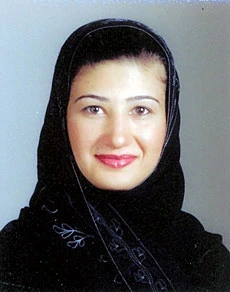
Rusha Nowailati, among the forerunners in ladies commercial banking, knows all too well the former obstacles. Nowailati, presently branch manager of a local SAMBA ladies bank branch, said she agreed with the eventual opening up of employment opportunities in the banking field and other fields in the Kingdom.
“Saudi society has finally accepted the fact that women have a role to play in local employment, especially with a second income becoming a must in many Saudi households. In general the banking industry is growing with massive potential, but the key question is marketing,” she said, adding that another factor is the negative impact of technology, which is leading to a decline in the need for certain employees, such as tellers and the like.
“But she expects that this could also have a positive side, causing the ladders to be shortened and leading to rapid opportunities for Saudi women in upper management positions, such as loan officers, financial service sales and international banking,” she said.
She commented that the general social attitude is that it is easier for women in a more structured, traditional industry like banking to be successful than in others saying that the type of degree can be less important to the potential job candidate.
But, she says, this is untrue.
“The banks are scouting for women who are smart, well-educated, and literate people, and I believe to get ahead one needs to start in management training programs that will lead to plum assignments and a focused determination of a candidates trajectory,” she stated, while calling on financial institutions themselves to make the effort of develop women leaders within their organizations.
“They must stop overlooking the fact that women leaders have good instincts about business and that they are born managers, collaborators, and team players . . . I also advise the next generation of young Saudi ladies to look beyond education to continue to progress in social advancement because I feel that it won’t happen unless we empower ourselves to succeed and push for change.”
No longer willing to accept the “glass-ceiling” which has been imposed on them for so long, many Saudi women are breaking through.
Shereen Tawfiq, corporate relationship manager at the regional headquarters of Saudi Fransi Banque in Jeddah, is one such example.
“When I started in banking eight years ago I knew I wanted to do something challenging to the point of helping to breaking the normal idea that women were only employable in retail banking, education or beauty and fashion,” she said. “I knew I wanted to do something extraordinary and at that time the Saudi government had just began its initiative in promoting Saudization at the banks and in hiring more women. It was then that I found an opening in the Credit Administration Department of Saudi Fransi Banque and applied. I was interviewed twice and was hired for the position not long after. I remember it was an easy job and not as challenging as I had hoped for but I decided that it was enough to give me a beginning to climb toward brighter positions.”
Tawfiq said that the job immediately aroused her interest in corporate banking. She began to gain experience working with company accounts, and Tawfiq also took relevant courses offered in-house by the bank as well as online courses in accounting in an effort to add to her educational background.
“However, once I got in I feel the real journey started. I was met with many social misconceptions some of which were vented by male colleagues that said that Saudi women are spoilt and that they were skeptical that I could do the job. Nonetheless this attitude only made me work harder,” she said.
After working as a credit analyst for some time the corporate head was impressed with her work but told her not to dream of becoming a corporate relationship manager.
“They told me plainly not to push them as it was culturally unacceptable for a women to achieve this position in Saudi Arabia and that they where letting me know upfront as to not let me get my hopes up too high,” she said. “Nevertheless, this still didn’t stop me,” Tawfiq said. “In 2004, my friend, who was also working in the same department, and I decided to push the management, and kept pushing them until finally they agreed to give us our own company portfolio as a test. They also said that even if we did well they could not give us the official title of corporate relationship manager because it again wasn’t “socially acceptable,” she said.
After accepting the portfolio and test, the first six months were the toughest. But in January 2005, Tawfiq became the first Saudi woman to become a corporate relationship officer with Saudi Fransi Banque. After reaching this position the challenges still haven’t stopped.
“The first year was extremely difficult, as many companies couldn’t accept the idea that a woman was handling their account,” she said. “There were mainly three types of situations I faced. Marketing and executing deals were tougher because of the social stigma but gradually some companies accepted it. On the other hand there were foreign and some more open-minded Saudi companies, which had no problem with working with a women from the beginning and were motivating. They also praised my work.”
Tawfiq also commended the support of her managers in Jeddah and Riyadh and the good feedback she received from her clients, which helped her achieve her second promotion in the field of corporate banking in June 2007.
“It is truly amazing that things are beginning to be more positive for working women these days. The government is now pushing more women to work in formerly restricted fields,” she said. Currently out of 3,000 employees working for the bank approximately 273 are women, according to Tawfiq.