RIYADH: Five years after the establishment of the “Make a Wish Program,” the National Home Health Care Foundation (NHHCF) has made 65 dreams come true for children diagnosed with life threatening illnesses. The program, which is globally practiced through specialized organizations, has been recently adopted by the charitable foundation.
Nesreen Banjar, director of the NHHCF, told Arab News that “Making a Wish Program” targets children below the age of 13 who are seriously ill but not necessarily dying.
“Children with different diseases, mainly cancer, are included in this program,” said Banjar, adding that the program started when nurses reported that many children were unable to respond to treatment because of depression. “This inspired us to do something that would help them to respond to treatment and so we decided to launch the program in 2003,” she added.
The NHHCF is the only organization in the Kingdom representing the concerns of home health care for both adults and children. Through its three branches in Riyadh, the Western Province and Al-Jouf, the foundation undertakes projects to make the physical and psychological lives of patients easier by running entertainment programs, providing medical care after leaving hospital, helping families to come to terms with their children’s illnesses and providing them with the correct care at home.
“We are not a proper hospital, but we are an institution accepting chronic cases referred to us by hospitals,” Banjar said.
She noted that some of the children referred by hospitals are in a very deteriorating state and needed not only physical but also psychological help.
She said “entertainment” plays a vital part in the psychological treatment process for children and has a proven positive impact on them more than adults. “Prior to children getting chemotherapy, they seem to be full of life and joy but get depressed after the treatment process starts, especially since it has side effects, such as hair loss,” she said.
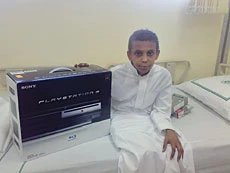
She added, “Most of the wishes that they have are simple and don’t go beyond getting mobile phones with cameras, PlayStation, computers or going on a trip.”
Banjar pointed out that the NHHCF has created a variety of special fun programs that help children fight illnesses.
“When children are waiting for their turn to take injections, we distribute toys, coloring books and colors with a view to gauging their interest. This helps them forget about the fear and pain. This program is known internationally as the ‘Toy for Joy’ program,” she said.
The program has enriched the lives of sick children through its wish-granting work. More than 800 women are helping the foundation to implement its fun programs.
Regarding the foundation’s role in supporting adults, Banjar said more than 43,000 adult patients — suffering from diseases such as cancer, diabetes, blood diseases, spine and head injuries, and heart diseases — have benefited from the medical and social services offered by the foundation since its establishment in 1997.
The foundation doesn’t receive any financial support from the government or social organizations. It depends solely on donations and spends about SR10 million yearly on medical and social treatment and services.
The cost incurred by the foundation on patients varies according to their condition. While the treatment of some may not exceed SR15,000, others may cost up to SR70,000.