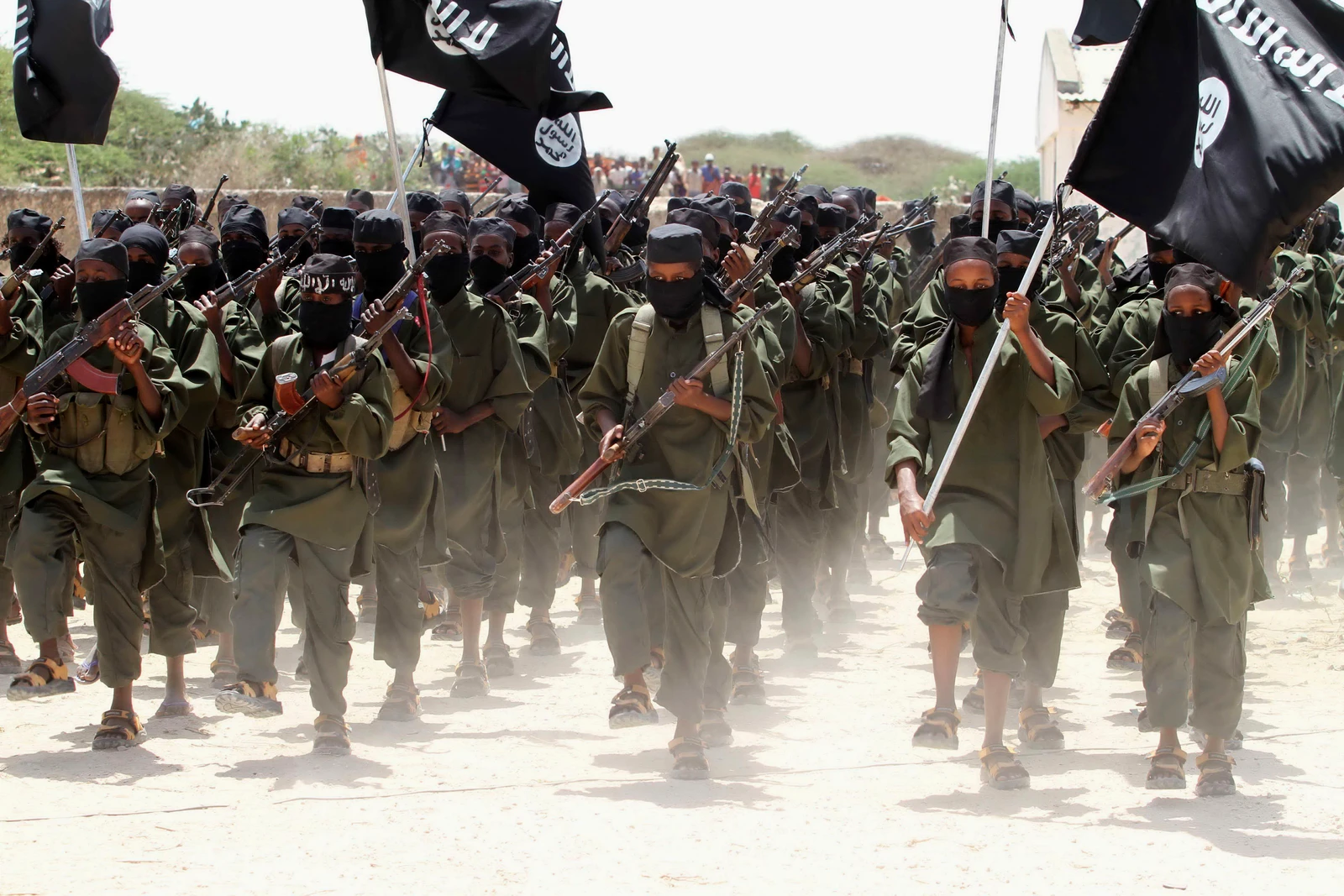
RAWALPINDI, Pakistan: In early June, about 300 fighters from jihadist groups came together for a secret gathering here, in the same city that serves as headquarters to the Pakistani Army.
The groups were launched long ago with the army’s clandestine support to fight against India in the disputed Himalayan region of Kashmir. But at the meeting, they agreed to resolve their differences and commit more fighters to another front instead: Afghanistan.
“The message was that the jihad in Kashmir is still continuing but it is not the most important right now. Afghanistan is the fighting ground, against the Americans there,” said Toor Gul, a leader of the militant group Hezb-ul Mujahedeen. He said the groups included the Al-Qaeda-linked Jaish-e-Mohammed and Lashkar-e-Tayaba, banned by Pakistan and branded terrorists by the US. The US military says militant attacks in eastern Afghanistan have increased 40 percent this year over 2007.
And for two straight months, the death toll of foreign troops in Afghanistan has exceeded that of Iraq. On Sunday, nine US soldiers were killed in an ambush in Afghanistan’s eastern Kunar province, the deadliest single attack for the US since June 2005.
Pakistani military and European intelligence officials, speaking to The Associated Press on condition of anonymity because the information is sensitive, confirmed the June meeting and said it was the second such gathering this year. A senior military official described the inability to prevent the meetings as “an intelligence failure.”
Despite growing pressure on Pakistan to quell Islamic militancy, jihadist groups within its borders are in fact increasing their cooperation to attack US and NATO forces in Afghanistan, according to interviews with a wide range of militants, intelligence officials, and military officers.
Militants say they operate with minimal interference, and sometimes tacit cooperation, from Pakistani authorities, while diplomats say the country’s new government has until now been ineffectual in dealing with a looming threat.
“Where there were embers seven years ago we are now fighting flames,” a serving Western general told The Associated Press, referring to both Afghanistan and Pakistan’s border regions. He agreed to be interviewed on condition his identity and nationality were not revealed.
A Pentagon report released late last month described a dual terror threat in Afghanistan: the Taleban in the south, and “a more complex, adaptive insurgency” in the east. That fragmented insurgency is made up of groups ranging from Al-Qaeda-linked Afghan warlords such as Gulbuddin Hekmatyar’s radical Hezb-e-Islami group to Pakistani militants such as Jaish-e-Mohammed, the report said.
Hekmatyar’s is the strongest rebel group in Afghanistan’s Kunar province, where Sunday’s deadly ambush occurred. His group has also had close contacts with jihadi groups in Pakistan.
In the past, the Taleban were suspicious of the mujahadeen groups with close associations to the Pakistani military and intelligence. But now Gul, who fights alongside Hekmatyar’s men in Kunar province, said they are united in the fight for Afghanistan. He told the AP he had been to Kunar in the last two months but refused to be more specific.
The Pakistani government also appears to be loosening its grip on the volatile northwest, where the influence of Islamic extremists is expanding. Al-Qaeda leader Osama bin Laden is believed to be hiding somewhere along the rugged, lawless Afghan-Pakistan border.
Pakistan’s Mohmand and Bajaur tribal areas are emerging as increasingly strong insurgent centers, according to Gul, the militant. His information was corroborated by Pakistani and Western officials. Both those tribal areas are right next door to Afghanistan’s Kunar province.
“Before there were special, hidden places for training. But now they are all over Bajaur and Mohmand,” he said. A former minister in President Pervez Musharraf’s ousted government, who did not want to be identified for fear of reprisals, said insurgents were being paid between 6,000 and 8,000 rupees — the equivalent of $90 and $120 — a month in Mohmand and grain was being collected to feed them.
He did not identify the source of the donations but said Pakistan’s Army and intelligence were aware of them.
Maulvi Abdul Rahman, a Taleban militant and former police officer under the ousted hard-line regime, said jihadist sympathizers in the Middle East are sending money to support the insurgents and more Central Asians are coming to fight. Rahman said under a tacit understanding with authorities, militants were free to cross to fight in Afghanistan so long as they do not stage attacks inside Pakistan, which has been assailed by an unprecedented wave of suicide attacks in the past year.
“It is easy for me now. I just go and come. There are army checkposts and now we pass and they don’t say anything. Pakistan now understands that the US is dangerous for them,” he said. “There is not an article in any agreement that says go to Afghanistan, but it is understood if we want to go to Afghanistan, OK, but leave Pakistan alone.”