
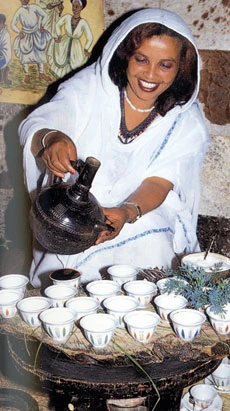
IT did not take long to discover that Ethiopia, which boasts 13 months of sunshine, is a land of wonder, beauty and enchantment, a country with one of the richest histories on the African Continent. Its capital Addis Ababa meaning ‘The new flower’, can be reached within two and a half air hours from Jeddah, is a city of contrasts and surprises.
One of the most striking geographical features of the country, the Great Rift Valley, is home to a chain of beautiful lakes around which are many of Ethiopia’s national parks. The widely varying habitats, which include mountains, lakes, deserts, savannahs and everything in between, are home to a wide range of wild and bird life, many of which are unique to Ethiopia.
The city is dotted with resorts and spas. The Langano Resort, managed by Asrat Mawro, is something tourists will enjoy with a beautiful layout of cottages, restaurants and fitness centers equipped with massage parlors. Kuriftu Resort & Spa is another that is built so that all of its rooms face a lake. Dreamland Family Resort is yet lake-facing resort developed by Tamerat Zewdie who has returned home after 31 years in the United States. “There is no end to your living abroad. There came a time when I decided to return home and do something to enrich the country’s tourism,” Zewdie said.
“Ethiopia is said to be the land of the fabled Queen of Sheba, home of the Ark of the Covenant, the birthplace of coffee, ‘Lucy’ — the world’s oldest known almost complete hominid skeleton that is more than three million years old,” said Tesfaye Desalegne Biwota, head, tourism marketing and promotion department of the Ethiopian Ministry of Culture and Tourism.
The historic route covers the ancient town of Axum with its amazing carved obelisks, festivals and relics including the Ark of the Covenant, Gondar with its castles and palaces, Lalibela with its remarkable rock-hewn churches and the walled Muslim city of Harar. The ancient city of Harar was — and still is — well-known for its Islamic learning and scholarship, as well as it handicrafts including weaving, basket making and bookbinding. It is also famed for its silversmiths. At Dire Dawa, one can see cave painting said to be thousands of years old.
Lake Tana, source of the Blue Nile, is the largest lake with 37 islands; the Great Rift Valley Lakes, many with national parks, are home to a wealth of bird and animal life. The high rugged Simien Mountains in the north and the Bale mountains in the southeast are also home to some unique wildlife and rich flora and are ideal for trekking, while some of Ethiopia’s fast-flowing rivers are becoming famous for white-water rafting.
There are at least nine national parks and four sanctuaries where 277 species of wildlife and more than 850 species of birds can be seen. “The Simien Mountains National Park is registered by UNESCO as a world heritage site and is home to three endemic mammals: walia ibex, gelada baboon and simien fox. Ras Dashen, the fourth highest peak in Africa with an altitude of 4,620 meters, is also located within the National Park,” Tesfa Teshome, international tourism promotion expert at the Ethiopian Ministry of Culture and Tourism, said.
Other national parks include Bale Mountains and Abijatta-Shalla in Oromia, Nech Sat, Mago and Omo National Parks in the south and Yangudi Rasa in Afar, Gambella National Park in Gambella, as well as Awash in both Oromia and Afar regions.
Driving to Lake Langano was a pleasant experience with visits to the ostrich farm and the Awash National Park. History lovers will find a rewarding experience at the National and Ethnographic Museum, which gives a graphic account of the country.
While Ethiopia is a mosaic of people speaking more than 80 languages, different lifestyles, costumes and cultural activities, with peoples’ livelihoods varying from hunter-gatherers, nomads and farmers to factory workers, business people and academics, its capital Addis Ababa is dotted with first-class hotels and restaurants, museums and palaces, and shopping, especially at Mercato, described as Africa’s largest open-air market. It was a pleasure shopping at Mercato, which has shops selling everything native to Ethiopia. “Everything here is produced by our local artists,” a shop manager said.
Addis Ababa is picturesque with wide tree-lined streets, fine architecture, glorious weather, along with the incongruity of donkey trains strolling along the boulevards. All these make the capital city a delightful place to explore. The city’s cozy expresso bars and patisseries are reminiscent of the Mediterranean, and its bustling outdoor markets are colorful reminders of traditional ways of life. The people, the bursts of music from cafes or shops, the pungent aromas of spicy cooking, of coffee and frankincense, form a unique Ethiopian pastiche.
Dominated by the 3,000-meter (9,840-foot) high Entoto Mountains immediately to the north, Ethiopia’s largest city has grown at an astonishing speed since it was founded just over a century ago. Covering 250 sq km (97 square miles), the city rambles pleasantly across many wooded hillsides and gullies cut through by fast-flowing streams. Despite its proximity to the Equator, its lofty altitude — it is the third highest capital in the world — means that it enjoys a mild, Afro-Alpine climate. Since its founding, Addis Ababa has clustered around two main centers: The National Palace to the east and the market with St. George’s Church to the west. Together they generated so much activity that the capital grew and developed rapidly.
By the late 1950s, Addis Ababa was recognized as the unofficial capital of Africa. The headquarters of the United Nations Economic Commission for Africa moved there in 1958 and the headquarters of the African Union followed in 1963. Today, Addis Ababa, which bears the imprint of many of these past developments, is a major metropolis with an estimated population of over three million.
Located at the center of Shewa region, the city stands at the very heart of Ethiopia and enjoys excellent connections with all the country’s economic zones. Addis Ababa is Africa’s unchallenged diplomatic capital, with more than 70 embassies and consular representatives in the mountain city. “The city has the largest concentration of diplomats after New York,” Teshome said.