SRINAGAR/ISLAMABAD: Police said they would shoot on sight anyone violating a curfew in one town of Indian Kashmir yesterday with riots erupting across the region as Muslims mourned 16 people killed in a day of bloody violence.
Violence, that has roiled the Himalayan region since June 23 when Muslims and Hindus began tit-for-tat protests over a government proposal to transfer land to a Hindu shrine in India’s only Muslim-majority state, also spread yesterday to other parts of India.
In the town of Kishtwar, where Hindus and Muslims clashed Tuesday leaving two dead, police said they would shoot anyone violating a curfew. Kishtwar is some 250 km north of Jammu, the region’s only majority Hindu city.
The police have been ordered to shoot protesters on sight in Kishtwar, according to Hemant Lohia, a senior police officer. “This last option becomes the first in order not to let the situation go out of hand.”
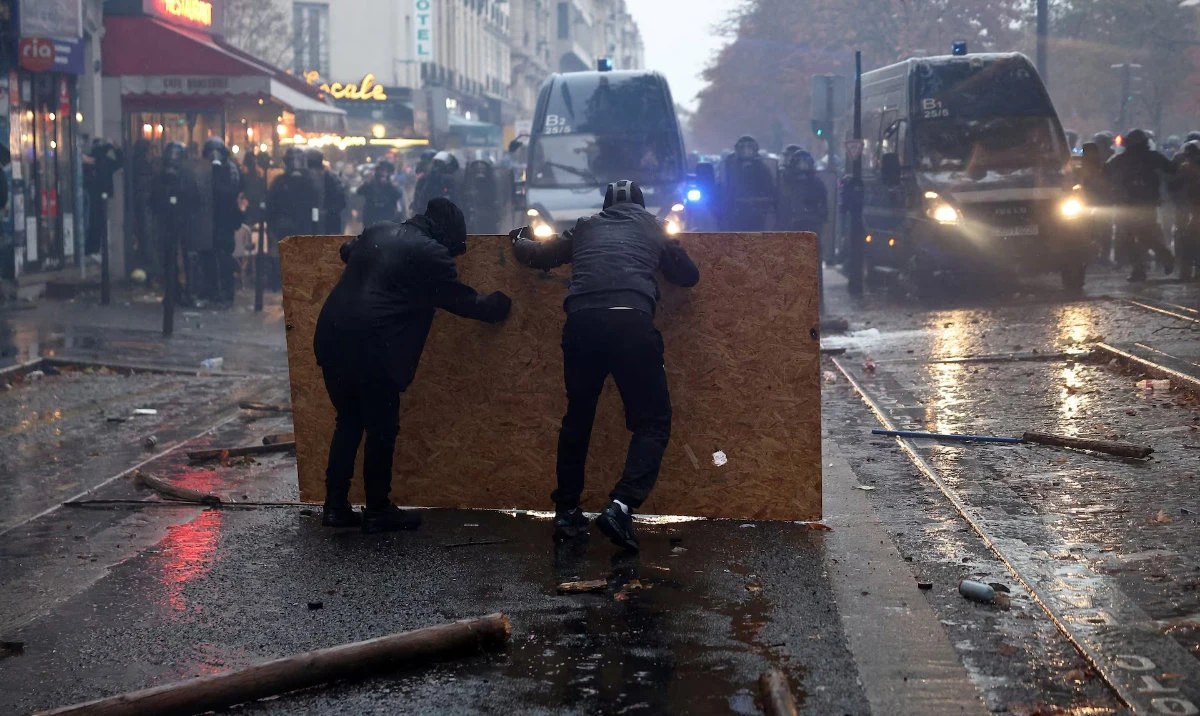
In Srinagar, the main city in the region, several thousand protesters took to the streets, attacking police posts and chanting slogans calling for revenge.
“Blood for blood” and “We want freedom,” they chanted as they ransacked sandbagged police bunkers across the city. There were also reports of protests in other cities across Kashmir as special prayers were being held in mosques and homes for those killed on Tuesday, the bloodiest day since the unrest started.
Police fired at hundreds of rock-throwing protesters at Fateh Kadal, a suburb in Srinagar, said a police officer on condition of anonymity because he was not authorized to speak with media. Three people were wounded, he said. In Bemina neighborhood, thousands of protesters clashed with police, then torched a government complex, according to the police control room.
Dozens of protesters and police were wounded, although exact figures were unavailable, police said.
Separatist political leaders called for three days of mourning and urged people to keep their protests peaceful. “Kashmiris will continue to agitate peacefully and we should not give Indian oppressors any chance to use brute force,” said Mirwaiz Omer Farooq.
Yesterday, the protests spilled over to other parts of India, with Hindu nationalist groups blocking traffic and railway lines for several hours in New Delhi, Mumbai and the tourist hub of Agra, home to the Taj Mahal.
In New Delhi and Mumbai several dozen activists from the Vishwa Hindu Parishad (World Hindu Organization), or the VHP, blocked roads for up to two hours, demanding that the land allocated to the shrine be restored. The plan had been shelved after widespread Muslim protests.
“The central government must give the land to the Amarnath shrine board. Otherwise, our protest will continue,” said VHP General Secretary Pravin Togadia, warning that they would launch a “nationwide movement.”
Some 50 protesters were detained in Mumbai, said police officer Pran Gokhale.
Earlier yesterday, thousands of people streamed out of their homes to buy supplies as authorities relaxed a curfew for several hours. The lockdown, the first to be imposed across the entire Kashmir region in 18 years, was ordered after separatist leader Sheikh Abdul Aziz and four others were killed on Monday while attempting to march to the Pakistan-controlled Kashmir to protest a blockade by Hindus of the highway linking the Kashmir Valley with the rest of India.
Some 100,000 people defied the curfew to attend Aziz’s funeral in Srinagar.
Meanwhile, Pakistan yesterday urged the international community to press New Delhi for “restraint” in disputed Kashmir valley. “We are deeply concerned over the deteriorating situation in Indian Kashmir which is resulting in loss of life and property of the Kashmiri people and violation of their human rights,” Foreign Ministry spokesman Mohammed Sadiq told reporters in Islamabad.
He called on the United Nations and human rights organizations to take notice of the “gross violation of human rights of Kashmiri people, unwarranted violence against them and their economic blockade perpetrated by extremist elements.”