DAMASCUS: Syrian President Bashar Assad disclosed yesterday that his country has handed proposals for peace with Israel to Turkish mediators and would wait for Israel’s response before holding any face-to-face negotiations.
Bashar said the document was intended to serve as a basis for direct talks and that he was waiting for a similar document laying out Israel’s positions. So far, negotiations have been held indirectly through Turkish mediation.
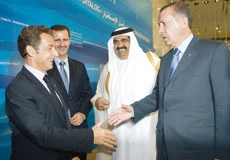
Bashar spoke yesterday at a summit with the leaders of France, Turkey and Qatar to discuss stability and peace in the Middle East. Iran was another major focus of the summit. France indicated before the meeting that it hoped warmer relations with Syria, Iran’s ally, could help the West in its efforts to persuade Iran to curb its nuclear program.
On Israel, the Syrian president cautioned that the future of negotiations rested on who becomes prime minister in Israel and whether the new leader will be committed to pursuing peace with Syria. Israeli Prime Minister Ehud Olmert, the target of several corruption investigations, has announced he will step down after his party chooses a new leader this month. That has left peace prospects with both Syria and the Palestinians uncertain.
An Israeli official said that efforts were under way to hold a new round of indirect talks and that it was Israel’s “genuine intention” to reach an agreement. The official declined to be identified because the diplomatic efforts are ongoing.
Any direct talks between the sides would have to wait until a new American administration is in place, Bashar said, acknowledging the importance of strong US backing for such an effort.
Bashar did not disclose details of the Syrian proposals. “We are now discussing a document of ... general principles of the peace process which will be the basis for direct negotiations,” he said.
He said Syria outlined six points on the issue of the “withdrawal line,” a reference to the extent of an Israeli withdrawal from the Golan Heights and a major sticking point over which direct negotiations collapsed in 2000.