
LONDON: The prudent and cautious regulatory stewardship of the Saudi financial and banking sector over the last few years has been vindicated as Saudi-based financial institutions have been much less affected by the fallout of the credit crunch and the impact of the global financial turmoil.
While some banks in neighboring Bahrain, Kuwait and Dubai have reported exposure to the US subprime CDOs (collateralized debt obligations); or to overexposure to the real estate market or even commodity receivables such as reverse Murabaha, resulting in some of the cases to more than $3 billion of write-offs, Saudi banks are weathering the storm and in fact are looking forward to 2009 and 2010 with much greater optimism than their Western and international counterparts.
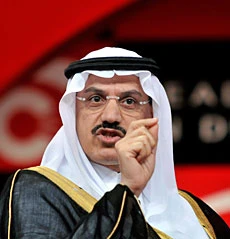
At a recent financial and economic conference in Riyadh, Muhammad Al-Jasser, the vice-governor of the Saudi Arabian Monetary Agency (SAMA), the central bank, highlighted the Saudi regulator’s prudential and supervisory philosophy. “We were accused of micro-managing. They said that SAMA was intrusive when we said ‘slowdown’. Now they want to kiss our foreheads. We never ceased believing that regulation must be part of the financial markets. The private interest of bankers must be guided like traffic. The rules must be applied to prevent excessive risk taking,” he explained.
Unusually for a Saudi bureaucrat, Al-Jasser could not have been more forthright in stressing that “there was a dismal failure of regulatory oversight” in the financial services markets in the West especially in the US, UK and Western Europe. In contrast, the Kingdom has been planning precisely for the rainy day. “In the good days, we rebuilt our reserves and paid down debt so we could cushion the economy and spend more than we are taking in during the bad times. Now our reserves will come down,” he said.
Some four years ago in 2005, SAMA, concerned by the wanton speculation on the local Saudi share market, was already reining in local banks and warned their senior executives that the banks should not to finance excessive speculation in the capital markets. Perhaps it was a bit too late to preempt the “irrational exuberance” in the Saudi stock market (the Tadawul Stock Exchange) which led to a 30 percent market correction in March 2007 which was effectively a wake-up call for both ordinary Saudis and institutional investors.
Ironically, it was the International Monetary Fund (IMF) which repeatedly in its Article 1V Consultations with Saudi Arabia over the last few years urged Riyadh to use its petrodollar surpluses more prudently to mitigate downturns in the future and to help future Saudi generations. Perhaps it is a double irony that the IMF failed to advise its main bankroller the US and its European partners to adopt the same prudency.
SAMA’s conservative policy of urging Saudi banks to steer clear of highly speculative and risky derivatives and the government’s policy of not rushing into establishing bloated sovereign wealth funds (SWFs), unlike Qatar, Abu Dhabi and Kuwait and those in China and Singapore, has paid off handsomely. Many of the SWFs were chasing high returns and have reported losses on several fronts. SAMA reserve investment exposure is mainly to US Treasury bonds and US dollar reserves.
SAMA’s policy has even been commended in the international media. The London Financial Times in a report a few days ago called the Saudi regulator’s supervision and investment policy “prescient precisely because of that conservative stance.”
“While many central banks from China to Qatar were establishing funds to pursue higher returns with at least a portion of their reserves,” said the Financial Times report, “SAMA did not. It eschewed the siren song of alternative investments and faithfully continued to buy US Treasury debt, using its dollar-denominated oil earnings to do so. In retrospect, with many hedge funds down 50 percent and the majority of private equity-owned companies worth far less today than at the peak two years ago, SAMA’s choices seem more brilliant than boring. At a time when both Washington and Wall Street have lost their certitude, both capitals could do worse than look at SAMA.
“As a result of its sound approach to regulation and its careful management of its reserves, Saudi Arabia today is in far better shape than most of its neighbors in the region; neighbors who pursued more ambitious investment policies and were less prudent regulators.”
Local bankers such as John Sfakianakis, chief economist at SABB (Saudi British Bank) strongly support SAMA’s prudent policy. “If SAMA had not been prudent in allowing the many banks to set up operations,” explained Sfakianakis to Arab News, “we could now be facing the same regulatory oversight problems that US banks are facing. The culture of greed that characterized many Western banks was not replicated in Saudi Arabia due to SAMA.
“Also, unlike the speculative real estate lending that was witnessed in some parts of the Middle East, Saudi banks have adhered to a balanced and conservative loan book. Saudi Arabia can weather the global recession far better now than before and far better than most members of the G-8. Even if oil prices average $30-$35 a barrel for the next two years Saudi Arabia’s economy will face manageable headwinds. If the US economy is undergoing a heart transplant Saudi Arabia is facing a cold snap.”
Indeed, perhaps not surprisingly, it was to Riyadh that British Prime Minister Gordon Brown turned to bring stability to the world oil markets by suggesting an international conference in the Kingdom last year to discuss the vagaries of the oil market and its impact on global economies. Similarly, Saudi Arabia was invited to the top table at the G-20 meeting in Washington late 2008 called by the lameduck Bush administration to bring stability to the global financial markets.
Even the transition team of new President Barack Obama sent out feelers to Riyadh to see what role Saudi Arabia and other GCC countries and Islamic finance in particular could play in helping recapitalize and energize the global financial markets.
Indeed one of the “positives” of the credit crunch and the global financial crisis, is the clear shift of financial and economic power away from the traditional centers of the US and Western Europe to the East including China, the GCC, Singapore, Hong Kong and India. Similarly analysts in London stress that the financial crisis and the credit crunch have exploded the myth once and for all that the developed markets in the West are not risky and are therefore secure. They urge investors in emerging countries to leverage their asset allocation strategies to include emerging market debt and other asset classes.
In the past, there was a sense of financial market and management invincibility exuding from Wall Street and the City in London. This was based on a neo-financial colonialistic chauvinism, which of course has proven to be highly fallible and damaging not only to these countries but to global financial system. In the end, the system was based on a pyramid of excess — whether of greed, risk, bonus chasing and under-regulation.
It would turn out to be perhaps perverse that the regulators and markets may have a greater capacity to endure major global financial crises than to pre-empt them.