JERUSALEM: More than 40 UN and other humanitarian agencies urged Israel yesterday to lift its crippling blockade of Hamas-run Gaza Strip, where a majority of the population is kept alive through foreign aid.
“We call for free and uninhibited access for all humanitarian assistance... We also call for a return to normalized trade,” said a joint statement read at a news conference in a UN warehouse in Jerusalem where aid destined for the impoverished Palestinian enclave is stored.
The statement was issued to mark the second anniversary of the blockade under which Israel and Egypt have kept Gaza after the violent takeover by Hamas, an Islamist movement pledged to the destruction of the Jewish state.
“The indiscriminate sanctions are affecting the entire 1.5 million population of Gaza, and ordinary women, children and the elderly are the first victims,” it said. “While Gazans are being kept alive through humanitarian aid, ordinary civilians have lost all quality of life as they fight to survive.”
Israel’s ban on allowing building materials into Gaza is hindering reconstruction work on the tens of thousands of homes destroyed in the Israeli offensive, the United Nations Relief and Works Agency said. “The list is long and the need is urgent but the total ban on building supplies remains in force,” UNRWA spokesman Christopher Gunness told a news conference in Jerusalem.
Some 52,400 houses have been destroyed in the enclave, affecting 250,000 people, Gunness said. In addition, 800 industrial properties were damaged or destroyed in the Israeli offensive from Dec. 28 to Jan. 18, while 14 mosques were destroyed, as were 10 schools, with a further 240 schools damaged.
The situation was compounded by devastation wrought by the 22-day military offensive Israel launched against the Gaza Strip in December, which killed more than 1,400 Palestinians. Thirteen Israelis were killed during the fighting Israel said aimed at ending rocket fire from Gaza.
Because of the blockade, humanitarian agencies have been unable to bring in the materials needed to rebuild homes, schools and hospitals.
“Thousands of people are living with holes in their walls, broken windows and no running water,” the statement said.
To highlight the effects of the blockade, Oxfam spokesman Michael Bailey held up a can of Gaza-made hummus that cannot be exported because of the blockade. “This is collective punishment in a tin,” he said.
The company that makes the chickpea paste had to close down last year and lay off its 85 employees because it could not import empty cans from Israel, said Bailey. Among the signatories were the UN agency for Palestinian refugees UNRWA, Oxfam International and CARE, as well as several dozen smaller organizations.
Since the siege was instituted, Israel has allowed only basic good to enter the salient. “We are receiving basic stuff but ... we need more than the basics and it is not being provided,” Gunness said. “On a nutritional level we are covering two-thirds of the needs.” He said that in addition, 400,000 people were drinking contaminated water. Bailey said that 80 percent of the inhabitants of the Strip depended on food assistance.
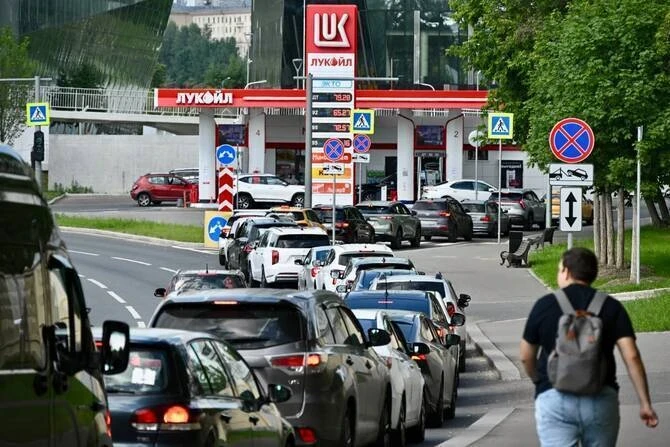
He charged that since November 2008 no petrol or diesel, save for that provided by UNRWA, has been allowed into the Gaza Strip, with the result that the Gaza power plant receives only 70 percent of weekly fuel requirements. Only 50 percent of the cooking gas requirements were permitted to be shipped into the Strip, he added.
“This is a collective punishment not only in terms of food access, but also for the development of the agriculture,” he said. “The blockade must be lifted immediately,” Eva Tomic, of the office of the UN Human Rights Commissioner, told the news conference.