
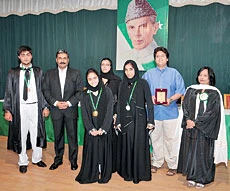
The Pakistani media are yet to mature. That was the verdict in a nutshell of a group of students who put media in the dock in a courtroom setting during a debate held by the Pakistan International School (English Section) Jeddah. Acute competition and the mad race for TRP ratings, have made most of the country’s channels go to any extent, totally forgetting its social responsibility, was the “judgment” pronounced by a seven-member bench on Thursday.
The plaintiff, defendants and the judges were all students of PISJ (ES) and they really thrived in the cut-and-thrust atmosphere of a courtroom.
The judges said, “It is high time media houses rose above petty and fictional stories just for the sake of competition and play a much bigger role in the nation-building process.”
The trial with the seven judges presiding, the first of its kind in Jeddah, saw the participants of the debate “Media Tulba Ki Adalat Mein” (media in students’ court) presenting their case for and against the motion in an impressive manner.
Zubair Khan, one the complainants against the media, said that the primary role of media is of an information provider and a motivator of social awareness, which is ultimately responsible for contributing toward the creation of a healthy society. Zubair questioned, “What purpose the TV channels serve by showing the headless bodies of blast victims? Aren’t they in a way arousing passion and anger for further attacks and at the same time giving a bad name to Pakistan? His argument was that Pakistan was being branded a failed or terrorist state due to the excessive coverage of such incidents.
Muhammad Ali, another plaintiff, questioned Pakistani electronic media’s glorification of Indian films, actors and the ill-conceived idea behind the telecast of Indian TV serials, which he said was playing havoc with the tradition and values of the Pakistani society. Questioning the accountability of the media, the speakers reiterated the fourth estate has become a fourth-rated state.
“There is an urgent need for a total change in the entire perspective of TV channels. They have to fix priorities and change the entire approach. They have to be serious. There are tons of issues in Pakistan, so why can’t these channels address those issues. They should understand that news is a serious business,” said another plaintiff.
In media’s defense, the defendants’ refrain was that this was an age of communication and “you cannot hide anything from the public.”
“When a blast takes place it is the duty of the media to tell us what has happened. And if the media fail to do that then in fact it should be held responsible,” said Hafza Khan.
“Media are supposed to be the mirror of the society,” said one of the defendants. Free and vibrant media reflect the freedom a citizen enjoys in his country, Hafza said.
Another defendant, Khushboo, reminded that media are the watchdog of democracy. “It was Pakistani TV channels which launched a massive campaign for the restoration of the judges sacked by the then-President Pervez Musharraf and the whole nation was mobilized to the extent that Chief Justice Iftikhar Muhammad Chaudhry and other judges were reinstated,” she said.
They said if the other three pillars: Executive, legislature and the judiciary are not strong, then media alone cannot do much.
PISJ (ES) Principal Sehar Kamran stressed the need for such activities for the overall growth and development of students.
The Chairman of Pakistan Journalist Forum Amir Mohammad Khan, Rauf Tahir and Press Consul Jamil Ahmad judged the participants.
At the end of the session, prizes were given to the best speakers: Hafza Khan bagged gold, Khushboo got silver and Zubair Khan got bronze medals, while Muhammad Ali was given a shield. Ayman Khalil and Ayesha Khalid were judged best lawyers.
Visa Consul Akmal Sayeed, who was the chief guest, distributed prizes and mementos among the winners and the participants.