MUMBAI: The lone surviving gunman in the Mumbai attacks pleaded guilty Monday and gave a detailed account of the plot and his role in the rampage that left 166 people dead and paralyzed the city for three days.
The confession was a big boost to India’s claims that terrorist groups in Pakistan were behind the attack, and that Islamabad was not doing enough to clamp down on them. Pakistan has acknowledged the Mumbai attacks were partly plotted on its soil, severely straining relations between the two countries.
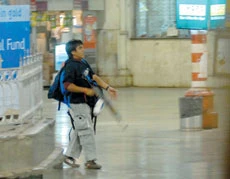
In a verbal statement, Muhammad Ajmal Qasab described his group’s journey from Karachi, Pakistan, on a boat, their subsequent landing in Mumbai on Nov. 26, and his assault on a railway station and a hospital with a comrade he identified as Abu Ismail.
The other gunmen, also armed with automatic rifles and grenades, attacked a Jewish center and two five-star hotels, including the Taj Mahal Hotel. The rampage ended at the historic hotel days later after commandos killed the attackers holed up there.
“I was firing and Abu was hurling hand grenades (at the railway station),” Qasab told the court. “We both fired, me and Abu Ismail. We fired on the public.”
Earlier Qasab, 21, stood up before the special court hearing his case just as a prosecution witness was to take the stand and addressed the judge. “Sir, I plead guilty to my crime,” he said, triggering a collective gasp in the courtroom.
The statement was recorded and signed by Qasab, formally reversing his plea from innocent to guilty in the trial that started April 17.
Qasab told the court he worked as a shop assistant in Jhelum town in Pakistan.
Unhappy with the low wages, he and a colleague named Muzzafar went to Rawalpindi with the intention of becoming professional robbers, he said.
While attending a festival in Rawalpindi, they approached some men with long beards, correctly guessing they were people who could provide them weapons. The bearded men put them in touch with Lashkar-e-Taiba, which gave them weapons training, he said.
Before coming to India, Qasab said he lived in a house in Karachi for one-and-a-half months with 10 other young men. All of them were transferred to another home and taken to sea where they met four handlers. One of them was an Indian named Abu Zundal, he said.
After attacking the railway station and hospital, Qasab said he and Ismail drove to a nearby beach in a hijacked vehicle.
He was later captured by police after a shootout in which Ismail was killed. He was treated for wounds and has since been held in solitary confinement in a Mumbai jail.
Qasab said his confession was not coerced. “There is no pressure on me. I am making the statement of my own will,” he said.
Asked by judge M.L. Tahiliyani why he confessed now after consistently denying his role, Qasab said it was because the Pakistani government recently acknowledged he was a Pakistani citizen, dealing a blow to his defense.
“If Pakistan has accepted me as its citizen, then end this case and punish me for my crime,” he said. “My request is that we end the trial and I be sentenced.”
Tahiliyani said no immediate judgment would be issued and the trial will resume Tuesday.
Pakistani Foreign Ministry spokesman Abdul Basit declined to comment on Qasab’s court admission.
A total of 166 people were killed in the attacks by 10 gunmen in Mumbai. It ended with troops storming the Taj Mahal Hotel where some gunmen were holed up.