
Brazilian Corporation for Research in Agriculture (EMBRAPA) is the largest agricultural research company in Brazil. It extends its actions to North America, Europe, Africa as well as Latin America. Research and Development (R&D) strategic projects conducted a multiinstitutional complex array, requiring a high volume of resources, in order to create the Macro program 1 Great National Challenges portfolio, as part of EMBRAPA System of Project Management (SEG).
The SEG was designed to provide the necessary tools to manage the whole life cycle of R&D projects, as they are: Planning, release of financial resources, follow ups and final evaluation. It also provides EMBRAPA with a better organizational flexibility and transparencies in generating technology.
The induction and financing of R&D projects occur throughout the Macro Programs (MP) with the purpose of composing and managing a strategic portfolio of projects of high technical and scientific quality, in order to accomplish the institutional goals.
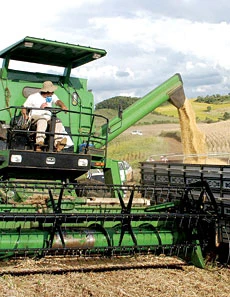
Building a new tropical agriculture: During the last three decades, Brazil has been dedicated to building and consolidating the modern tropical agriculture. This is a multiple, plural, and complex movement, to understand Brazilian reality, the potential of its natural resources and, specifically, its human resources. This movement is about transforming this reality, which is full of historically deposited contrasts, in order to promote social and economic growth and well-being for all Brazilian people.
Thirty years ago, the challenge of building the tropical agriculture required enabling the stable production of food, fibers and other raw material considering the diversity of Brazilian regions. This production needed to be done to ensure domestic supply, support the growth of the agribusiness, hold back inflation and provide exportable surplus (necessary to generate foreign exchange for paying foreign debt and financing Brazilian development). Each harvest attained significant numbers: 120 million tons of grains, 16 million tons of vegetables, 18 million tons of meat, 38 million tons of fruit, 3.7 million tons of cotton, 2.1 million tons of coffee beans, 470 million tons of sugarcane, 120 million cubic meters of wood from native and cultivated forests and 22 billion liters of milk.
In addition, tropical agriculture is part of realities so different as family-based agriculture, Quilombola communities (ethnic rural communities), indigenous nations, specialized agriculture/livestock companies, transformation industries, logistics and exporting companies. Thus, this agriculture must develop mankind in order to build its sustainability toward the future.
It has to integrate various interests, such as economic competitiveness, environmental balance, social equity/justice, reduction of regional inequity and its worldwide insertion.
During 2005-2006 considering the sustainability of Brazilian tropical agriculture and the knowledge generation it demands, the EMBRAPA devoted itself to helping Brazil make the necessary adjustments, in order to attain its goals.
Brazilian Agro Energy Plan — 2006-2011: The second edition of the Brazilian Agro Energy Plan focuses on the strategic actions of the Ministry of Agriculture. Livestock and Food Supply arising from its institutional mission, namely, “to promote the sustainable development and the competitiveness of Brazilian agribusiness to the benefit of Brazilian society,” as well as on the government’s general guidelines, particularly those set forth in the document Agro-energy Policy Guidelines. Brazil is the acknowledged world leader in the generation and implementation of modern, tropical agricultural technology and has a robust agro-industry. A striking example is the ethanol production chain, recognized as the most efficient in the world, driven by a dynamic business sector accustomed to innovating and taking risks.
A series of advantages, such as the possibility of earmarking new lands to energy farming without having to reduce the food-crop farmed area or impose environmental impact beyond what is socially acceptable, have enabled Brazil to become the leader in energy agriculture and in the world’s energy markets.