
The Internationale Funkausstellung (IFA) held in Berlin between Sept. 4 and 9 is one of the two vast consumer electronics shows, together with the Consumer Electronics Show in Las Vegas, that bracket the year in the retail sector of the industry. Stuffed with the glitz and hype that inevitably surrounds product launches for televisions, phones and consumer electronics of all sorts, it provides a chance for the big corporate players to strut their technological stuff direct to the retail consumer and tempt them with glimpses of things to come.
The theme common to both events this year has been the advent of 3D television. Manufacturers, including Samsung, Sony and Philips, seem committed to the idea that 3D TV would be the “next big thing” in home entertainment and the natural successor to high-definition television.
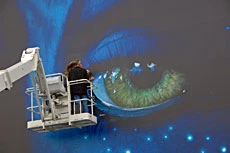
Sony and Panasonic confirmed that they would be launching 3D televisions next year, encouraged by a surge of interest in the technology; Sky will start broadcasting a 3D satellite channel and filmmakers are in the process of re-equipping studios to produce films in the format, Avatar famously being the first. Samsung put on an impressive 3D display in the context of their vision for the future of consumer interaction with the advancing technology under the banner; “Digital Humanism.”
Consumer electronics manufacturers, challenged with the competition from Internet-enabled mobile devices, are keen to explore new ways to keep the television the center of the home. Panasonic, for example, spoke of the “digital hearth,” a collection of electronic devices they hoped would form the center of family life.
Samsung, amongst others, is looking seriously at Internet-enabled televisions, which can bring catch-up TV services and Web-based video sites such as YouTube to the big screen in your home. None of the services demonstrated at the show yet have wide support from broadcasters and until there is content to justify the expense of the new technology, it may prove a slow seller.
Given the need to keep the technology juggernaut rolling it is in this year even more critical for companies such as Samsung, to demonstrate an engaging vision for the future. Boo-Keun Yoon, president of visual display at Samsung Electronics, presenting Samsung’s vision introduced the apparently oxymoronic concept of ‘digital humanism’ to the consumer electronics industry press.
Consumers continue to demand more emotional and self-expressive experiences from their technology products. Samsung calls this phenomenon “Digital Humanism”. Future technology products must now, Samsung feels, ‘reflect individual human values, lifestyles and cultural experiences.’
Samsung’s strategy is to raise its commitment to creating products that enable sharing of personal experience and expression of personal style in a companywide program to imbue digital media with greater emotional relevance.
“Digital technology is efficient and convenient, but it doesn’t sufficiently convey human emotion and warmth,” said Yoon during Samsung’s IFA keynote press conference. “For digital products to be loved by consumers, they must inspire the human heart.”
Boo-Keun Yoon identified five elements of Samsung’s “Digital Humanism” campaign; Essence, Engagement, Expression, Experience and Eco.
The essential element running through all this is a massively increased connectivity between more advanced digital products that allow people to express and transfer and interact with others who wish the same. For example, Internet TV with dedicated “widgets” that enable incredibly thin flat panel televisions to broadcast U-Tube or even Facebook direct into the home. The vision incorporates seamless connectivity between ultra portable net-books, mobile phones, TV and other personal electronic devices to create an environment that enables the consumer to connect, share, receive and display information and experiences of just about anybody anywhere with compatible technology.
“How great it would be if we can experience warmth and emotion through our digital products,” said Yoon. “This is ‘Digital Humanism’ — and this is what Samsung aspires to.”
Supporting the interactive element of “delivering at the highest levels of performance expectation and enable the consumer to share content, messages and their daily experiences with others” is a consumer friendly color and design policy and a commendable environmental approach that uses a significant proportion of recycled material in the manufacture of the new technology.
Certainly Samsung drove consumer demand with the development of revolutionary LED TVs that placed the company to lead the global TV market for the fourth year in a row. Picture quality and ultra-slim design – quite literally ‘finer slim” – they are quite startling in their picture quality. When coupled with the looming 3D TV – once the manufacturers have decided on which format to settle on – they will herald a new era of picture and sound quality of consumer television.
DisplaySearch, a respected reporting and consulting organization specifically focused on the display supply chain and display-related industries, said Samsung was expected to have a 59.8 percent global market share in the LED television market in 2009, with Japanese rival Sharp following at 27.9 percent.
As LED televisions consume less power than traditional LCDs, they are both economical and environmentally correct, Yoon said, adding that Samsung expects its LED TV segment to grow to the same size as its traditional LCD category by 2012.
Turning to the question of televisions that use active-matrix organic light-emitting diodes (AM-OLEDs), celebrated within the industry for their extreme thinness, superior picture quality and energy efficiency, Yoon said that much more time was needed for commercialized models to become profitable.
“Right now, LEDs are the leading force,” he concluded.