
The University of Bologna in Italy has as its motto: “Alma Mater Studiorum” (Latin for “Nourishing Mother of Studies”). It is a term with which many students around the world are familiar; universities are frequently referred to as their Alma Maters. In Bologna’s case, however, the motto makes a bold claim — to being the oldest university in the world. Although adopted only in 2000, the motto implies that Bologna is the mother of all studies.
Bologna University is undoubtedly old. It was founded in 1088 or 1063, or possibly earlier, and it was the first still-surviving institution to call itself a “university” and award degrees.
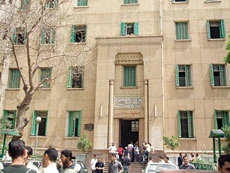
Other venerable European universities, such as Oxford, Paris, Modena, Cambridge and Salamanca came afterwards, albeit soon afterwards. Nonetheless, Bologna’s claim to primacy is one that the Muslim world can challenge. Al-Azhar University in Cairo traces its foundation back a full century before Bologna. The University of Al-Karaouine at Fez in Morocco dates back to 859 AD. They were part of culture of learning at the heart of what has come to be known as the Golden Age of Islam, a hive of learning and culture in the most advanced and civilized empire in its time. The growth of knowledge in the Islamic world did not happen by accident; it occurred because there was a cohesive political entity stretching from the Iberian peninsula to Central Asia inside which there was a unifying language, Arabic, and a common legal system, Shariah. This cohesiveness made trade and travel far easier. Society was stable and prospered. Learning flourished.
As the successor state to the much of the Roman as well as the Persian empires and areas beyond that had been part of neither, the Caliphate of the Abbasid era, centered in Baghdad, ruled over a state containing a cornucopia of ideas and knowledge: Greek, Latin, Syrian, Coptic, Persian into lands beyond the Caliphate. It became a vast melting pot of knowledge. Scholars assessed, evaluated and absorbed from the older civilizations all that was seen as good and compatible with Islam. Works were translated into Arabic from the Greek, Persian and Sanskrit under the patronage of the caliphs. Plato, Aristotle, Galen, Hippocrates, Ptolemy, Sushruta, Charaka and Brahmagupta and others were brought together for the first time. Persian philosophy was studied and developed. Teams of translators were set to work by successive caliphs who saw themselves not only as political and religious leaders but also as patrons of the arts and science.
The result of this melting pot was an explosion of libraries that were at the same time centers of learning. In Baghdad, the Bait Al-Hikma (“House of Wisdom”) was founded by the caliphs Harun Al-Rashid (786-809) and his son Al-Ma’mun (813-833). In Basra, there was the Dar Al-Kutub (“House of Books”). Later in Cairo there was the huge Palace Library containing 18,000 books, an enormous number for the period. Two hundred years later, in the libraries of Paris and Oxford, books were numbered in just the hundreds.
Arab libraries had one thing that the West did not have. They had paper, introduced from China, while the West had far more cumbersome vellum. The opening of paper factories in Baghdad — a high-tech industry of its day — enabled the spread of knowledge that could not have happened but for the existence of the vast multinational Islamic state.
In 1005, a century after the Palace Library was started, the Fatimid Caliph Al-Hakim created in Cairo the biggest Islamic library of all: The Dar Al-Ilm (“House of Knowledge”). According to the Egyptian historian Taqi Al-Din Ahmad Al-Maqrizi (1364-1442) the House of Knowledge contained as many as 600,000 books. This is possibly an exaggeration but almost certainly it contained many tens of thousands of books.
Other cities across the Muslim world also had libraries. Another of the major ones was in the palace at Cordoba, Spain, capital of Umayyad Andalusia. Established by the Caliph Al-Hakim II, a patron of learning and lover of literature and the arts whose 40-year reign is still considered the greatest period of Muslim Spain, the library was reported to hold 400,000 books. This figure, furnished by the Egyptian mathematician and writer Ahmed Abdullah Al-Qalqashandi, may not be the exaggeration it seems so much as a reference to sections; books were divided into sections at the time.
These massive libraries drew in students and teachers from far and wide and were in everything but name what today are called universities. The collections of books became the basis for the study of science, medicine, geography, history, mathematics, astronomy, philosophy, architecture, music, grammar, poetry, painting and more.
In time the students of these disciplines, who were often provided with scholarships, became masters, taking ideas further. They traveled to India and China, following Prophet Muhammad’s (peace be upon him) injunction that to seek knowledge go even as far as China. They exchanged ideas with people of other faiths — Buddhists, Hindus and others — and wrote treatises on their travels, including geographers such as Al-Istakhri, Al-Yaqoubi, Ibn Hawqal and Al-Idrisi. They developed algebra and arithmetic. Arab scholars invented trigonometry as is understood today. Arab medicine became famed the world over.
On such student at the Dar Al-Hikma was Abu Abdullah Mohammad Ibn Musa Al-Khuwarizmi (died c. 225 AH/840 AD), one of the greatest mathematicians the world has known. His study of Indian numerals and understanding of the use of the zero led to their introduction into the Arab world, and from there to Europe, where they are still called “Arabic” numerals. The word “Algebra” comes from his book “Al-Kitab Al-Mukhtasar Fi Hisab Al-Jabr Wa’l-Muqabala” (“The Compendious Book on Calculation by Completion and Balancing”).
Abu Nasr Al-Farabi (870-970) was a musician, political theorist and arguably one of the world’s greatest philosophers. He has been called the “father of Islamic Neo-Platonism” and had considerable influence on many medieval Christian thinkers, including Thomas Aquinas. The roll call of Muslim philosophers, scientists, astronomers, physicians, chemists, historians, psychologists, geographers, poets and musicians during this golden age is staggering. Some names are well known — Ibn Sina (known in Europe as “Avicenna), Ibn Rushd (“Averroes”), Al-Kindi and Al-Ghazali. Ibn Khaldun came relatively late in this period (1332-1406), but with his understanding of the role economics has on politics he can be said to prefigure Marx. His classification of the sciences went further than Al-Khuwarizmi’s to include arithmetic, calculations, algebra, commercial transactions, inheritance partitions, optics and surveying. The works of Ibn Khaldun show the extent to which Arab science had developed.
THE works of these scholars was not merely abstract, academic learning; it was practical. Ideas were put to use and enriched society. There were advances in medicine, hydraulics, mechanics and technology. Arab agricultural science can be said to have started with Ibn Wahshiyya and his study of Nabatean agriculture entitled “Kitab Al-Filaha Al-Nabatiyya” (c. 904).
As Ibn Khaldun’s classification shows, optics was another field that flourished during this period in history. Mathematics and geometry were put to use to make mirrors and lenses. The related works of Basra-born scientist Al-Hasan ibn Al-Haytham, who died in 1039, were not superseded until the 17th century.
Learning and prosperity went hand in hand; the former, flowing from these Islamic “universities” fueled the latter. However, learning and prosperity depends on peace and stability. This was witnessed in Muslim Spain, where the Great Library in Cordoba was broken up and the books sold in 1011 amidst civil war. The Mongol invasion from the east demolished the great libraries of Baghdad in the 13th century. But by the time the centers of learning were being destroyed by internal and external forces, the knowledge that the Arabs had gathered, studied and further developed had been exported to Europe through Spain, Sicily and Italy by Arab speaking “Arabophiles” such as Emperor Frederick II, an enlightened patron of the arts and science, who founded the University of Naples in 1224. There, he commissioned the collection of surviving Arabic texts to be translated and studied.
The extent of European civilization’s indebtedness to Islamic science and learning can never be exactly quantified but one thing is certain: It is that the Islamic world had universities (in the fuller sense of the term) at a time when Europe was preoccupied with the superstitions and social breakdown of the Middle Ages. The great houses of knowledge of Islam’s Golden Age were the fount of new ideas and new knowledge that then fed back into society. It stands to reason then that no new golden age is possible without learning and open minds — without new universities.