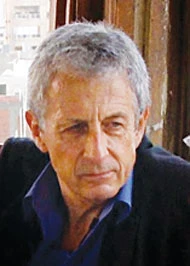
THUWAL: Among a galaxy of world leaders, Nobel laureates and well-known professors and scientists at Wednesday’s opening ceremony of King Abdullah University of Science and Technology (KAUST) was the British historian Robert Lacey. A distinguished journalist with a fascination for history, he is known very well in the Kingdom for his meticulous research on events that have shaped Saudi Arabia’s history.
He is an author of a number of international bestsellers, including “Majesty” and his earlier book on Saudi Arabia, “The Kingdom.”
Lacey’s new book, “Inside the Kingdom: Kings, Clerics, Modernists, Terrorists and the Struggle for Saudi Arabia,” will be published next month in London and New York.
In an interview with Arab News on the sidelines of the KAUST opening, Lacey said KAUST would undoubtedly raise the level at which scientific research is conducted in this country. Following are excerpts from the interview:
What are your first impressions of KAUST?
When I first saw KAUST from the highway, shimmering on the desert coast like a mirage beside the sea, the place seemed almost dream-like — and it is, of course, the product of one man’s dream.
How will the creation of this university help in promoting educational reforms?
Educational reform depends on the people who shape education — from the minister and his officials to the teacher in the classroom, and to every parent who wants better schools for their children and should try to make their voices heard. The king has shown the way. Now the question is — will everyone follow?
How will this help raise the stature of King Abdullah?
King Abdullah has already attained considerable international stature and respect: the interfaith dialogue, the domestic program to curb extremism, the national dialogues; the Arab Peace Initiative, membership of the World Trade Organization, the introduction of human rights organizations to the Kingdom, and now a standard-setting scientific university of international standard, built and staffed in record time. After the debacle of 9/11, the king has been the saving of Saudi Arabia’s reputation in the world.
You have followed the developments in the Kingdom for a long time. Where does the Kingdom stand at the moment? Would it be right to say that the creation of KAUST marks a paradigm shift in the government’s thinking?
On the day following the KAUST opening, i.e. Thursday the Kingdom will be represented by the foreign minister at the G20 summit in Pittsburgh — the gathering of the world’s Top 20 economic powers.
That shows the growing stature of Saudi Arabia in the world. As for “a paradigm shift in the government’s thinking” — the Saudi government is not just the Council of Ministers. It is also the Shoura Council, the Grand Ulema Council, the local governors, the municipal councils, and all the judges and civil servants as well. Have all those people really “got it”? Have they understood? Do they agree? And do they sincerely support what King Abdullah is trying to achieve? Only history will tell.
Will KAUST lead to substantial changes in way research is done in the Kingdom? Will this university help better the level of education at other universities, such as King Abdulaziz University in Jeddah and King Saud University in Riyadh?
KAUST will undoubtedly improve the level at which scientific research is conducted in this country. Saudi researchers will have the unparalleled opportunity to work alongside and to learn from some of the finest scientists in the world. Let us hope that the lessons will be learned and spread widely.
What were the expectations when King Fahd University of Petroleum and Minerals (KFUPM) in the Eastern Province was launched? Were those expectations met?
I am afraid that I don’t have the information to answer this.
How do you think KAUST will be different from KFUPM?
Let us hope that the two universities will work together. KFUPM is already the highest-ranked Saudi college in the international league tables of higher education. The chance now exists for bright graduates from KFUPM to go on to KAUST, and for KAUST graduates to come back to teach at KFUPM, thus enriching both institutions.
Since you have known the Kingdom better than almost any other foreign observer, what will be your message to those coming from outside and watching the creation of this university?
I’d say, “Look out, Saudi’s cookin’!”
What will you say to the skeptics, both within and without, who feel that KAUST will have no major impact on the attitude of the local population?
They could be right.