
DOWNSTREAM hydrocarbon petrochemicals sound somewhat technical — something the average person might not be too concerned with. However, once you get out of your car (constructed and comfortably upholstered partly with SABIC plastics and painted and carpeted with SABIC chemicals) and take a final swig of water from the SABIC plastic bottle, and then chuck the day’s washing (SABIC polyester shirt and tie, maybe) into the washing machine that has a plastic endoskeleton from SABIC, you will have unconsciously interacted with the company, like it or not.
Hydrocarbons and the huge industry spawned by the ingenuity of industrial chemists insinuates itself into our daily lives in so many ways, largely unnoticed. SABIC, with its leading position in the petrochemical world, does so more than almost anyone else. Looked at another way, there are bits of Saudi Arabia in various forms almost everywhere on the planet. It is a fascinating thought.
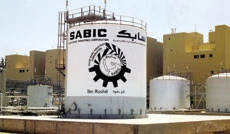
The prosaically named Arabian Industrial Fibres Co. for example was formed as a joint stock venture in Dec. 1995, with SABIC holding 51.7 percent. Its capital of SR3 billion ($800million), was divided into 30 million SR100-shares which were fully subscribed and paid.
An interesting aside is the name that it is more generally known by: Ibn Rushd. The name hints at the pride Saudi Arabia — modestly hidden but available to those who follow the clues — takes in naming many of its companies. Who exactly was Ibn Rushd — the founder? Well, in a way, yes. Abul-Walid Muhammad ibn Ahmad ibn Rushd — known in Europe as Averroes — was born in Cordoba, then Andalus now Spain, in 1126. He was a polymath who trained as a doctor and then became a master of Islamic philosophy, Islamic theology, law and jurisprudence, logic, psychology, politics, Arabic music theory, and the sciences of medicine, astronomy, geography, mathematics, physics and celestial mechanics.
Little wonder that his name, being as it is an epitome of Islamic philosophy and science, should be attached to a company so reliant on science and that has a global reach. The fully integrated multiplant complex uses natural gas from the pipeline running from Al Jubail on the east coast mainly as feedstock. The complex produces a wide range of fibers and filaments including staple Partially Oriented Yarns, fibers and textile chips. POY is designed to manufacture textured drawn yarns and flat drawn yarns for weaving and knitting processes. Staple fibers have a wide application for spun yarn, fiberfill, filtration, needle punching and wadding. Textile chips are also offered for customers making their own POY. Ibn Rushd produces about 110,000 tons per year of these polyester products.
The aromatics complex and a purified terephthalic acid (PTA) plant at Yanbu came on stream in 1998. It marked the beginning of a new industry in Saudi Arabia: polyester (190,000 t/y) for textiles and carpets, and polyethylene terephthalate (PET) bottles.
A second 350,000-t/y PTA plant came on stream in 2000, with 225,000 t/y being exported. This was followed recently by a second 250,000-t/y PET.
The complex uses the Cyclar process and produces among other derivatives 350,000 t/y of benzene, 300,000 t/y of paraxylene, 45,000 t/y of orthoxylene and 35,000 t/y of meta-xylene.
Polyester is not just for cheap suits; they are the basis of the common PET (polyethylene terephthalate) resins suitable for making transparent bottles and packaging materials including those for carbonated soft drinks and bottled water. PET resins are particularly useful for the production of containers intended especially for food packaging (soft drinks, mineral water, fruit juices, sauces, ketchup, jams, pickles and the like) and for pharmaceuticals and cosmetics.
Excellent resistance to acids and most common organic chemicals except strong alkalis and some organic solvents characterizes the PET grades produced in the Yanbu complex. Another plus is that they are easy to recycle and conform to food regulations in the US and Europe.
Regulations are the blight of any industrial process but a reality that both limits production and stirs the ingenuity of scientist to produce materials that perform well and within the new legislative perimeters. One of the latest additions to the group business portfolio, SABIC Innovative Plastics (formerly GE Plastics, acquired by SABIC in 2007), is a global supplier of engineering thermoplastics with a 75-year history of breakthrough solutions. It is now a multibillion-dollar company with operations in more than 25 countries and over 9,000 employees worldwide.
When the world regulatory body for the electrical and electronic industries, the International Electrotechnical Commission (IEC), tightened its 60355 standard and included a demanding Glow Wire Ignition test for flammability, Vestel, a Turkish washing machine manufacturer, looked for a new regulation-compliant material to replace the existing polyamide used in its machines.
SABIC Innovative Plastics had already developed several flame-retardant materials that achieved IEC 60355 certification in collaboration with a German testing organization. Because the materials had already met the new IEC standards, Vestel and other manufacturers did not have to spend time and resources on additional testing of plastic parts. Using the new plastic, they were able to achieve a number of goals including better performance of plastic parts, reduced system costs, environmental responsibility and greater design freedom.
It is not just in everyday domestic items that plastic has become important. It is prominent in areas such as the automotive industry, electronics, building and construction, transportation and health care. The SABIC’s product portfolio includes thermoplastic resins, coatings, specialty compounds, film and sheet.
A similar high performance resin to that used in Vestel’s washing machine proved ideal for beetles. Volkswagen “Beetles”, that is. The fenders on the car are injection molded, 50 percent lighter than steel, require very little post-production finishing and absorb bumps and bruises in a way that steel cannot. Lighter weight gives better mileage and lower emissions. Good news all round.
It does not stop there. To reduce weight while promoting sustainability, automakers GM chose SABIC’s Xenoy iQ resin for the hood, tailgate panels and vertical body panels of the Opel Flextreme electric car introduced at the Frankfurt motor show in 2007. Xenoy iQ resin uses consumer waste — recycled polyethylene water bottles — to reduce the carbon footprint of the Flextreme. This innovative material provides high stiffness and impact with the potential to reduce weight by 50 percent compared to steel.
Drive it, wear it, drink from it and live in it — plastic in its many forms has become and will continue to be the material of choice for the construction of an increasing proportion of the necessities of modern and future life. And SABIC’s name will be featured large in the supply chain at some point.