
WASHINGTON: The Council on American Islamic Relations, one of Islam's most active advocacy groups in Washington, celebrated 15 battle-scarred years of service this week.
At an annual banquet this week, representatives from other faith communities joined hundreds of Muslim Americans present. They included leading rights activist Rev. Jesse Jackson and Rabbi Steven Jacobs, who recently attended the Interfaith Conference held in Geneva and sponsored by Custodian of the Two Holy Mosques King Abdullah.
Established in 1994, CAIR is a non-profit grassroots organization headquartered in Washington DC, with 35 offices and chapters across the US and Canada. Its aim is to improve the understanding of Islam and protect civil liberties.
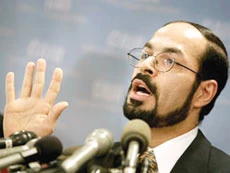
Nihad Awad, CAIR's executive director, said the Muslim organization has been through many challenges during these years. "The road was never rosy," he said.
An example: CAIR processed nearly 2,500 civil rights discrimination cases on behalf of Muslims in 2006, and more than 9,500 in the past decade.
Rev. Jackson, a leading civil rights leader and founder of the Rainbow/Push Coalition, said it was important not to stereotype the world's one billion peaceful Muslims by the acts of the fanatical few.
"You cannot define Christianity by the slavery system," Jackson told Arab News before the event. "Top religious leaders under Jim Crow Laws [which segregated all public facilities, including public schools, public transportation, public places such as restrooms and restaurants for whites and blacks] were Christian. That doesn't define Christianity but rather that of people in control. You can't judge Islam because of the destructive acts of a few."
Rabbi Jacobs said after the 9/11 attacks occurred he realized that "we had an enormous challenge because most Americans blamed all Muslims [for the attacks]. Muslims are similar to us, the Jewish community, because we share the same values and have the same priorities."
The rabbi said he decided to embrace the challenge "to go out in the community and country to build relations with Jews, Christians and Muslims."
Rev. Jackson echoed his ideas, saying: "We must never strop trying to tear down walls and build bridges. We must talk to each other."
But one difficult wall, according to Awad, is the constant challenge of dealing with the media.
"We have shown that we can work with the media effectively. There is still a lot of work that needs to be done, but I think American Muslims understand the media culture now."
But the media also had shown another face to CAIR in recent years, with fierce attacks by right-wing media outlets over funding and alleged ties to terrorist organizations.
Awad said the harassment intensified following the 9/11 attacks as some members of the media joined with far-right groups.
"They attack you when you are effective," Awad told reporters. "They feel that the growth of Islam and the development of the Muslim community are threatening their agenda."
Former Congressman Paul Findley, author of "Silent No More: Confronting America's False Images of Islam and many other books, and cofounder of the Council for National Interest, a Washington advocacy group, addressed the media in his acceptance address as CAIR's 2009 Community Service Award winner.
"Always be alert regarding negative comments about Islam in the media and ... complain to the editor about the false information they are printing about Islam. I have always fought against these stereotypes, but I am now 88, and I need you to help me," said Findley.
He told the audience that they need to become advocates for the true face of Islam. "I ask you to display your faith in a way that makes one proud to be a Muslim. Every day you have the potential to be a great ambassador for Islam."
Some days are easier than others. Just a few days before the 15th anniversary, a new book, "The Muslim Mafia," accused CAIR of trying to "infiltrate" Congress through interns on the Judiciary, Intelligence and Homeland Security Committees.
Four House Republicans formally requested an investigation to determine if CAIR is a security threat.
Imam Mahdi Bray, director of the Washington-based Muslim American Society, MAS, responded to these attacks at the gala: "As Muslims, we want to end religious and racial profiling, and to those Islamaphobes and a misguided few in Congress we say that we will not allow them to demonize our faith."
But it is a difficult struggle, as even the FBI decided earlier this year to sever cooperation with CAIR on the pretext of its alleged links to some radicals.
Despite the continued attacks, Awad said he was confident that CAIR would overcome such hardship.
"We are not afraid and we are not intimidated. The pressure should not deter us from doing what is right," he told the audience.

