
The development of Ruwais district of Jeddah comes following the directions of Makkah Gov. Prince Khaled Al-Faisal to fix the problem of unplanned development in Jeddah, Makkah and Taif.
The new strategy is to develop the unplanned settlements through cooperation between the public and the private sectors.
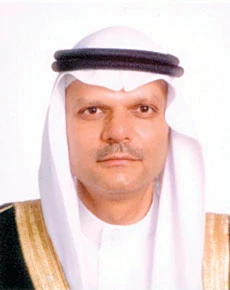
Waleed Abdulaal, the general manager of Al-Ruwais International Company for Real Estate Development, says previously the municipality’s role was not sufficient to solve the problem of unplanned settlements; instead municipal interference only increased the problems and the number of unplanned settlements.
In an interview with Arab News, Abdulaal said the unplanned settlements in Jeddah could be divided into four categories: Unplanned settlements with good economic features, unplanned settlements that enjoy good economic features but need government support; unplanned settlements built on the edges of cities that can be self-developed; and unplanned settlements with poor economic features.
In Jeddah there are 54 unplanned settlements, home to a third of Jeddah’s population. The whole plan focusing on unplanned settlements in the region aims at stopping the spread of these settlements.
The development plan for Al-Ruwais will include only two third of the district. Abdulaal said that the remaining location “is already in a good condition and is planned well. This location stretches between Falasteen Street and Al-Abaqira Street.”
He said that among the main obstacles facing the company is the resistance of residents to enroll in the development project. Abdulaal explained their role is to convince locals that “this plan is a national vision that is achieved through cooperation between the private and public sectors.”
He said Prince Khaled has approached the unplanned settlements, as they now constitute a problem for the city.
Asked where people living in the area should go, he said that Prince Khaled directed providing neighborhoods for Al-Ruwais residents. He announced that an alternative housing program is being set to welcome 34 percent of Al-Ruwais population, 32 percent of which are Saudis.
A third of the legal foreign residents in the district are Arabs, 21 percent of whom are Asians.
Another group of the district’s residents is virtually uncountable because it is living in the country illegally and is undocumented.
Asked about the businesses already existing, he said if any of these businesses were complete, it would be welcomed in the new development project. However, he added, that as 90 percent of these businesses are run by non-Saudis and are providing public services that are not worth preservation and eventually the same services would be provided under the new plan. The priority for the new businesses in the plan would be for Saudis, he declared.
The project targets different layers of society said Abdulaal, and according to him this is what drives the project to succeed.
“If the rents are too high, then the location would be restricted to a small portion of the population and this would not contribute to the success of the plan,” added Abdulaal.
Would there be cultural centers in the new project? Yes, there will be two, he said, one for men and the other for women. Other services would also be identified and built accordingly, including schools and mosques. According to him, the number of streets would be reduced. The buildings are to have the sense of local traditional architecture.
Al-Ruwais will also have a grand park in the middle of the district and will have some other small parks. Abdulaal said the district is expected to have the capacity to accommodate 60,000 residents.
When would the project see light of the day? Abdulaal said it would take time. He added that studies have begun, but people will start seeing things when evacuation starts and people move to alternative accommodations.
Abdulaal said this would not take place unless the real estates are evaluated and their owners handed compensations. He expects these procedures would end next year after which the development process starts.