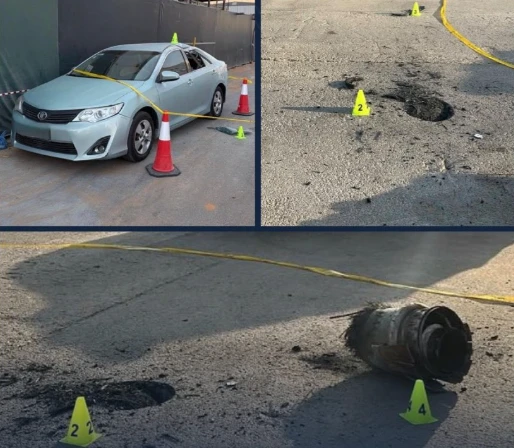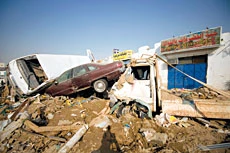
JEDDAH: Scenes of utter devastation and destruction lie to the east of the Haramain Expressway in Quwaizah area of Jeddah.
Contractors are energetically going about their business, lifting out wrecked cars and clearing debris from the roads and byways of the district. It was square in the path of the wall of water that roared westward without warning from out of the wadis east of Jeddah.
“It is a scene of utter destruction, of total, total destruction,” said one contractor who was barely able to control his emotions. He described the scene to Arab News as hellish. “I have never experienced anything like this,” he said.
Teams of workers are using cranes of all sizes and of capacities up to 500 tons to lift fallen buildings, wrecked cars and broken infrastructure. Huge beams of concrete, cars, structural steelwork — all lie in a sea of mud.
Another contractor on site said; “There is little apparent coordination between the various agencies on the ground. It’s very much ad hoc, tackling the challenges as they come in. This will go on for weeks.” It begs the question; what could they possibly do except clean up and start again?
In the foul waters lie more dangers. Heavily cratered roads that collapsed as their substrate was washed away by the flood are visible, but under the mud lie craters, concealed by the glistening mud. Should a crane or heavy vehicle drop into one of these, it would change from rescuer to victim in a second and provide perhaps another body to dig out. Yet the work goes on; drivers and operators, foul with stinking ordure, work on steadily and methodically.
The time for panic and urgent rescue is gone. Anyone still in there will not notice another day or two go by. Pathetic images of normality that once lived in these mean streets occasionally surface. A one-eyed bear, little more than a lump of mud with a button sewn on, peering accusingly through the filth, reminds the onlooker of a life changed for ever.
Bright plastic toys, colorful against their dark khaki backdrop flash into sight and disappear in a bow-wave of slurry from a giant forklift truck carrying one more crushed and dripping car. Aluminum kettles, beds and the paraphernalia of family life have all been transformed into trash, often shapeless mud-soaked trash. These were the people who had little and now have nothing except what they stand up in.
“There is no electricity or water and the people have all gone. It’s a ghost town. The water — or rather a mixture of water and sewage — came through here three meters deep. You can see the marks on the walls,” a European engineer overseeing a section of the operations said. He estimated that there were 7,000 plus cars to clear out of the way in his area alone. Another expert involved in the cleanup said, “We have already pulled out about 2,500 cars and estimate that there are over 3,000 left.”
The clearing of wreckage is only part of the operation that lies ahead. There is a huge amount of mud-scraping and washing down to do just to clear away the sewage and mud which, if left, will rapidly become a vector of disease as scavenging rats and flies move in for the feast. “Après moi, le deluge” (After me, the deluge) Louis XV said with foresight of impending disaster. We are left to deal with the realities of the scene “après le deluge.”