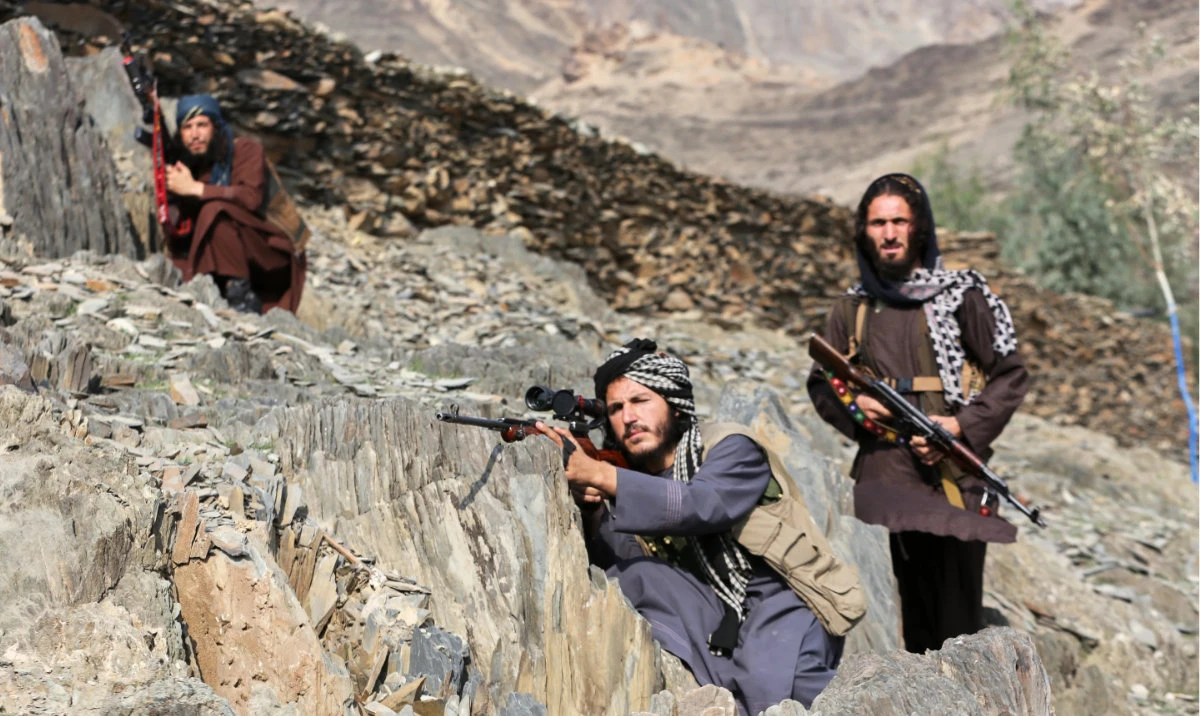
NEW DELHI: Terrorist groups based in Pakistan and Afghanistan were working with Al-Qaeda to provoke a conflict between nuclear-armed India and Pakistan, US Defense Secretary Robert Gates said on Wednesday.
Reflecting anxiety in the region about New Delhi’s reaction if it were attacked by a militant group with roots in Pakistan, Gates said restraint by India could not be counted on.
Gates said rebels in Al-Qaeda’s “syndicate” — which includes the Taleban in Pakistan and Afghanistan, as well as Pakistan-based Lashkar-e-Taiba — posed a danger to the region as a whole.
They are trying “to destabilize not just Afghanistan, not just Pakistan, but potentially the whole region by provoking a conflict perhaps between India and Pakistan through some provocative act,” Gates said during a visit to New Delhi.
“It’s important to recognize the magnitude of the threat that the entire region faces,” he added following talks with his Indian counterpart, A.K. Antony.
India and Pakistan have fought three wars since their independence in 1947 and tension spiked again in 2008 when militants — that New Delhi identified as belonging to Lashkar-e-Taiba — attacked the city of Mumbai, killing 166 people.
India did not mobilize forces, unlike in 2001 when it massed troops on the border with Pakistan after an attack on its Parliament. This drew praise from Gates, but he said such restraint might not be repeated next time.
“I think it’s not unreasonable to assume India’s patience would be limited were there to be further attacks,” Gates warned.
New Delhi suspects the Pakistani intelligence service of supporting terror groups that target India and has consistently called on Islamabad to crack down on militants operating on its soil.
Gates described India as a vital partner in the struggle against extremist threats and said that he had discussed how to bolster US-India military cooperation.
He also lauded India’s “extraordinary” financial aid to Afghanistan, but acknowledged the tension this created as both Islamabad and New Delhi vie for influence in Kabul.
“There are real suspicions both in India and Pakistan about what the other is doing in Afghanistan,” he said.
“So I think each country focusing its efforts on development, on humanitarian assistance, perhaps in some limited areas of training, but with full transparency for each other, would help allay these suspicions and frankly create opportunities,” he said.
Gates, after a cultural trip to visit the Taj Mahal on Wednesday afternoon, is to head to Pakistan on Thursday.
During his two-day trip to India, Gates has also reassured leaders in New Delhi that Washington will not abandon Afghanistan despite a timeline for the withdrawal of US troops.
In separate meetings with Prime Minister Manmohan Singh and Foreign Minister S.M. Krishna on Tuesday, Gates discussed regional security and offered reassurances over the target date of July 2011 for starting a drawdown of American forces, a US defense official said.
Gates, mindful of India’s concerns about an early US exit, pledged the United States would remain committed to Kabul with major economic and diplomatic support even as its military presence is gradually scaled back.
US officials said the visit to India reflected a blossoming relationship between the two countries that has dramatically transformed since the mutual unease of the Cold War.
Defense ties have expanded following the attacks of September 11, 2001, and a deal in July between the two countries helped clear the way for the sale of hi-tech US weaponry to India.
In November, President Barack Obama rolled out the red carpet for the Indian prime minister in the first full-fledged official visit of his presidency, toasting India as an “indispensable” partner.