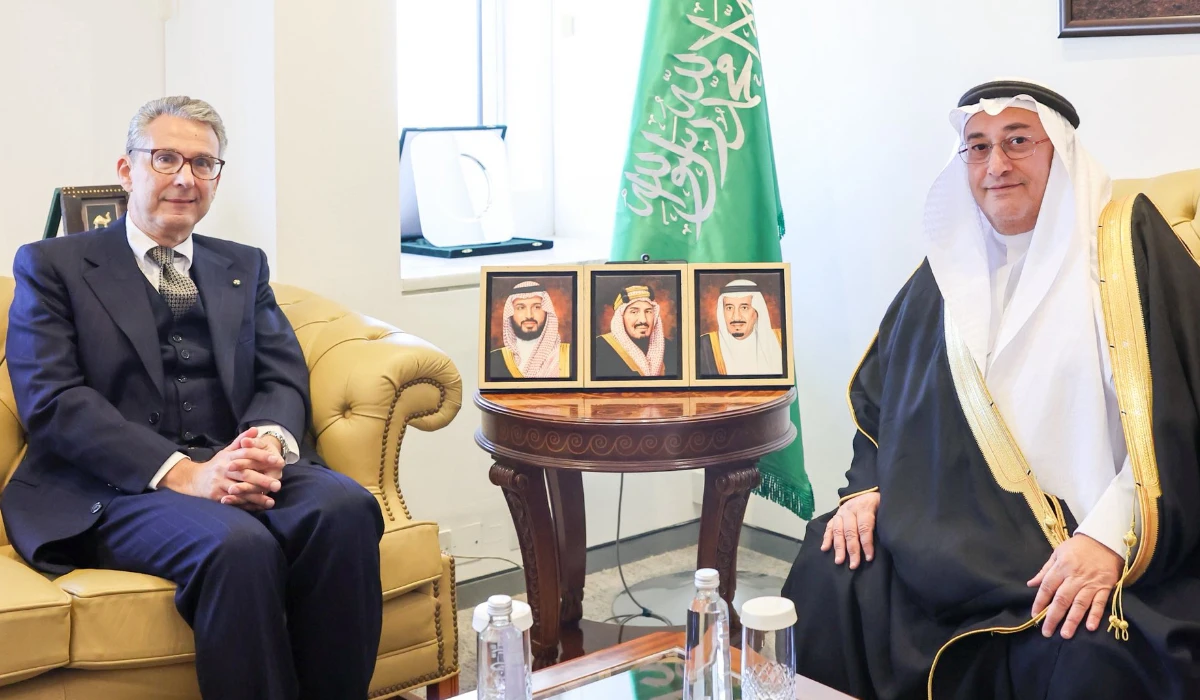
LONDON: Foreign Minister Prince Saud Al-Faisal reiterated Kingdom’s support for the unity, integrity and security of Yemen at a conference held in London. Speaking at the meeting, Prince Saud said, “Saudi Arabia will continue to provide all possible assistance to our brothers in Yemen and urge all countries attending the meeting to do the same. Saudi Arabia has fulfilled all its commitments made during the 2006 London Conference.”
Prince Saud said the major threat faced by Yemen was intervention by some regional powers trying to sow seeds of dissension and create instability in the country, the Saudi Press Agency reported on Thursday.
Referring to Afghanistan Prince Saud said the Kingdom will only take part in Afghan peace efforts if the Taleban deny sanctuary to Al-Qaeda leader Osama Bin Laden and cut ties with militant networks.
Afghan President Hamid Karzai earlier called on Saudi Arabia, which hosted talks between Afghan government and Taleban representatives in the past, to help bring peace to Afghanistan.
“Unless the Taleban give up the issue of sanctuary (to Bin Laden) I don’t think the negotiations with them will be possible or feasible to achieve anything,” Prince Saud told reporters on the sidelines of the London meet.
“We have two conditions: that the request comes officially from Afghanistan and the Taleban have to prove their intentions in coming to the negotiations by cutting their relations with the terrorists and proving it,” he said.
“By keeping their contacts with Bin Laden they won’t be coming to any negotiations with a positive attitude. I think the important theme in this conference is the intention to change policy in Afghanistan, a recognition first that the settlement in Afghanistan is not going to be a military question alone but there has to be a political and economic side to the settlement,” Prince Saud said.
Prince Saud announced a $150 million Saudi contribution for the development of Afghanistan.
Earlier, speaking at the conference, Karzai said he would call a loya jirga, or council of elders, to discuss how to bring about reconciliation in Afghanistan. “We will establish a national council for peace and reconciliation and reintegration, followed by a peace jirga in Afghanistan,” he said.
“We hope Custodian of the Two Holy Mosques King Abdullah will kindly play a prominent role to guide and assist the peace process,” Karzai added.
He also said stability in Afghanistan depended not just on what happened inside the country but also on its neighbors. “We ask all our neighbors, particularly Pakistan, to support our peace and reconciliation effort,” he said.
World leaders attending the conference also agreed on a timetable for the handover of security duties in Afghan provinces starting in late 2010 or early 2011.
In their final communique, they pledged funds for a plan aimed at persuading Taleban fighters to renounce violence — but offered no specific figures.
The meeting backed Karzai’s plan to reintegrate Taleban willing to “cut ties with Al-Qaeda and other terrorist groups and pursue their political goals peacefully.” It said handover of security responsibilities to Afghan forces in the country’s more peaceful provinces would begin “by late 2010/early 2011,” with the Afghan National Army “conducting the majority of operations in the insecure areas of Afghanistan within three years.” The conference was called to help world powers chart a road map out of Afghanistan amid rising US and NATO casualties and falling public support.
The 70 nations welcomed Karzai’s promise to crack down on corruption and said a summit in Kabul later this year would offer specific plans to bolster his faltering government.
The text said discussions marked a “decisive step toward greater Afghan leadership to secure, stabilize and develop Afghanistan.” Karzai warned, however, he expected foreign troops to stay in Afghanistan for years to come.
“With regard to training and equipping the Afghan security forces, five to 10 years will be enough,” Karzai told the BBC. “With regard to sustaining them until Afghanistan is financially able to provide for our forces, the time will be extended to 10 to 15 years.” International allies have said they will pledge at least $500 million for the reconciliation fund — officially known as the Peace and Reintegration Trust Fund, and dubbed the “Taleban Trust Fund” by some.
Thursday’s summit encouraged more contributions but gave no firm figure. US Secretary of State Hillary Clinton said the United States would back it if insurgents pledge to eschew violence, renounce ties to Al-Qaeda and embrace democracy after more than eight years of combat.
Clinton said the “US military has been authorized to use substantial funds to support the effort.”