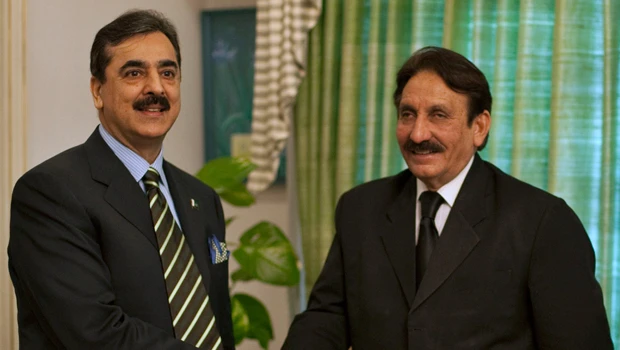
- ISLAMABAD: Prime Minister Yousaf Raza Gilani on Wednesday averted a potential confrontation with the judiciary by inviting Chief Justice Iftikhar Chaudhry to his residence for consultations on finalizing the appointment of top judges.
The government in effect was forced into an embarrassing U-turn, withdrawing earlier appointments that sparked a showdown with the Supreme Court and a fresh crisis in the country.
The row flared when Zardari appointed two senior judges last week. The Supreme Court swiftly suspended the nominations, on the grounds that the head of state had apparently violated the constitution.
Following talks with Chaudhry, Gilani said Justice Khawaja Muhammad Sharif, whom the president last Saturday appointed to the Supreme Court, would stay in position as head of the high court in Lahore.
Instead three alternative judges, Saqib Nisar, Asif Saeed Khosa and Khalil ur Rehman Ramday had been appointed to the Supreme Court, he said.
"The decisions that we took today are part of a consultation process, which requires meaningful and result-oriented discussion for the appointments as part of the constitutional requirement," Gilani told reporters.
"Tensions have now eased out," he said, adding the government will fill all vacant judge posts in the superior judiciary today.
On Monday, hundreds of lawyers rallied across Pakistan, denouncing Zardari and went on strike in the capital Islamabad and the major cities of Lahore, Peshawar, Karachi and Quetta.
"The government had made a mistake by appointing judges without consulting the chief justice, which it corrected today," former deputy attorney general Raja Abdur Rehman said.
Opposition leader Nawaz Sharif, who has been largely supportive of the government, denounced the president on Sunday as "the biggest threat to democracy."
Analysts said Zardari's eligibility as president could be challenged if he was found in violation of the constitution, and had suggested that a U-turn on the appointments was his only way out of the crisis.
"The government has back tracked but at the same time it has avoided a more embarrassing situation," political analyst Hasan Askari said.
"Tensions between the government and the judiciary will subside with Prime Minister Gilani's decision to hold a meeting with the chief justice.
This was a "sensible move" on part of the government, he added, because "direct confrontation between the executive and judiciary would have caused collapse of not only the government but also the entire democratic system."
-- With input from agencies