
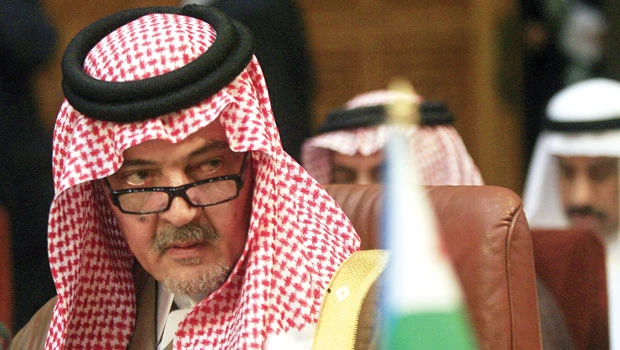
- CAIRO: Arab League ministers on Wednesday backed a US call for indirect Palestinian-Israeli talks, giving a boost to Washington’s efforts to revive the moribund peace process.
Palestinian President Mahmoud Abbas had said he would adhere to the decision of the Arab League committee that met in Cairo.
Syria, a staunch opponent of Israel, said the Arab League decision was not agreed by consensus and it appeared aimed at giving “political cover” for a Palestinian decision already taken.
“Despite not being convinced about the sincerity of the Israeli side to achieve a just peace, the committee sees ... indirect negotiations as a last initiative,” Arab League chief Amr Moussa told a meeting of Arab foreign ministers in Cairo. “These negotiations should not be open-ended and must have a time limit not exceeding four months. The indirect talks should not be automatically translated into direct talks,” he said.
Palestinian negotiator Saeb Erekat had also said Arabs were not “convinced by Israeli intentions” but backed the US idea.
Israeli Prime Minister Benjamin Netanyahu, who has called for direct talks but has not ruled out indirect negotiations as a first step, said after the Arab League move that conditions were improving for the start of so-called “proximity talks.” “We will see. We are not the obstacle. I’ve said it takes two to tango in the Middle East. But it might take three, and initially, we might need a shuttle mission,” he told Israel’s Parliament, referring to a mediator moving between the sides.
“The world understands — and how — that this government wants negotiations and has taken steps, not simple ones, to promote talks,” Netanyahu said, an apparent reference to a partial settlement freeze that Abbas has termed inadequate.
Palestinians have played down the significance of indirect talks, saying US Middle East peace envoy George Mitchell’s shuttle diplomacy over the past year has been merely that.
Erekat said if discussions failed the committee would meet in July to assess developments. Moussa said any failure would prompt Arabs to seek an emergency UN Security Council meeting.
Negotiations must “adhere to Arab principles defined by the Arab peace initiative,” Oman’s top diplomat Yusef bin Alawi bin Abdullah said on Tuesday. “What has prevented President Abbas from pursuing negotiations is the continued policy of settlements,” Abdullah said, adding that any negotiations must be during Netanyahu’s term of office.
“Israel does not want to return to the negotiating table. But it wishes to blame the Palestinian side, saying that the Palestinians do not want to enter into negotiations,” Palestinian spokesman Nabil Abu Rudeina said.
Palestinian officials have cited recent Israeli measures, including a plan to include West Bank religious sites in a Jewish heritage project and plans for more East Jerusalem homes, as evidence that Netanyahu is not sincere about peacemaking. Announcement of the heritage plan last week has increased tension in the West Bank. It led to violent protests and triggered calls for a new Palestinian uprising from Hamas.