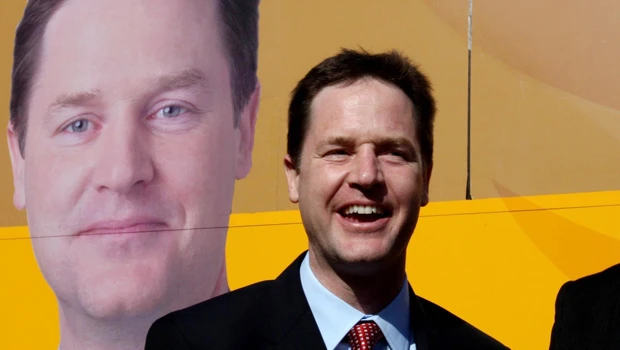
- LONDON: Britain's uncertain national election may deliver a surprising twist: The country's perennial third-placed party, the hitherto toothless Liberal Democrats, could play kingmaker.
For the first time in nearly 40 years, polls suggest neither the governing Labour Party nor the main opposition Conservatives may win an outright parliamentary majority in the country's May 6 election.
That would plunge Britain into a frantic round of political bartering not seen since 1974, creating a hung Parliament in which the Liberal Democrats will likely decide the fate of Prime Minister Gordon Brown and his main challenger, Conservative leader David Cameron.
While traditionally aligned with Brown's center-left Labour party, the Liberal Democrats look increasingly likely to side with the more dynamic Cameron - forming a pact that would oust Labour after 13 years in office.
Polls show Cameron's Conservatives on course to take the largest number of the 650 seats in the House of Commons - but not enough to govern outright. That scenario would see the Tories trading pledges or jobs to gain backing from their rivals. Only with the support of others can a minority government win parliamentary votes and pass laws.
For the first time since the 1920s, when their predecessor Liberal Party was a major force, an organization that has won only about 20 percent of British votes in recent national elections may finally come to the fore.
But, despite their potentially pivotal role, few Liberal Democrat stalwarts are relishing the prospect.
Nick Clegg, the party's affable 43-year-old leader, scoffs at talk of political alliances. It's no time for "politicians to play footsie with each other," he says.