
- For the past several weeks, we have been going through Paul Gross’s 20 superfruits (mango, fig, orange, strawberry, goji, red grape, cranberry, kiwifruit, papaya, blueberry, sweet and sour cherries, red raspberry, seaberry, guava, blackberry, blackcurrant, date, pomegranate, acai (assai), and dry prune) in the same sequence he put them, which is according to their richness in nutrients, phytochemicals, and colors; effects on health and diseases; their popularity; and their progresses in clinical and scientific researches.
Red grape,Vitis vinifera, is cultivated globally in temperate regions, making it popular as fresh and dry fruit, fresh juice, drinks, and in gourmet cooking.
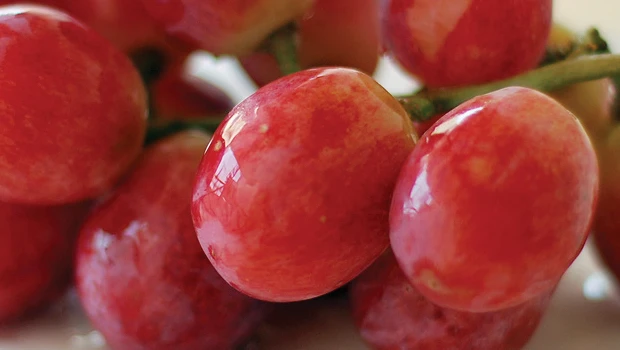
Why does Gross emphasize only red and black grapes as a superfruit? It is because the fine skin’s dark pigment gives the fruit important phytocompounds called anthocyanins, which offer multiple health benefits. However, the most prominent and most researched phytochemical is in the seeds of red grapes. It is resveratrol, a promising polyphenol, that contains protective constituents, which can act on early aging, diabetes, cardiovascular disorders, and cancer.
Apart from the red pigment (anthocyanin), red and green grapes contain equally essential nutrients. The seeds in both species provide good amounts of vitamins A, C, E and K and omega-3 and -6 fatty acids as well as a concentration of proanthocyanidins. These polyphenols maintain the equilibrium of the blood, skin, and brain as well as suppress cancer cells and inflammation. One cup of grapes with seeds or their juice provides vitamins A, B-complex, C, E, K, and P along with minerals calcium, iron, phosphorus, potassium, and sodium.
Red grapes have been the subject of scientific research and scrutiny for over a hundred years because of their numerous powerful phytocompounds found particularly in their very dark thick-skin such as in American Grapes, which provide high amounts of anthocyanin and resveratrol. The grapes and their juice have been found in research to significantly reduce blood cholesterol serum, clots, and risk of cancer, while boosting energy and cognitive skills in lab animals.
According to food scientist, Dr. Steve Talcott, the grapes can also suppress the buildup of amyloid protein deposits in the brain, the main culprit that causes Alzheimer’s disease in mice. In another study on a group of Japanese American elderly, purple grape juice introduced in their diet has shown reduction in blood pressure and risk of developing Alzheimer’s.
Dark grapes are in the center of active research with more than 4,000 medical published papers since 1881. They are also being the most researched in clinical trials.
According to Paul Pitchford, grape juice has properties that detoxify and strengthen the liver; build blood cells; prevent artery blockage; and protect the heart.
As stated in John Heinerman’s Encyclopedia of Healing Juices, two Canadian scientists published a research called “Virus inactivation by grapes and wines.” It pointed to high tannins in grape’s skin and pulp, which were found to destroy infection-causing viruses (herpes and polio) in studies. On another front, photographer Ogden Kraut reported in one of his books that he was able put his abdominal malignant tumor into remission through drinking “grape juice and a fruit-and-vegetable diet.” Furthermore, the regimen gave him unusual energy and enhanced sleep quality. Clogged arteries can also be unblocked with the same treatment.
Grapes are one of the most mentioned fruits in the Holy Quran and other Holy Books. Fruits and grapes in particular are part of the set up in Paradise as rewards for the faithful: “Luxuriant gardens and vineyards” (Surah: 78; Ayah: 32). Because grapes are highly-prized in most nations, they are promised as attraction and reward for good worldly deeds.
Grapevine leaves are widely used in the Arab world and Turkey to make rice stuffed vine leaves with olive oil. They are served cold as appetizers when stuffed with rice and herbs. The more popular version, which is stuffed with rice and minced beef or lamb is relished as a main dish.
Due to their exquisite flavor, red, green, and black grapes are popular as snacks, beverages, bakery ingredient (raisins), preserves, desserts, jellies, garnishes, and flavoring agents. They are consumed fresh or as raisins, jams, or juice.
Fifteen grapes make a portion for breakfast or snack.
For maximum benefit and more health advantages, choose the darker pigment grapes and the ones with seeds, which offer plenty of polyphenols. Make sure you crunch the seeds; they come with a treasure of resveratrol. That is where the fountain of youth lies hidden for you to discover and enjoy.
Grapes are favored for their exceptional taste, exquisite fragrance, attractive shape and cluster formation, and diverse colors. Why not sample and enjoy the fruit on earth and in Paradise!