
- Buried inside Jeddah’s Roshan Mall on Malek Road, “Wafa & Sana’s Vision” photography exhibition is easy to miss as there are no flyers or posters to inform people and attract them to it.
- It’s a shame really, because the exhibition itself is filled with stunning photographs that showcase the talents of two Saudi Arabian women photographers.
Sana Harasani and Wafa Yareemi are both the organizers and photographers of this exhibition sponsored by Canon and Roshan Mall. Born and raised in Saudi Arabia, both women aim to showcase the beauty of Saudi Arabia’s history and culture through their photographs. They have done several group exhibitions before (both inside and outside the Kingdom) which is how they actually met.
This exhibition, however, is unique in that it is the first time they have a joint and personal one to display their artwork. Even though they are holding a joint exhibition, each artist has a different vision and specialization, which is apparent in their display of pictures. The showroom is indeed split in half: with the left side for Yareemi and the right for Harasani.
As Abdul Aziz Mishkhas, the president of the House of Photographers in Jeddah, put it: “Yareemi and Harasani have turned their cameras into painting tools that make you spellbound by their artwork, thus enriching your culture and offering you pleasurable contemplation.”
Harasani has a collection of still life, portrait and abstract photographs on display; however, one can immediately tell that abstract photography is her specialty. Through her vision, “art through lenses,” her objective is “to use color, movement and light as tools to capture a scene that is usually invisible to the naked eye.”
Abstract photography is a process of using colors and patterns combined to create an image, with no true meaning or no clear subject involved. It leaves more to the imagination, leaving the observer to concentrate on color, texture and shape rather than the whole subject. That is exactly what Harasani’s abstract photographs are all about.
Even though some of her pictures may seem bizarre and perplexing to the regular observer, they are still nonetheless fascinating to look at. The swirls of bright-colored lines portray the movement she captured on film by keeping her shutter open for a long period of time. She accomplishes this by either keeping her camera still and shooting moving subjects (such as passing cars or walking pedestrians) or shooting still subjects while she moves (either moving her camera or shooting while driving in a car).
Her photos know no boundaries as they stimulate spectators’ thoughts and make them dive into a world of unlimited imagination. In one picture, she used a low shutter speed and moved the camera up and down to transform ordinary streetlights into a flower-shaped image of white, green and red swirling lights.
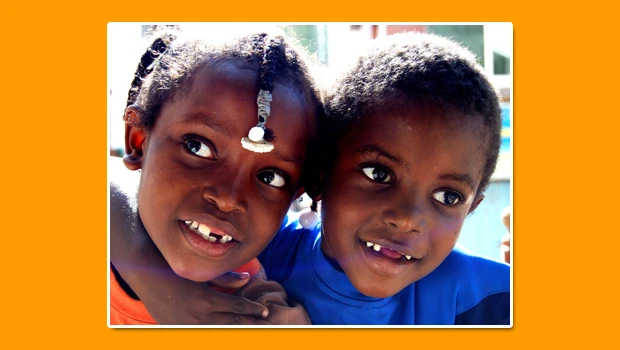
Her portrait photography has nothing less of an effect. In one portrait, she focuses on two children playing in the streets of Old Jeddah. It is a natural photograph of color, detail and contrast that simply portrays joy and sibling love.
Yareemi is an award-winning artist and a photographer who has been taking professional pictures and displaying them for six years. She used to paint using acrylic and watercolors and was the manager of the ladies section at Jeddah’s House of Artists. Due to asthma problems, however (which worsened from paint colors), she was forced to quit. Consequently, she put all her focus on photography — a passion of hers since a long time — and now teaches beginner photography workshops at the Saudi Arts Center.
“I’ve always loved taking pictures. I constantly carry a camera with me when I travel and when I’m at home to take pictures of my daughters,” says Yareemi. Her photographs are original as they depend on her use of lenses, filters and natural lighting (she only uses Adobe Photoshop for color contrast).
She has won numerous awards, both nationally and internationally with a continuous goal to portray “the culture and history of Saudi Arabia and to showcase the talents of Saudi Arabian women.”
She has a variety of pictures both in color and black and white of flowers, horses, landscapes, portraits and abstract. “Photographs have the power to replace words and send messages to the viewer. For example, photographs of flowers portray romance and love while landscapes expose culture and history,” she explains.
She has several close-up flower photographs that she took using a macro lens, and they are nothing less than exquisite. The colors are bright and the details so precise that she was capable of revealing the reflection of the flower in a drop of dew on the flower’s leaf. In “Six Flowers in My Life,” she was able to expose a flower’s reflection in six droplets of water — with the six flowers referring to her six daughters.
Her photograph of the Prophet’s Mosque is more like a painting than a photograph due to its crisp details. The dark blue sky is mesmerizing with its swirl of clouds, and a reflection of the mosque is evident on its shiny and colorful ceramic tile floor.
The reason why photography exhibitions are rare to find is due to a lack of sponsorship, appreciation and general education on photography in the Kingdom. Both Yareemi and Harasani agree that there is also a general “camera-phobia” in the Kingdom, especially when one brings out the big cameras.
“Halls are rare to find and if found, are so expensive,” explains Yareemi. “Moreover, the ones you find lack the correct lighting and other important elements.”
That is not very encouraging to photographers, especially when coupled with a lack of advertising for an exhibition such as this one. That is the reason why many local photographers have their exhibitions outside the Kingdom.
However, it is apparent that more and more people in Saudi Arabia are becoming increasingly interested in photography.
“Things have changed a lot in the past five years,” explains Harasani. “More people are coming to me to talk about my pictures.”
It is true when they say that a picture is worth a thousand words because both artists’ pictures depict beauty and evoke feelings of admiration from their audiences. Average selling price for both photographers’ pictures is SR 1,500 with frames ranging from wood, canvas and for the first time, ceramic tile.
and