
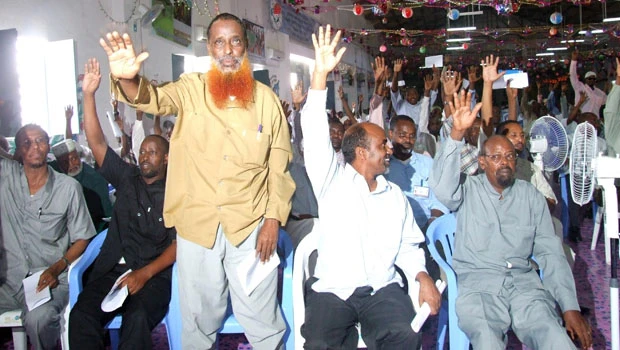
- MOGADISHU: Students stayed home from school and traders closed their shops Thursday after militants said they would attack a rare political gathering — a meeting of Somalia’s Parliament.
The militant Al-Shabab group even warned teachers nearby not to hold class. Parliament wound up canceling the session for the second time this week. Parliament speaker Sheikh Aden Mohamed Nur insisted it was not because of the threats but because the meeting hall “needed loudspeakers and some other adjustments.”
The legislature — 550 members hand-picked by their clans — has many more problems than missing audio equipment. Parliamentarians are fleeing Mogadishu, Somalia’s bleak, shattered capital, in droves and resettling in neighboring countries.
One former parliamentarian has even joined Al-Shabab while another quit last month, opting to be jobless. Parliament now has trouble forming a quorum.
“Apart from the title of a parliamentarian, they are nothing,” said Said Hassan Shire, the member who resigned. “I regret the useless years I was part of a failed parliament. I curse every day of those years.”
Like ordinary Somalis, parliamentarians face insecurity and a low standard of living. They have seen their stipend cut by two-thirds to $600 a month.
Pay for the parliamentarians is a sore point. Members say the United Nations Development Program for Somalia should be paying them, and that they have not received their full salaries for almost a year. Deputy speaker Mohamed Omar Dalha said the European Union pays parliament’s salary through the UNDP. But Marie Dimond, UNDP-Somalia’s deputy country director, said the money is a “support measure” for the government. “Salary payments are first and foremost a government responsibility,” she said.
When parliament does meet it passes laws — albeit ones that can be enforced only in the small area the government controls — and approves Cabinet appointments. Members last met in December.