- ALKHOBAR: A renewable energy expert who is visiting Saudi Arabia said the Kingdom’s solar power potential creates fabulous opportunities for investors and that calls for energy conservation need to be taken seriously across the Middle East.
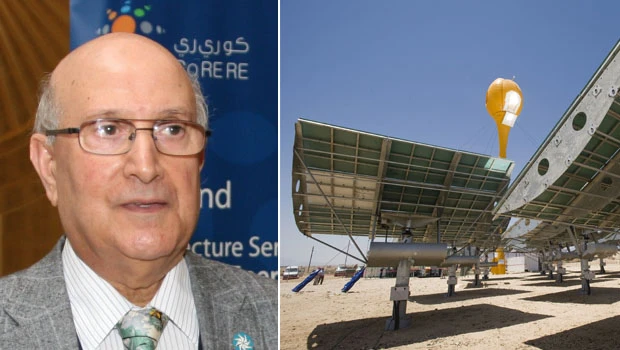
Professor Ali Sayigh, director general of the UK-based World Renewable Energy Network, was in the Kingdom to attend an event sponsored by the Center of Research Excellence in Renewable Energy at King Fahd University of Petroleum and Minerals.
Sayigh said the government was setting the right course for alternative energy sources with the creation of the King Abdullah Nuclear and Renewable Energy City.
“Now that the leadership has taken a step in the right direction, the private sector should follow by investing massively in this field,” Sayigh told Arab News. “There is plenty of money to be made because Saudi Arabia is rich in silicon which is a key ingredient in the production of solar cells and electronic stuff.”
According to information published by the Directorate of Mineral Resources, Saudi Arabia has large deposits of silica sandstone, silica dune sand, quartzite and vein quartz across the Kingdom, spanning from the Gulf to the Red Sea.
He said the country was just beginning to scratch the surface when it comes to solar power. “There have been not been great many solar-energy projects in Saudi Arabia — some small ones for desalination and street lighting,” Sayigh said.
“When you talk about a substantial project, it should be on the order of something like about SR100 million. There has not been a solar-energy project of that size.”
He said that is about to change. “A solar-powered desalination plant that is to be established in Al-Khafji will be the biggest of its kind. It will have a great impact and will eventually prove itself as a landmark project.”
He also noted the importance of measures to boost energy conservation. “Education is the key to conserving energy and other precious resources,” Sayigh said. “We should teach our people simple things such as turning off lights and computers at night.”
He said that thinking should extend to the region’s water resources, as well. “Water is a precious commodity. It is very, very expensive. It is more expensive than oil here. People should not waste their resources,” Sayigh said. “According to the Prophet Muhammad (peace be upon him), you should not waste water even if you are on the bank of a river. That is the statement of the Prophet. Why don’t we listen then?”
He said the amount of energy wasted in the region was shocking. “I know of people in the Gulf who come to the cooler climes of London to escape three months of harsh summer in this region,” he said. “They leave their places with their air-conditioning on for three months. Just so that when they come back their houses will remain cool. Yes, I repeat, they keep their ACs on for three months — such wastefulness. Isn't that crazy? I know this for sure because I got this from the man who is in charge of electricity in Qatar.”
Sayigh also said the media needs to get involved. “The media has to play a critical role. People in the media need to know where the electricity is coming from. How much of it is coming? Is it good for the environment?” he said. “All these questions need to be asked. We need to educate people.”