
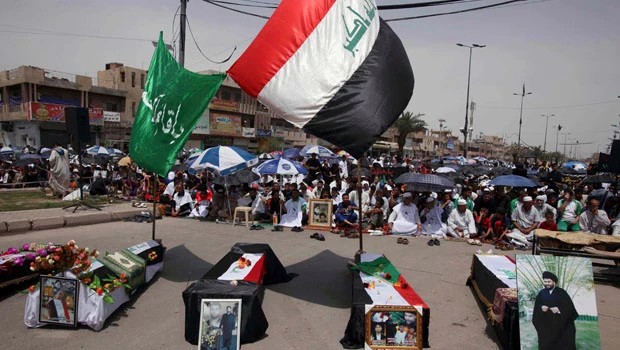
- BAGHDAD: The number of civilians killed by violence in Iraq rose sharply in April from the month before, a sign that insurgents may be trying to exploit political tensions after an election that produced no outright winner.
A total of 274 civilians were killed by bomb blasts or other attacks last month, compared with 216 in March and 211 in February, government figures showed on Saturday. April's toll was a far cry from the dark days of all-out sectarian war in 2006/07 but remained high.
The rise in deaths occurred as Shiite-led factions try to overturn a slim, two-seat lead which a cross-sectarian alliance heavily backed by Iraq's Sunni minority holds after the parliamentary election on March 7.
The Sunni-backed list, led by secular former Prime Minister Iyad Allawi, has warned that attempts to deprive it of a chance to form the next government could lead to more violence.
Sunnis dominated Iraq under Saddam Hussein and resentment at their loss of power after the 2003 US-led invasion helped to fuel the insurgency and sectarian fighting.
Prime Minister Nuri Al-Maliki's alliance successfully sought a recount of votes cast in Baghdad which is due to begin on Monday and could change the election result.
Other Shiite-led factions are leading attempts to disqualify candidates with alleged links to Saddam's outlawed Baath party. Most belong to Allawi's Iraqiya list.
The monthly casualty statistics, issued by the interior, defense and health ministries, showed that 39 police officers, 15 soldiers and 48 insurgents were killed in April. The number of police killed was sharply lower than in previous months.
Suspected insurgents staged a number of significant assaults last month, including a series of car bombs in Shiite areas of Baghdad that killed 56 people on April 23.
Coordinated bombings across the capital destroyed seven buildings and killed 35 people on April 6 while suicide car bombers targeting foreign embassies killed 41 two days earlier.
Around 100,000 civilians have died violent deaths in Iraq since the invasion, according to www.iraqbodycount.org.
Three US soldiers died from hostile fire in April, according to icasualties.org, the same number as the month before but up from one in February.
US forces are increasingly taking on a supporting role for their Iraqi counterparts as they prepare to end combat operations in August and withdraw completely by the end of 2011.