
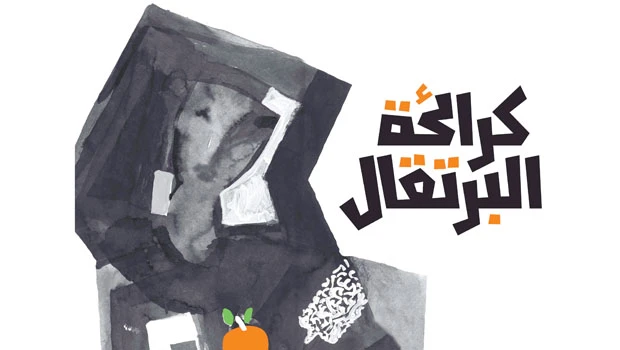
- Kingdom’s first women’s play highlights women’s devotion to Palestine
An hour of waiting last Thursday at Dar Al-Hekma College’s theater did not disappoint the packed audience waiting to experience the play: “Smells Like Orange.”
The play was surprisingly professional for a first women’s play and incorporated great lighting and excellent acting. Ticket prices ranged between SR100 and SR200, and attracted a full audience of various age groups from grandmothers to young children.
“Smells Like Orange,” which took one and a half years to produce, tells the story of Amal, a Palestinian-American mother, who comes from the US to sacrifice her life for her native land: Palestine. The symbol of an orange marks the emotional attachment to Palestine through strength, resistance and cleverness. Moreover, the scent of the orange trees help Palestinians keep going during the hard times.
Salwa Ba’arma, director of the play, said they have taken the permission to put this play in action from the Ministry of Information through the governorate, and that the permission took two months to be issued.
Asked why they have chosen the Palestinian issue and not a local concern she said: “Unfortunately, we have marked a low sense of belonging to the Palestinian issue when it comes to the creative works.”
“We opt through this play to remove the discrimination between the Saudi society and the Palestinian expatriate through collaborating to solve the privilege from the Saudi part and the reversed racism from the Palestinians,” states Ba’arma.
Since it was a play about Palestine, it was imperative that the actors speak in a Palestinian accent — the actors did a great job in that. Furthermore, the change of scenes was rapid and did not distract since the women behind-the-scenes were all dressed in black. Although it was entertaining to watch, it was a little too long — going over two hours in length.
The play through its tragic and comic scenes hooked the audience who sympathized at times, laughed in others, but clapped all the times. The audience who showed their support to the Palestinian issue even before the play starts were seen dressed up in the Palestinian traditional dresses, putting on Palestinian scarves decorated with the Palestinian flags and supportive phrases.
The team that go by the name, “Hekaya,” consist of 59 members (only 20 percent Saudi) and are the first team composed of professionals under the supervision of the World Assembly for Muslim Youth. The team played the role of Palestinian mothers, workers, students and bloggers. The absence of men was clear in the play, and was attributed to death, imprisonment or immigration.
“Smells Like Orange” highlights the challenges that Palestinians face because of the siege and the West Bank barrier, which blocked transportation and reduced food commodities arriving into the country. It also portrays several tragic scenes.
One scene speaks of a woman who desperately awaits approval to transfer her sick daughter to a hospital and only gets it a few minutes before her child dies. Another scene tells the story of a Palestinian girl who resists a project by the human aid organization to build mud houses for Palestinians since an Israeli human rights body offers the project. To release the tension the boss of the Palestinian organization invited the Israeli team to lunch and delayed the dissection to “some other time.”
Still another scene shows the clustering of Palestinian patients awaiting permission at the city of Rafah’s border crossing. The girls criticize the Arabic media by saying it repeats the same news over and over again, with some deceiving and not even accurate. Some comedic parts include a woman claiming she can read the newspaper upside down and still get what the reporters intend to say. The scene also mocks the Israeli soldiers who suspect a Palestinian girl and panic, but then find out the source of their fear is an empty water bottle.
“Smells like Orange” criticizes Palestinians who leave their land and those who claim electronic resistance by creating blogs that discuss the Palestinian issue. In one scene, for example, girls criticize people who commented on Amal’s blog after she wrote a political article.
Ba’arma who obtained a degree in filmmaking from the UK said they are looking forward to have their play hosted in other cities in the Kingdom. “Our experience is unique within the Kingdom, however it is still considered a primary try if compared to the international theater experience.”
“There is a huge gap in having the theater experts. Therefore we tried to bridge this gap through allocating a team for each department and training them accordingly and giving them some literature to read,” explains Ba’arma.
Ba’arma says the team aims at adding more Saudis, but Saudis were reluctant to participate. She also aims at expanding the scale of the audience by discussing moral and social issues in her future plays so that she could increase youth’s awareness and stress their role in the Muslim society.
To visit Hekaya go to: