
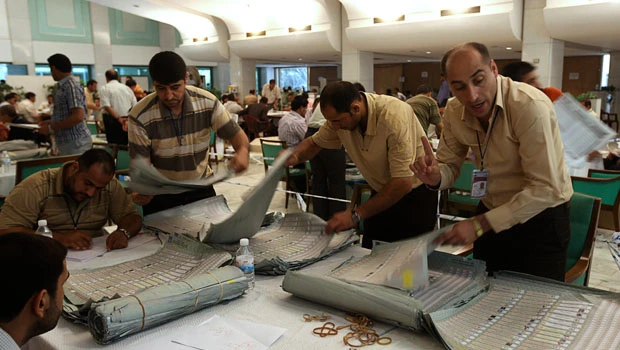
- BAGHDAD: A recount of 2.5 million votes cast in Baghdad in Iraq's March 7 election has been completed and no fraud was found, an Iraqi election official said on Friday, making it likely the final tally will not change.
Prime Minister Nuri Al-Maliki's predominantly Shiite electoral coalition demanded the recount, alleging fraud, after coming second in the parliamentary election, two seats behind a cross-sectarian bloc led by former Prime Minister Iyad Allawi.
A reversal in the results could have angered Allawi's Sunni backers, who see the secular Shiite politician as a champion of the influence they feel they lost with the 2003 fall of Sunni dictator Saddam Hussein and as a bulwark against Shiite Iran.
"There is no proof ... that there was fraud or manipulation or big mistakes," said Qassim Al-Aboudi, a spokesman for the Independent High Electoral Commission (IHEC).
The results of the recount, which began on May 3, will be made public on Monday, Aboudi said.
An IHEC official who asked not to be named said he did not think the recount would change the final result.
Allawi's Iraqiya coalition rode strong support from minority Sunnis to gain 91 parliamentary seats compared to 89 for Maliki's State of Law bloc.
State of Law has announced a tie-up with the Iran-friendly Iraqi National Alliance, the other main Shiite-led political grouping, which finished third with 70 seats. Together they would form the largest bloc in the next 325-seat parliament.
The time it is taking to certify the election results and start to form a government could make the country vulnerable to a slide back into the sectarian violence unleashed after the 2003 US-led invasion.
Dozens have died in attacks carried out since the ballot by suspected Sunni Islamist insurgents seeking to exploit the political vacuum and tensions between Sunnis and Shiites.