
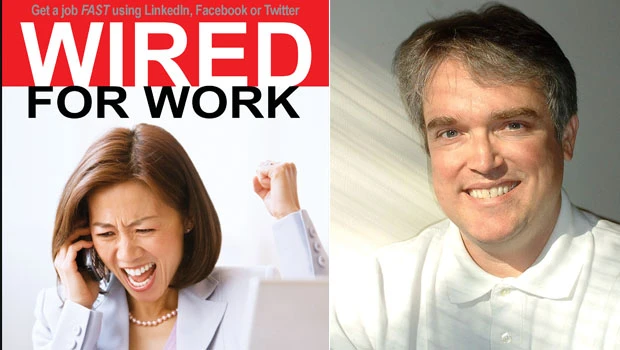
- While social networking has become enormously popular in Saudi Arabia over the past year, there are still plenty of people who have never set up an account at LinkedIn or Twitter.
- Even more folks don’t really know how to use social networking for anything other than sending casual messages to friends.
While searching for ways to encourage people to take advantage of the many opportunities social networking can bring, Arab News found Steve Weber’s “Wired for Work.” This book is available for free download through or purchase it from Amazon.com. “Wired for Work,” has a focus on helping people use social networking sites to land employment, but more than anything else, the book is a primer on how to exploit the power of social networking to make and maintain business connections. It is particularly useful for LinkedIn and Twitter, although some of its information in regards to Facebook’s functionality is dated due to never ending changes at this social networking website.
In an online conversation with Weber, Arab News asked for some tips on how people could best make use of social networking to advance their careers. Weber suggested that one of the first things people should do is to consider setting up separate business and personal accounts at social networking sites. He believes it’s best to keep work colleagues and business activities separate from family life. Weber noted that if people keep their business-oriented and personal accounts separate, an employer won’t have the impression that work time is being spent on personal communication if an individual is using social networking at the office to further business goals.
For Weber, it’s no contest as to which social networking site provides the best business value. He remarked that LinkedIn (www.linkedin.com) offers the most opportunities as a business resource — particularly for people with advanced degrees and several years of work experience.
“LinkedIn is tailored to professionals,” observed Weber. “Individuals looking for higher-level jobs, or for their next career advancement, should focus on creating a LinkedIn account and building their network there. After they’ve polished their LinkedIn account, as time permits, they can branch out onto Twitter and Facebook, to see if these venues are useful, and to drive new acquaintances to their LinkedIn account.”
Weber cautions that it’s important for people to remember that social networking sites are public forums. Just as it’s wise to politely avoid controversial topics such as politics and religion at dinner parties, users of social networking sites should consider following similar guidelines. It can be very difficult to keep online communications private and deciding early on how much to share is essential. It can also be tricky to decide which people to accept as connections or friends within a social network.
“This is undoubtedly one of the most common, delicate issues in online social networking. If you decline a request from an acquaintance or colleague, they can feel insulted, and this can damage your relations in the workplace. That is why it’s a good idea to erect certain boundaries between your personal and professional lives,” Weber noted. “You might, for example, have a personal policy of stating that your Facebook account is only for personal friendships. If many of your Facebook friends are family members and personal acquaintances, you don’t want to bombard them with work-related trivia.”
Even when people are careful about what they post online and are keeping tight control of privacy settings on their social networking accounts, there’s a good chance that some “friends” might not be as conservative. Recent trends in “tagging” or identifying photos at social networking sites can cause problems — especially if the photo or the tag are too revealing.
“Sometimes you’ve got to write to the people who have such photos on their accounts, and ask that the photos be deleted, or the offending tags be removed. If you explain that you’re concerned this will hurt your career chances, people are usually very understanding,” Weber advised. “In any event, this is why it’s a good idea to have a business-oriented or business-friendly account where you can control the content, and ensure that it is the first information that people notice in a Google search. But this is not something I would obsess about. Employers who screen candidates with a Google search are not usually looking for one little offense as a reason to eliminate a job candidate. They are looking for an indication of whether someone tends to demonstrate maturity and polite behavior, and that they’ll be an asset to the company, not a regular cause for embarrassment.”
Once people have accounts set up and they are posting to them regularly, Weber thinks it’s important to remember that “Details are good; Tedium is bad.” He explained that, “People who are following you want to know what drives your thinking — your inspirations and why you’re doing what you do. So even on a business-oriented account, you’ve got to share some personal information and experiences. However, when you get down to it, people mostly care about themselves. They want to know what’s in it for them. So try to post personal things with an eye towards helping provide useful information and solving problems for other people. Also, people like to express their opinions. Try to always make clear that you’re asking others to chime in with their own experiences.”