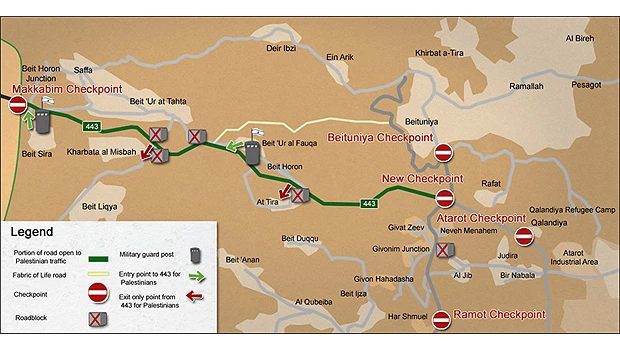
- RAMALLAH: This Friday (May 28), residents of the Palestinian villages along Road 443 will hold a motorcade on the day of the road's court-ordered opening.
The procession will be held in protest of the very limited access and use Palestinians will have to the road and the continued restrictions on the road’s use, according to the Popular Struggle Coordination Committee press release.
An Israeli Supreme Court ruling on the illegality of barring Palestinians from accessing Road 443 will take effect on Friday. According to the ruling, Road 443 should be opened to Palestinian movement, allowing villagers access to the road, which was built on their lands, for the first time in nearly a decade.
When Road 443 was built in the early 1980s, Israel assured the court that the road would be built to serve Palestinian and their own transporting needs in accessing Ramallah, and not to connect Israel to East Jerusalem through the West Bank.
The Israeli Army, however, only intends to partially open the road, subjecting Palestinians, using it, to lengthy searches at the checkpoints at every entrance to it. The army also does not intend to open the Beituniya or Qalandiya checkpoints rendering 443 a road to nowhere, as it will not provide easier access to Ramallah.
Rather than security, the main concern of Israeli officials over the opening of the road is one of transportation. Yishay Talor of the Ministry of Transportation said in a Jan. 11 meeting of the foreign affairs and defense committee of the Israeli Knesset, that the expected outcome of opening Road 443 to Palestinian cars will be increased traffic jams and a "complete collapse of Road 1" between Tel Aviv and Jerusalem.
There are currently 68km of road in the West Bank that is forbidden to Palestinians, not including Road 443. Additional 164km or roads in the Jordan Valley are severely restricted for Palestinian use.
The motorcade will depart from the center of village of Beit Sira (near the Maccabim checkpoint) and proceed to Ramallah through the Beituniya checkpoint, which is intended to remain closed for Palestinian movement.