
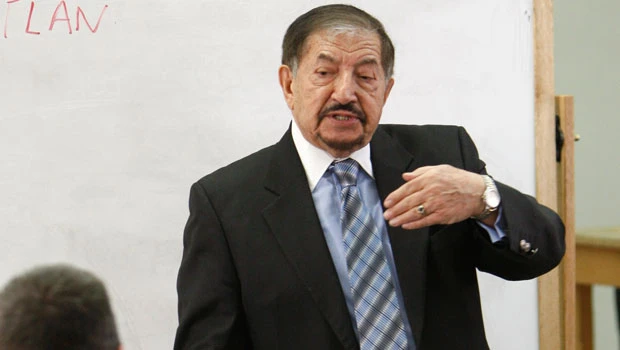
- DETROIT: Mohammed Al-Turaiki left his Saudi headdress behind in favor of a blazer and sweater as he made the rounds at one of the United States’ oldest addiction treatment centers in Detriot, Michigan in hope of finding answers to treating alcohol and drug addiction in the Kingdom.
Al-Turaiki, the chief executive of the Riyadh-based Saudi Care for Rehabilitation and Health Care, is trying to change the negative image of addiction by creating a network of treatment facilities in Saudi Arabia. He came to Brighton Hospital earlier this year to check out the facility and its treatment programs that have long included Detroit’s large Arab and Muslim population.
“When I made the rounds in the hospital, patients who saw me tossed out a few words in Arabic to see if I would respond,” Al-Turaiki said. “I felt at home.”
During his weeklong visit to Brighton earlier this year, Al-Turaiki learned about the 60-year-old hospital’s links with the broader community, including Arab-American social services groups that provide substance abuse counseling and one that developed one of the country’s first Arabic-English 12-step program.
“We will need to build an Islamically grounded 12-step culture and meetings to support patients post-discharge,” said Al-Turaiki, whose company plans to build a public-private 250-bed treatment hospital and referral center.
While at Brighton, he met with Alec Berry, an 82-year-old US-born Arab and Muslim who helped create the bilingual program. Berry, an alcoholic who has been sober for more than 40 years, is planning to go to Saudi Arabia later this year and develop post-treatment programs if Brighton and Saudi Care finalize their consulting agreement in the weeks ahead.
Brighton and Saudi officials speak regularly by phone and the proposed agreement calls for Brighton officials to visit the Kingdom and provide guidance on design, construction, management and clinical services.
The 12-step program at Brighton forms the core of the recovery program established by Alcoholics Anonymous, which isn't allied with any religion or sect. But Al-Turaiki and Berry say the program resonates with Muslims, since the third step speaks of turning one’s life “over to the care of God.”
“In the Arabic-Muslim community, because Islam forbids the use of alcohol, you can imagine how much more intense the denial system is going to be,” said Berry, a therapist.
Brighton tries to combat feelings by giving every patient a roommate, said Dr. Mark Menestrina, director of the detoxification unit. And during meetings with patients, Menestrina said he has had an Arab-American friend who has been sober for more than three years talk with patients in Arabic.
“It also helps to have identification with people similar to you,” he said. “They need to know they're not alone.”
Al-Turaiki knows of no statistics on the rates of addiction or relapse in Saudi Arabia, but said the odds of success “are at least twice as unfavorable as recorded in the best treatment centers in the US.”
“We know the gap is too wide between the needs of addicts for treatment and rehabilitation and the facilities and expertise to deliver it, because addiction is stigmatized and it is chronic,” he said.
He stressed that a strict prohibition on intoxicants shouldn’t keep a community or country from helping addicts.
“Islam encourages Muslims to find treatment for alcohol and drug addiction,” he said. “The Muslim community supports every effort that its brothers and sisters take to draw back the veil of intoxication.”