
- HONG KONG: Hong Kong authorities refused entry on Wednesday to a sculptor whose work — a large statue dedicated to the victims of the 1989 Tiananmen Square crackdown — had been seized in the Chinese territory four days earlier, an opposition legislator said.
Chen Weiming was deported early Wednesday after arriving on a flight from Los Angeles late Tuesday, said opposition lawmaker James To, who met with Chen at the airport. The US-based New Zealand national wanted to inspect his statue for possible damage.
The deportation came after Hong Kong police seized Chen's “Democracy” statue and his large carving depicting the June 1989 suppression of student protesters from a sidewalk on Saturday and arrested 13 activists protecting the two works of art. The activists were freed on bail later Saturday and police returned the two pieces on Tuesday.
“We are very annoyed. Why is Hong Kong denying him entry for political reasons? He is a very humble sculptor,” To told The Associated Press in a phone interview.
Hong Kong's Immigration Department said it won't comment on individual cases.
Holly Warren, a spokeswoman for the New Zealand Consulate-General in Hong Kong, said she didn't have immediate comment.
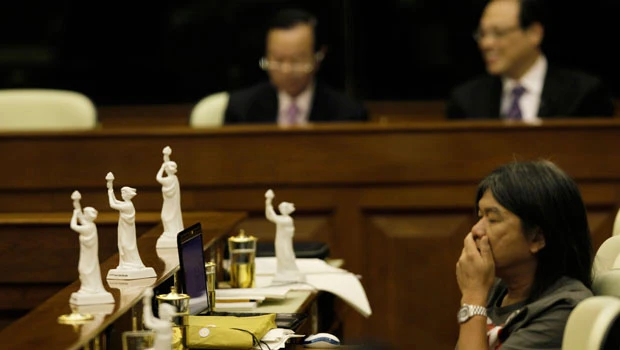
On Wednesday, Hong Kong's pro-democracy legislators displayed miniature versions of the statue on their desks as they proposed a motion urging Beijing to exonerate the 1989 student protesters, whom China still considers “counterrevolutionary» rioters.
The motion was defeated, blocked by pro-Beijing legislators who control the chamber.
Opposition legislator Albert Ho accused the Chinese government of trying to water down memories of its brutal crackdown.
“How can it succeed? The history of the Tiananmen incident is deeply seared in the hearts of the Chinese people. The people will not forget,” Ho said. Chen's 21-foot (6.4-meter) tall “democracy” statue, which features a woman holding a torch, is based on a similar one that was displayed on Tiananmen Square during the 1989 protests. The original was toppled by tanks during the military eviction.
The recent actions by the Hong Kong government are alarming to local activists because they are wary of losing the right to stage the only open commemorative activities for the Tiananmen crackdown on Chinese soil. While the incident is still taboo on the mainland, former British colony Hong Kong is promised freedom of speech as part of its special political status under Chinese rule.
Meanwhile, families of those killed in the crushing of the 1989 protests demanded China end its silence and open a dialogue on the bloodshed.
In an annual open letter, 128 members of the Tiananmen Mothers castigated the Communist Party government for ignoring its calls for openness on the crackdown that occurred June 3-4, 1989 and vowed never to give up their fight.
"The Chinese communist authorities should have heard our voices, and yet there has been no answer," the letter said, citing repeated requests for dialogue and an inquiry into the massacre.
"Can it be that you really want to wear us all down or wait for our deaths so that the problem will naturally disappear?" said the letter, distributed by the New York-based group Human Rights in China.
The group issues a similar call each year as the anniversary approaches but is annually rebuffed by the government, which claims the matter has already been laid to rest.
Hundreds, if not thousands, of people were killed in central Beijing on the night of June 3-4, 1989, when the military violently crushed six weeks of democracy protests on Tiananmen Square.
An official verdict after the protests called them a "counter-revolutionary rebellion."