
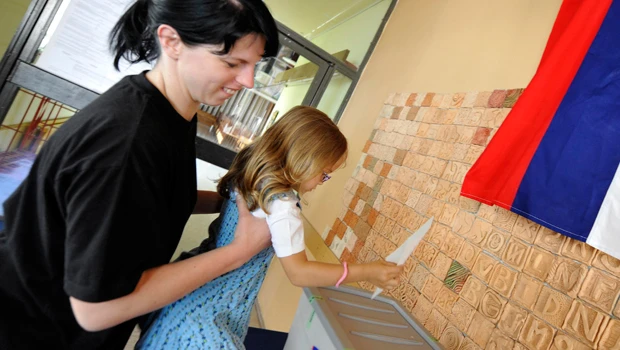
- LJUBLJANA, Slovenia: Slovenians are deciding in a referendum Sunday whether to support the government's deal with neighbor Croatia to let international negotiators solve their 19-year-old Adriatic border dispute.
The 12-hour vote is being seen as a test of Prime Minister Borut Pahor's popularity. A "no" result would annul the deal brokered by Pahor and further shake his leftist government — already unpopular amid the financial crisis.
Some have speculated a rejection of the deal could lead to Pahor stepping down.
The outcome is unpredictable, with one in three respondents of several different surveys saying they were undecided before the vote. The surveys also have differed over whether supporters or opponents of the deal are in the majority.
Pahor said the deal represents a "small window of historic opportunity" to resolve the long-running dispute.
He also said a rejection of the pact would make EU-member Slovenia look like a troublemaker in the eyes of the West, hurting its international image.
But his opponents — opposition parties, several prominent experts and even the influential Roman Catholic church — have accused him of committing de facto treason by inviting arbitration that could end with Slovenia's territorial claims being dismissed altogether.
At the heart of the dispute is the Adriadic border line left unmarked after the two countries seceded from Yugoslavia in 1991 and became independent states. They also both claim four border villages.
Slovenia — with less than 25 km of Adriatic coastline between the Italian and Croatian borders — insists its waters should be wide enough to reach open seas; Croatia claims Slovenian waters end far from the open seas, but it's ready to give it free transit through its part of the Adriatic.
The tensions culminated when Slovenia blocked Croatia's bid to join the European Union in 2008: The leaders exchanged insults, and a Croat tried to assassinate Pahor.
The EU became irritated with the row in its backyard.
In October, Pahor and Croatian counterpart Jadranka Kosor agreed to seek international arbitration, and Slovenia unblocked Croatia's EU negotiations.
The EU and Washington welcomed the deal, and both parliaments ratified it. But Pahor decided to put it to a referendum as well.
He warned the population that rejecting the deal would spark new hostilities with Croatia — a trade partner and a favorite vacation destination for Slovenes.
Opposition leader Janez Jansa has called on voters to be "bigger patriots than their leaders" and reject the pact, which he argued would not give Slovenia access to open seas. Philosopher Tine Hribar claimed the deal meant "collaboration with occupying force," as Croatia now controls disputed waters and villages.