
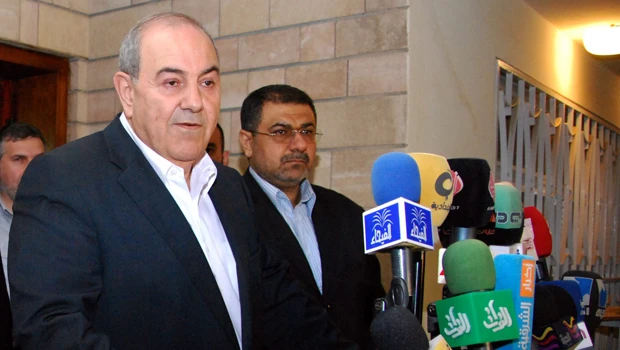
- BAGHDAD: President Jalal Talabani on Tuesday called the first session of Iraq's new Parliament for June 14, more than three months after an inconclusive election that has yet to yield a government.
Political uncertainty since the March 7 vote has led to a rise in violence and threatens to overshadow the latest phase of US military withdrawal.
The election was won by the cross-sectarian Iraqiya alliance of former Prime Minister Iyad Allawi, with the heavy backing of Iraq's once-dominant Sunni minority.
But Iraqiya fell short of a majority, forcing tense negotiations between fractious Sunni, Shiite and Kurdish blocs.
Allawi is being challenged for the right to form the government by the two main Shiite groups of incumbent Prime Minister Nuri Al-Maliki and firebrand cleric Moqtada Al-Sadr, who say they will join forces to become the largest bloc in Parliament.
A spokesman for Maliki's Dawa Party, the lead party in the State of Law alliance that polled second in the election, said party committees from the two blocs were working together to secure a majority.
Together, State of Law and the third-placed Iraqi National Alliance grouped around Iranian-backed Sadr, would still fall four seats short of a majority in the 325-seat Parliament.
The two are squabbling over who should be prime minister, with Maliki resisting pressure from the INA to step aside.
"We will be presented in the first session of the Parliament as a single bloc," Dawa Party spokesman Haider Al-Abadi told Reuters.
Allawi has warned that Iraq risks sliding back into sectarian violence if his Sunni-backed bloc is left out of power.
It could yet take months to form a government. The United States says it will stick to a plan regardless to cut troop numbers from just under 90,000 to 50,000 by Sept. 1.
"There is a risk of a prolonged political crisis which could have serious effects on political stability and on the security environment," Gala Riani of IHS Global Insight said, but added:
"In spite of all the horse-trading that is going on, there appears also to be an agreement that it is to no group's benefit at this point — aside from the existing Sunni insurgency — to let matters get out of hand."
The Supreme Court certified the results of the election on June 1 after a recount and appeals process that changed nothing.
Insurgents appear to be exploiting the power vacuum.
Overall violence in Iraq has dropped sharply since the worst days of sectarian bloodshed in 2006-07, but April and May saw a spike in civilian casualties compared with the first three months of the year.
There are daily incidents of shootings and bombings, often targeting Iraqi security forces and Sunni ex-insurgents known as Sahwa or 'Sons of Iraq', who switched sides to fight Al-Qaeda and helped turn the tide of the war.
Iraqi political analyst Ibrahim Al-Sumaidaie said coalition talks depended on pressure from regional powers — Iran, Saudi Arabia, Turkey and Syria — the conflict between the main political blocs and the backing of the United States.
"The constitutional time limit is two to three months, so they have time," he said.