- DIYARBAKIR, Turkey: Turkish troops and Kurdish militants clashed in southeast Turkey on Saturday in an escalation of violence which killed 10 soldiers and 12 rebels.
The battle at Semdinli in Hakkari province, near the border with Iraq, rekindled the conflict in the region and prompted the armed forces to hit Kurdistan Workers Party (PKK) targets inside northern Iraq.
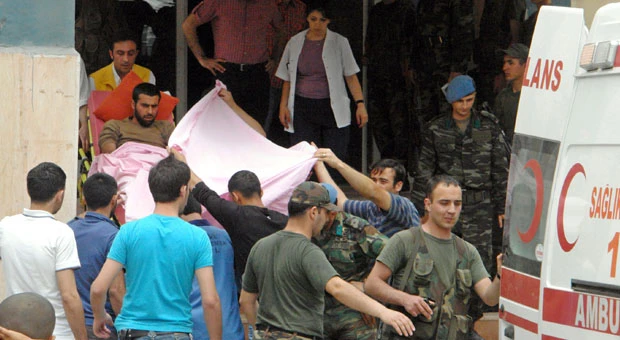
The PKK militants touched off the fighting with an attack on an army border unit at about 2 a.m. and 14 soldiers were wounded, the General Staff said in a statement on its website. The wounded have been transferred to hospitals.
"Reinforcements were sent to the region and throughout the night support was provided to the conflict zone by attack helicopters and artillery. Separately, the Air Force struck targets identified in the northern region of Iraq," it said.
PKK spokesman Ahmed Denis said in the Iraqi Kurdistan regional capital of Irbil: "Turkish warplanes have started to attack the Khwakorek district inside Iraqi territory." He said he had no information on the number of casualties.
Eight soldiers were killed in the attack on the military base and two more soldiers died when they trod on a land mine in Hakkari.
"Our fight will continue until the terrorist organization has been annihilated," said Prime Minister Recep Tayyip Erdogan.
Far-right MHP party leader Devlet Bahceli said Erdogan was the architect of the current situation. He called for a meeting on Monday of the National Security Council and the reintroduction of a state of emergency in southeast Turkey, which ended in 2002, when Erdogan's AK Party came to power.
The military warned Friday the PKK might intensify its operations over the summer, when warmer weather brings increased infiltration of PKK guerrillas from the mountains of northern Iraq. Several thousand rebels are based there.
The military announced Friday that at least 130 members of the PKK had been killed inside Turkey and in an air raid on rebel hide-outs in Iraq since violence flared anew in March. The military had lost 43 personnel.
The PKK branded terrorists by Turkey, the United States and the European Union, said this month they had scrapped a year-old unilateral cease-fire and resumed attacks against Turkish forces because of military operations against them.
The cease-fire had come as Erdogan's government worked on plans to boost Kurdish rights to help end the conflict. However, the process has faltered and it suffered a setback in December when the Constitutional Court banned the pro-Kurdish Democratic Society Party (DTP) on charges of links to the PKK.
More than 40,000 people have been killed in the conflict since the PKK launched its insurgency in 1984 with the aim of creating an ethnic homeland in the country's southeast.
The rebels say they now want greater rights and autonomy for Turkey's estimated 12-15 million Kurds.