
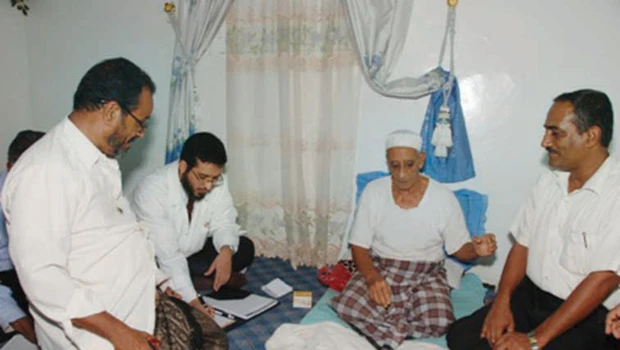
- MUKALLA: A group of Saudi and Yemeni doctors are fighting an unprecedented wave of dengue fever along the coastal areas of Hadramout.
The Yemeni Health Ministry has recorded more than 900 suspected cases, out of which around two thirds have tested positive.
A Yemeni medical team was formed from local doctors and technicians to receive the Saudi delegation, which arrived in Mukalla on Tuesday, and arrange their field visit to the infected areas.
Dr. Al-Abed Bamousa, head of the Yemeni Health Ministry’s provincial office, praised the Saudi medical specialists.
“They devoted their time in fighting dengue fever in Yemen. The Saudis will assess the spread of the disease in Hadramout and train local medics on the World Health Organization’s therapeutic strategy for treating dengue fever.”
Sponsored by local NGO Al-Awn Foundation for Development and the local governorate, the team met local officials and specialists and toured hospitals.
They examined patients, breeding grounds for mosquitoes, insecticides and pesticides used to fight them and visited veterinary clinics, slaughterhouses and livestock markets.
As part of their visit, they delivered a lecture on dengue fever and ways to stop the disease from spreading. The local Mukalla radio station also hosted them on a live program.
The Saudi specialists enlightened listeners on the symptoms of the disease and what could be done to avoid catching it.
Doctors also took samples from affected areas. Some of them will be tested in the Kingdom due to the lack of advanced laboratory equipment there.
Hadramout Gov. Salem Ahmed Al-Khanbshi expressed the local authority’s readiness to support the Saudi medical team so it could carry out its task easily. He also urged local doctors to benefit from the Saudi team’s expertise. He thanked the health office and Al-Awn Foundation for their efforts in fighting dengue fever.
The head of the Saudi team, Dr. Hussein Albar, told Arab News that they came to Hadramout to assess the extent of dengue infection in the coastal areas of the province.
“We are here to exchange know-how and help Yemeni officials benefit from our experience in fighting the disease in the Kingdom,” Albar said.
“Jeddah had experienced a similar outbreak of dengue fever in 2003, claiming many lives. The Kingdom succeeded in controlling the epidemic and we bring our accumulated experience to Yemen to help them nip the disease in the bud.”
The visit also has the goal of examining Yemen’s general health plans as well as launching a public awareness campaign about dengue fever.
Albar said his team has identified many shortcomings in the handling of the outbreak.
“A diagnostic machine that can trace the virus in the blood from the first day of infection is not available in Hadramout. Doctors depend on the count of antibodies in the blood, which appear only after seven days from infection.”
Yemeni authorities have promised to provide the advanced machine and ask the Saudi doctors to train local medical professionals on its usage.
The Saudi team consists of members from the Mohammed Hussein Al-Amoudi Chair of Viral Hemorrhagic Fever at King Abdulaziz University.
Besides Albar, a public health specialist, the team comprises Dr. Tariq Ahmed Madani, professor of internal medicine and infectious diseases, and Dr. Altayeb Ibrahim, head of the chair and a professor of arbovirology veterinary medicine. A number of medical technicians are also part of the team.