
- James A.
- Dwyer, Jr.
And that number is growing. If the improvement in the global economy were as strong as mobile phone demand, good times would certainly be here again. Unfortunately for some companies who previously dominated the industry, tastes in mobile devices have evolved and the industry is fragmenting. This creates challenges as margins become ever thinner, consumers demand more from any device and it’s tougher to predict which handsets will be winners.
According to the International Data Corporation (IDC) Worldwide Quarterly Mobile Phone Tracker, mobile phone vendors shipped a total of 317.5 million units during 2Q10, up 14.5 percent from the 277.2 million units shipped during the second quarter of 2009. The top five vendors in order were Nokia, Samsung, LG Electronics, Research In Motion (RIM) and Sony Ericsson. Nokia’s total shipments exceeded those of the next two vendors combined. RIM with its BlackBerry devices posted the highest year-over-year gain. In an industry changing trend, IDC found that handset vendors outside the top five had shipped 89.8 million handsets and now hold 28.3 percent of the global market. Only Nokia with its 35 percent market share is individually stronger.
Ramon Llamas, senior research analyst with IDC’s Mobile Devices Technology and Trends team stated that “companies with a strict focus on the smartphone market, like RIM, Apple, and HTC have clearly benefited from steadily increasing user interest.” However, he cautioned that “to dismiss the worldwide leaders would be a mistake. Each currently enjoys broad distribution, a deep portfolio, and brand recognition. Moreover, each is in the midst of refreshing its respective product portfolio, with greater emphasis on smartphones during the second half of this year.”
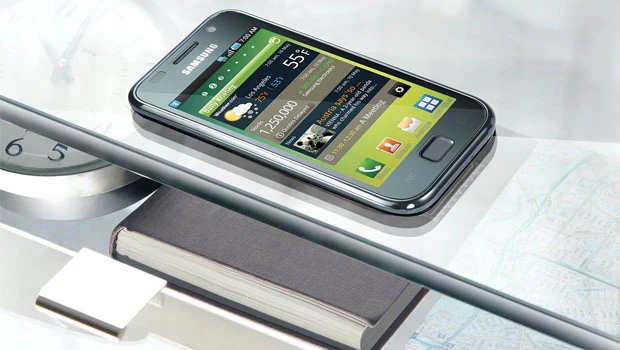
IDC found that consistent growth has returned to the CEMA handset market, buoyed by continued mobile subscriber growth in the Middle East and Africa. Smartphones saw expansion in the region after the retrenchment of 2009 during the financial crisis, buoyed by price cuts to Nokia models and the introduction of cheaper smartphone models. Among traditional mobile phones, Nokia faced more competition as Samsung took market share away. Analysts anticipate that Samsung will improve its position over the rest of the year. The company has sold one million Galaxy S units worldwide just three weeks from launch — a record for Samsung. In the Middle East, the first shipment of the Galaxy S phones sold out rapidly and the company expects a similar response to the next batch due later this month. Samsung’s target is to sell 10 million Galaxy S class handsets worldwide.
Strategy Analytics noted that Apple shipped 8.4 million iPhones worldwide in Q2 2010, up 61 percent from 5.2 million units in Q2 2009. Its global market share has edged up from two percent in Q2 2009 to almost three percent in Q2 2010. The research firm pointed out though that Apple had a mixed second quarter of 2010, as criticism about its products and production methods mounted.
Despite Apple’s problems and a global market share of just three percent, it continues to lead in application (app) downloads. ABI Research predicts that mobile app downloads from iOS and Android will account for 78 percent of all application downloads in 2010, with iOS (the iPhone’s operating system) taking the lion’s share of 52 percent of all applications. The numbers are driven by availability, variety and novelty in both the Android market and the iTunes App Store, which is currently unmatched by other smartphone platforms. In addition, the sale of Android phones has taken off in 2010, with over 160,000 activations being reported daily.
“The iTunes App Store’s days of being the only game in town are over, although the store will continue to be the biggest player in the market,” remarked ABI’s wireless research analyst Bhavya Khanna. “Downloads from other platforms, such as Blackberry’s App Store and Nokia’s Ovi Store remain sluggish, hampered by a lack of variety and fragmentation among both manufacturers’ many devices.” ABI forecasts that revenues from mobile app sales will continue their decline, as high competition leads to a “race to the bottom.” Full-featured games are available from between $.99 and $5, and many popular applications are adopting ad-supported models. Application store owners will continue to support low-priced and free applications because they help market and sell their devices. Making money will become a difficult proposition in a market that is expected to peak in 2011, with annual sales of just under $8 billion.
App store revenue will peak due to a drop in app price, not because of a decline in demand. According to IDC, the worldwide smartphone market grew 50 percent year over year in the second quarter of 2010 (2Q10). Of IDC’s 2Q10 smartphone Top 10 vendor rankings, four of the top ten vendors, all of whom predominantly ship Android-powered smartphones, posted year-over-year growth rates greater than 100 percent. However, it must be mentioned that despite its difficulties, Nokia remained the clear number one smartphone vendor worldwide.
“The worldwide smartphone market will continue this explosive growth in the second half of 2010, setting up a critical starting point for 2011,” advised Llamas. “That more smartphone models will be launched is a given, but just as important is the anticipated launch of several refreshed operating systems. Both BlackBerry and Symbian^3 are poised with fresh, yet familiar experiences, while Windows Phone 7 promises a complete break from previous versions. All these are expected to launch in the second half of 2010, and their reception among end-users will indicate their future in this fast-growing segment of the market for 2011 and beyond.”