
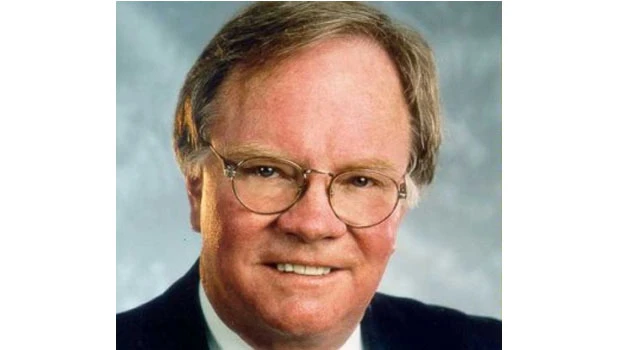
- Peak oil guru Matthew Simmons is dead.
- Considered a maverick in the close-knit world of energy finance and idolized by many, Simmons did more than anyone else to bring to widespread public attention the obscure theory of "peak oil."
Demand for energy has become a "runaway train that cannot be easily slowed or reversed," Simmons said in May at the Offshore Technology Conference in Houston. "We are in the early stages of a global train wreck when demand outstrips supply and shortages begin," he underlined.
Simmons was controversial — at the least — yet he enjoyed a global following. When he spoke, the world listened. "Single-handedly Matt set out on a crusade not to change the world but to wake us all up," said Lad Handelman, a colleague and friend.
"In the history of the petroleum era, Matt Simmons will be remembered for calling attention to 'peak oil'," T. Boone Pickens, another peak oil proponent said in a statement. "You had to admire his advocacy and his ability to focus on the need to better prepare for a new energy future."
Simmons was an ardent torchbearer of peak oil, a theory of waning world oil supply that dates back decades. The term "peak oil" was originally coined in the 1950s by M. King Hubbert, who predicted US oil production would peak in 1970 and decline at the same rate it rose. He was right about the peak date for US supply. But Hubbert's prediction about the rate of decline was off, and his prediction that global oil production would peak around 2000 proved wrong.
Simmons, the investment banker, won acclaim and a worldwide following among peak-oil theorists, after his 2005 book, "Twilight in the Desert: The Coming Saudi Oil Shock and the World Economy." In it he argued that the Kingdom had inflated its oil reserves and that production from the giant Ghawar oil field, cornerstone of Saudi Arabia's oil production, would soon peak - if it hadn't already.
Put into production in 1951, Ghawar remains the greatest treasure of hydrocarbons ever found. Measuring about 20 miles wide and 175 miles long, Ghawar spits out as much oil every day as all the oil wells in the US combined. Its output accounts for around 60 percent of total Saudi production.
Simmons was inspired to compile the book after visiting Saudi Arabia in 2003. After poring through tons of engineering data, generated by Saudi geologists, he argued that Saudi Arabia's giant oil fields were reaching the end of their greatest productivity and that the Kingdom wasn't likely to find new sources to replace depleting ones. A 2008 article in Fortune magazine quoted Simmons as saying, "I find it ironic that here we have the biggest industry on earth, and I'm one of the few people to figure out that we have a major problem."
Many still questioned his credentials. He was basically an investment banker, they insisted - who broke into what was basically a very technical domain.
This continued to haunt Simmons until the end. During the recent Gulf of Mexico spill episode too, Simmons was off the mark. He deeply criticized BP's handling of the disaster, and predicted the company would soon file for bankruptcy. This turned out to be completely wrong. He also ended up on the receiving end for stating that the oil spill could only be stopped using a nuclear device and that the disaster would end up requiring the entire Gulf Coast to be evacuated. Those dire predictions did not come true. How ironic that on the day Simmons' death was reported, BP also announced it had finally permanently capped the leaking Gulf well.
The counter argument to imminent peak oil supported by organizations including IHS-Cambridge Energy Research Associates is that improving technologies will make it possible for companies to find more oil and get more out of existing fields - for many more decades to come. There seems to be a growing consensus now that there is plenty of oil beneath the surface. The problem is on the surface and not beneath it, many now argue.
Energy consultant Michael Lynch, the former director for Asian energy and security at the Center for International Studies at the Massachusetts Institute of Technology, questions the peak oil view. "Like many Malthusian beliefs, the peak oil theory has been promoted by a motivated group of scientists and laymen who base their conclusions on poor analyses of data and misinterpretations of technical material."
Then he continued: "One leading proponent of peak oil, the writer Paul Roberts, recently expressed shock to discover that the liquid coming out of the Ghawar Field in Saudi Arabia, the world's largest known deposit, is around 35 percent water and rising. But this is hardly a concern - the buildup is caused by the Saudis pumping seawater into the field to keep pressure up and make extraction easier. The global average for water in oil field yields is estimated to be as high as 75 percent.
"Another critic, a prominent consultant Matthew Simmons," he underlined, "has raised concerns over oil engineers using 'fuzzy logic' to estimate reservoir holdings."
Analysts at Sanford C. Bernstein Ltd. combing through dozens of high-resolution satellite images of Ghawar going back to 2001, concluded in a study sent to clients at the end of April that only part of the vast field "is suffering signs of old age." On the whole, putting Simmons' peak oil theory in the dustbin, they said, the field "is being properly managed" and is experiencing only "mild production-decline rates at worst."
The satellite work also used overhead radar technology to determine whether the field showed any signs of surface collapse - called "subsidence" - that could indicate heavy depletion rates underground. Instead, the radar found the northernmost part of the field, known as Shedgum, "was actually slightly uplifted."
The group attributed this rise to heavy water injection and what it surmised was Aramco's use of enhanced oil-recovery techniques, which boosted underground pressure enough to lift the ground level.
Bernstein concluded that Shedgum, one of the oldest sections of Ghawar, was the only area facing serious challenges.
Simmons is dead - yet his legacy will continue to haunt the energy world for some time to come. Despite disagreeing on many counts, let's concede, he was a free thinker, a man of conviction, who introduced new vocabulary to the energy fraternity.
The energy world will definitely miss you Matt!