
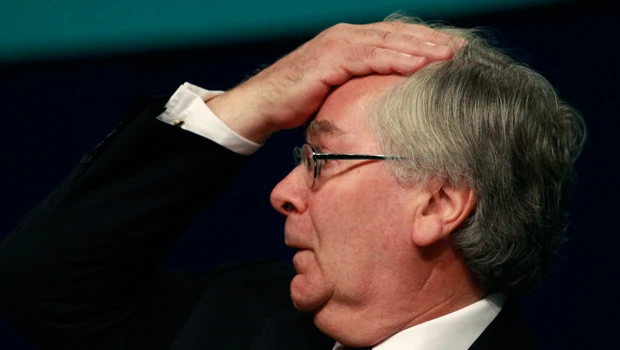
- LONDON: Bank of England Governor Mervyn King told a gathering of Britain's main unions on Wednesday that workers impacted by the global credit crisis had every right to be angry because the financial sector — himself included — had let them down.
King, who was only the second Bank of England governor to speak to the Trades Union Congress, noted that while the crisis was caused by the financial sector the fallout is universal.
"Before the crisis, steady growth with low inflation and high employment was in our grasp," King said. "We let it slip — we, that is, in the financial sector and as policymakers — not your members nor the many businesses and organizations around the country which employ them.
"And although the causes of the crisis may have been rooted in the financial sector, the consequences are affecting everyone, and will continue to do so for years to come." King said the union members and the businesses which employ them "are entitled to be angry." His appearance at the congress in the northern city of Manchester was not universally welcomed by the delegates.
Bob Crow, the general secretary of the Rail Maritime and Transport Union, and his members walked out of the speech.
"Delegates want to hear from the people suffering from this economic crisis, not waste time being lectured by the people who created it," Crow said.
Official statistics, meanwhile, showed Britain's unemployment rate fell by 0.1 percentage point to 7.8 percent in the three months to July, with more than 250,000 people joining the work force. Total unemployment fell by 8,000 people between May and July to 2.47 million.
The statistics office said 286,000 more people had jobs than in the previous quarter, bringing the number of workers in Britain to 29.16 million.
The labor market figures weren't all good news, though.
The improvement was driven largely by part-time jobs, which accounted for about 60 percent of the new jobs.
Meanwhile, a separate measure of unemployment actually increased during August. The statistics office said the number of people claiming the jobseeker's allowance rose by 2,300 in August to 1.47 million.
That was the first increase since January and may stoke fears that the economic recovery in Britain is running out of steam.
"There is some good news, but those figures that look most clearly at what is now happening are more disappointing," said TUC general secretary Brendan Barber.
"What is clear is that the economy is still extremely fragile. With more than one in six young people without work, the best the government can expect is a largely jobless recovery. At worst the economy could go into reverse." Nigel Meager, the Director of the Institute for Employment Studies, said the numbers, while generally strong, were still cause for concern.
"The rise in claimant unemployment in August, although modest, is an unwelcome reminder of how fragile the labor market remains," he said. "And, as the most up-to-date indicator of what is happening, it suggests a weakening picture."