
- While Saudi Arabia is engaged in developing and expanding its religious sites and facilities for Haj and Umrah pilgrims, it continues to pay equal attention to promoting tourism.
One of the latest moves is to build high-tech airports and considerably upgrade existing ones across the Kingdom. The General Authority of Civil Aviation (GACA), which has decided to spend between $10 billion and $20 billion on developing and upgrading airports by 2020, has unveiled its plans to establish two new airports in Taif and Jazan with advanced facilities, in addition to its efforts to expand some of the existing domestic and international airports. It is giving top priority to the expansion of King Abdulaziz Airport in Jeddah.
The new airport in Jazan, to be named after Custodian of the Two Holy Mosques King Abdullah, will be located 30 km from the new Jazan Economic City and will have capacity to handle three million passengers a year. The new Taif regional airport will be located 30 km northeast of the resort city, 70 km from Makkah and 160 km from Jeddah. In addition to serving millions of pilgrims who visit the Kingdom annually, the new airport is designed to reduce the pressure on King Abdulaziz International Airport in Jeddah, the main gateway of pilgrims, and play a big role in developing tourism in the province. Taif airport currently receives pilgrims from GCC countries.
The Saudi Commission for Tourism and Antiquities (SCTA), which is dedicated to promoting tourism on a large scale, has drawn up new plans to establish a fund to finance tourist projects within its strategy to attract $50 billion in investments. According to SCTA Chairman Prince Sultan bin Salman, the tourist projects will focus on family tourism, medical treatment, shopping and sports tourism to keep pace with the current world trend. The Kingdom is looking at tourism as a viable economic project that can attract investments and provide more job opportunities and national cadres.
All regional and local museums across the Kingdom remained open for visitors from this year’s Eid Al-Fitr holiday until the Saudi National Day. These include the Kingdom’s 20 museums, in addition to the National Museum and Al-Masmak Palace in Riyadh, with guides available at every museum to explain the exhibits to visitors.
The SCTA is encouraging people to visit the museums and the tourist and historic locations to enable them gain a first-hand knowledge of the Kingdom’s heritage and culture. The regional museums are in Makkah, Madinah, Taif, Jeddah, Baha, Dammam, Hail and Al-Nammas, while the local museums are in Jazan, Najran, Al-Ula, Tima, Al-Jouf, Al-Ahsa, Shaqra, Onaiza, Al-Majmaa and Al-Dawadmi.
The economic return from tourism can be very huge and provide work opportunities that cannot be matched by other sectors. It is in this context that SCTA and other concerned authorities are currently busy implementing the decisions that will open the door for investment in the Kingdom’s huge tourist potentials.
About 1.14 million people were either directly or indirectly employed in the sector of tourism during 2009. The rate of Saudization of jobs in the sector has gone up from 10 percent to 26 percent during the year. “In fact, tourism can generate more job opportunities than any other sector,” Prince Sultan says.
There is a big jump in the antiquities and museums sector in the Kingdom, especially in the area of explorations and excavations made by scientific teams from international universities and Saudi researchers. The SCTA has started the establishment of five new museums in Dammam, Abha, Hail, Tabuk and Baha. The commission is also finalizing studies to rehabilitate and develop six museums in Dawmat Al-Jandl, Tima, Al Ola, Hofuf, Sabia and Najran.
In Tabuk alone, the SCTA has started the implementation of eight projects to develop tourist sites. These support other projects implemented by municipalities, investors, and businessmen in the province. These projects include the Corniche, walkways along Um-Ghanam Beach, as well as restoration works in a number of tourist sites and facilities throughout the municipality. These projects are expected to make a significant impact on promoting tourism in the Tabuk province, which is endowed with rich tourism potential and is capable of attracting visitors to its beaches and heritage sites throughout the year.
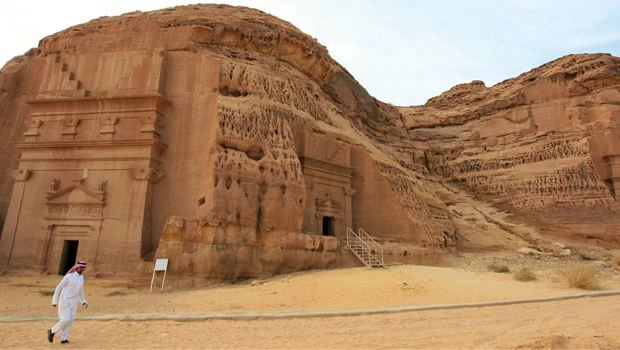
Of course, Madain Saleh remains one of the most popular tourist sites. It is an archeological site located in the Al Ola sector in the Madinah region. Jeddah, with its long beach, attractive monuments along the Corniche and Red Sea water sports, is yet another favorite destination for visitors, both domestic and overseas.
Yanbu Industrial City is additionally being transformed into a tourist destination. Efforts to implement various projects including developing a marine area to make it attractive for tourists.
Yanbu is not only one of the oldest ports in Saudi Arabia, but is also one of the most important industrial cities. Along with many historical sites, it also boasts beautiful coral reefs that are perfect for diving and fishing on its long Red Sea coast.
The Royal Commission for Jubail and Yanbu is currently implementing new projects worth SR1.4 billion in Yanbu, including a seafront project, college buildings for girls, and infrastructure projects including main and subsidiary roads.
Prince Saud bin Abdullah bin Thunayan, chairman of the Royal Commission (RC), recently inspected the projects, including the home ownership program for RC employees in Jabiriya District, where 693 housing units have been completed at a cost of SR727 million.
Covering an area of 11 km, the seafront project will boost tourism in Yanbu and create more jobs for Saudis, an RC spokesman said. "The Royal Commission will take into consideration the environmental aspects while providing recreational facilities."
The seafront project is aimed at attracting more tourists to the city and providing them with all required facilities such as recreation centers, hotels and restaurants and, above all, greenery.
The Huzam Al-Akhdar project, opened by Prince Saud, is spread over an area of nine kilometers along King Abdul Aziz Road. As many as 22,000 trees and 200,000 flowers have been planted in the area, which has greenery covering 70,000 square meters, according to Aqeeli Khawaji, CEO of the commission in Yanbu. In addition to pathways for joggers, the area has resting places, recreational facilities for children, a large prayer area and parking for 600 vehicles.
The newly opened Fairouz Gardens, believed to be the most beautiful garden in Yanbu covering an area of 72,300 square meters, is now a major spot for families and has a play area with recreational facilities for children. An attractive feature is that the garden has a large map of the Kingdom covering 1,200 square meters. The newly developed Yanbu Industrial Lake is eye catching and has become a pleasant landmark.
These and other projects in the pipeline are aimed at making Yanbu one of the major tourist attractions in the Kingdom, says Hamid bin Khidr Sabeeh, RC's director for operations and maintenance. The huge seafront project has lucrative investment opportunities for Saudis interested in the tourism sector.
With the launch of the first phase of the seafront project north of Yanbu, the city promises to have many tourist attractions. "This is an important project, which aims at developing historical ports in the north of Yanbu,” Prince Sultan has said. The seafront project will attract at least 500,000 tourists every year. The project includes recreational centers, resorts, marine games and cultural projects.
Although Yanbu is clearly designed for business, there is a great deal of sports activities available nearby, such as Red Sea diving, deep-sea fishing and snorkeling. It also boasts some of the best hotels, restaurants and cafes.
Yanbu also has become a favorite destination for weekends, especially among those interested in a family adventure or a luxury trip. It is green and serene. With some of its projects either completed or nearing completion, the industrial city is marching toward becoming a truly world-class tourist destination in one of the Kingdom's most exciting and dynamic new urban areas.