- JERUSALEM: Israel's moratorium on new building in settlements expired on Monday but Palestinians held back from carrying out a threat to quit peace talks, leaving more time for diplomacy to try to save the negotiations.
French President Nicolas Sarkozy, playing host to Palestinian President Mahmoud Abbas, invited him, along with Israeli Prime Minister Benjamin Netanyahu and Egyptian President Hosni Mubarak to Paris for talks before the end of October.
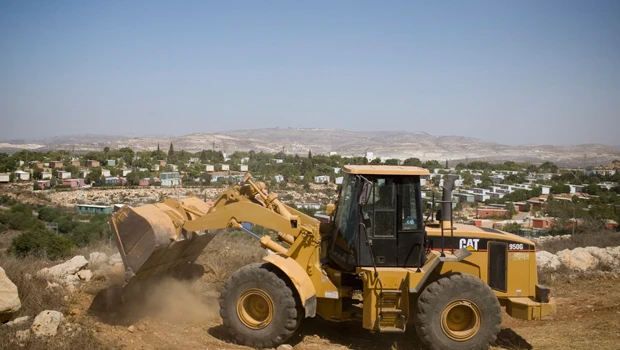
Earth-moving equipment began work in at least two settlements in the occupied West Bank but there was little sign, during a Jewish holiday, of any widescale resumption of construction.
"It's all symbolic for now," Israeli Housing Minister Ariel Atias told the YNet news website, questioning whether Defense Minister Ehud Barak, whose ministry oversees Israeli activities in the West Bank, would agree to issue new building permits.
A window of at least one week was open for US diplomatic efforts to avert what would be a major embarrassment for President Barack Obama — the collapse of a peace process launched at the White House nearly four weeks ago.
Abbas, who had threatened to abandon the negotiations if settlement building was revived, said he would withhold his decision until after an Arab League forum met on Oct. 4 and consultations with a PLO council.
"We will not have swift reactions now, to say 'yes or 'no — we want, or we don't want'," Abbas, on a visit to Paris, told a news conference with Sarkozy. The French leader for his part said "the settlements must stop."
Abbas called for the moratorium to be prolonged for three to four months, saying settlement activity — which Palestinians fear will deny them a viable and contiguous state — must stop.
Allowing the 10-month limited building freeze in West Bank settlements to expire at midnight, Netanyahu defied Obama's call for an extension but avoided antagonising pro-settler parties in Israel's governing coalition.
"Israel is ready to pursue continuous contacts in the coming days to find a way to continue peace talks between Israel and the Palestinian Authority," Netanyahu said in a statement issued minutes after the moratorium ended.
A spokesman for Hamas, an Islamist group that controls the Gaza Strip and opposes Abbas's peace efforts, urged him "to decide immediately to pull out of the negotiations."
US DIPLOMACY
In Washington, State Department spokesman P.J. Crowley said US policy on settlement construction had not changed. "We remain in close touch with both parties and will be meeting with them again in the coming days," he said in a statement.
Netanyahu imposed the freeze on housing starts in the West Bank settlements in November under pressure from Obama.
The moratorium did not cover homes whose construction was under way and government statistics show nearly 2,400 units are currently being built on land Palestinians want for a state.
Netanyahu earlier urged settlers to show restraint once the freeze ended. He has held out the prospect of limiting the scope of renewed construction, a message he seemed to underscore in the public plea to them.
Settler groups pledged that construction would begin on some 2,000 homes next week, after the end of the Jewish religious festival of Sukkoth when many Israelis are on vacation and businesses operate on a limited holiday schedule.
Tightened Israeli security measures during the week-long holiday meant that Palestinian workers, who make up the bulk of construction crews in settlements, could not reach building sites.
One settler leader, Shaul Goldstein, said there could be problems in getting housing projects off the ground.
"We have a serious problem of a lack of confidence in the decisions of the government and therefore a large section of the private builders has not yet started to build," he told Army Radio.
"They want to see what the future holds and that everything will be fine. We have encouraged them to start (building)."
Palestinians say settlements will make it impossible for them to create a viable independent state and the issue is one of the core problems standing in the way of any peace agreement.
Nearly 500,000 Jews live in well over 100 settlements established across the West Bank and East Jerusalem on land that Israel captured from Jordan in a 1967 Middle East war. The World Court deems settlements illegal but Israel disputes this. Some 2.5 million Palestinians live in the same areas.