
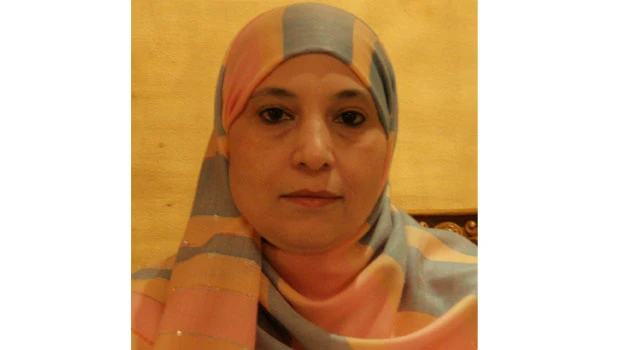
- AL-HASA: Some of the most important figures in the world of cardiac sciences are deliberating on key issues concerning the human heart at the King of Organs 2010 conference in Al-Hasa.
Among them is Saudi Arabia’s Dr. Howaida O. Al-Qethamy, director of the cardiac surgery department at Riyadh’s Prince Sultan Cardiac Center.
The cardiac surgeon is known for having invented a unique homemade pulmonary valve in 2007. In a country with few women role models, Al-Qethamy stands tall with her achievements. The modest surgeon credits her parents for her success in the field of medicine.
She says Saudi women have done quite well in the last couple of years.
“They have progressed rather well. They have proved their talent in almost all competitive fields,” Al-Qethamy told Arab News.
“In the medical field we have some great women scientists, doctors specializing in different aspects of medicine, pharmacists, surgeons, laboratory technicians and even excellent nurses. They are everywhere, in catheterization laboratories, intensive care units and operating theaters.”
Al-Qethamy said it was not always this way.
“In the past, Saudis did not like the idea of enrolling their daughters or sisters in medical schools. Joining a nursing institution was totally out of question. The whole idea of women working in the medical field was abhorrent to them,” she said.
“Now, however, attitudes have changed. Everybody realizes how important it is for our girls to study medicine and nursing. There is no longer any resistance from society. On the contrary, there is encouragement.”
She also credits her parents for her success.
“They made the difference in my life. They encouraged me in my field and allowed me to pursue my dream, and here I am at this international conference contributing my own bit to the success of this very important event,” she said.
“My parents realized very early on that sending their daughter into the medical field was one of the best ways of serving humanity in general and Muslims in particular.”
Al-Qethamy says medicine is a noble profession.
“It brings you in direct contact with humanity. We are able to listen to and feel the pain of people. We then try to lessen the pain and help the person — man, woman, child or adult — in distress to overcome their problems. With the wisdom granted by God and the tools provided by science, we try to cure debilitating diseases and help them lead normal lives.”
The senior consulting cardiac surgeon is originally from Taif, but has lived in Riyadh ever since she graduated in medicine from the Jeddah-based King Abdulaziz University.
“After completing my degree in Jeddah, I went to Riyadh Military Hospital and did my internship there. I studied and specialized in different types of surgeries. Later on I became a cardiac surgery specialist.”
She also spent time honing her surgical skills in France, Canada and the United States.
Her big moment came in 2007 when she invented an easy-to-make pulmonary valve. “You can make this on an operating theater table,” she said. “It can be turned into a tiny little stuff, which is then introduced into the heart through a keyhole on a balloon catheter. It is then inflated inside the heart without opening it at all. I have carried out 19 such procedures in the last three years and by the grace of God the results are excellent. We have had a 100 percent success rate.”
Al-Qethamy’s paper detailing her invention was published in the American Heart Journal in 2008 to critical acclaim from the world medical community. She is now invited to cardiac conferences worldwide. She says conferences, like the one in Al-Hasa, play a very important role in exchanging ideas.
“Here we get a chance to interact with the wider world and to update our knowledge,” Al-Qethamy said. “It is a unique opportunity for us to interact with such great researchers in our field.”
She commended conference founder Dr. Abdullah A. Abdulgader for his successful efforts in bringing top-tier scientists and researchers to Saudi Arabia.
Al-Qethamy advises young people not to give up despite the challenges.
“To the young people I would say, concentrate on your work. Do it selflessly and honestly, and do it with the intention of serving the community. Success will come automatically,” she said.
“Since nothing is easy in life, we should learn how to manage with whatever we have. To the government I would suggest, keep the focus on young people. They are our treasure. We need to invest in them.”