- QUITO: Ecuadorean President Rafael Correa has backed off the idea of dissolving Congress and ruling by decree and plans to revise an austerity law that triggered a bloody police revolt, a government minister said.
On Thursday, as unrest flared across the country, Correa said he might dissolve Congress, which would have meant a call for new elections, seen as a tactic to bypass a deadlocked legislature and try to solidify his power.
“This measure is not part of the immediate scenario,” Policy Minister Doris Soliz told Reuters in an interview. Soliz added the government planned to rewrite the austerity law to clarify it, rather than make any major changes. She did not rule out using decree powers if the Congress continued to block laws. “The option is there, it has no expiry date.”
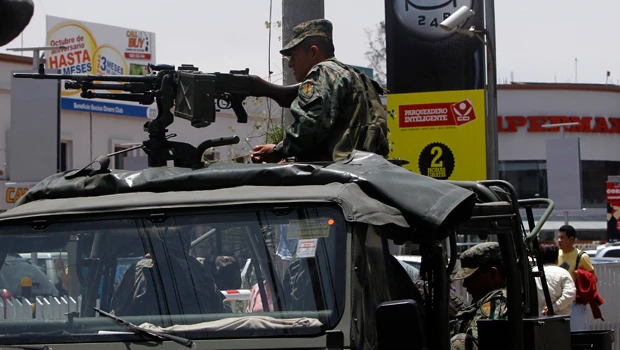
Shoppers flocked to Quito’s colonial center on Saturday as life returned to normal. But heavily armed troops bolstered security in and outside the presidential palace after the police uprising threatened to end nearly five years of relative stability in Ecuador.
Correa vowed on Saturday to round up and punish renegade police who staged the short-lived rebellion, and will investigate opponents he accuses of trying to mount a coup.
The police were angered by moves to cut bonuses and freeze promotions as part of nationwide spending cuts that Correa is trying to push through during a financial squeeze. The law takes effect on Monday.
The rebellion was the toughest challenge yet to the leftist Correa, who remains popular for his anti-poverty programs despite a slow recovery from economic crisis in OPEC’s lowest- producing member nation and the world’s biggest banana exporter.
“We were ambushed, it was a political trap,” Correa said during his weekly address on state television on Saturday, speaking over footage that showed him being physically attacked by police and engulfed in clouds of tear gas. “These crazy people were politically manipulated.
They wanted to kill me,” said Correa, limping with a cane after knee surgery earlier this month. He said one policeman tried to break his already hobbled knee with a truncheon during the mayhem, instead breaking the ankle of a guard who intervened.