
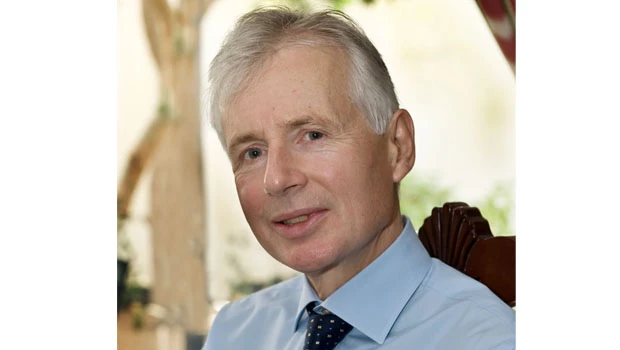
- RIYADH: Fresh from a posting in Tel Aviv, Britain’s new ambassador to Saudi Arabia, Sir Tom Philips, brings with him an intriguing mix of experience in diplomatically interesting areas and a personal determination to immerse himself in the Kingdom’s culture.
He has spent time in Kampala and Harare and was involved with the situation in the Balkans, as well as serving as the UK’s special representative in Afghanistan.
Speaking of his personal ambitions in the Kingdom, Philips said that he wanted to understand, see and get to know the richness of the local culture.
“To see and feel the country, to feel it in your bloodstream and to know what people think,” he told Arab News in his first local media interview.
After five weeks in the Kingdom, he said that he was already struck by the amount of goals and interests shared by Saudi Arabia and the UK, particularly in the regional security agenda.
Philips noted that he had hosted two ministerial visits since he had been here. One involved Commercial Secretary to the UK Treasury Lord Sassoon.
“But in a way more important here, Defense Secretary Liam Fox had visited and held discussions.”
That included a visit to Taif to see the Typhoon squadron and British personnel who are working together with Saudi colleagues on a mutual strategic cooperation issue.
Philips says he wants to further develop long-standing relations between Saudi Arabia and the UK, particularly in the fields of cultural exchange and education.
He is particularly keen to see more Saudi students going to British universities. He points to a particular flaw in the notion that vast amounts of Saudis are studying in the UK. There are only 5,000 on university courses, he said. He added that most are simply doing English language courses.
Of those at British universities, just 10 are at Oxford and five at Cambridge, while none are at the prestigious Scottish universities. He would like to see those figures change.
In 2009, Britain clocked up £4.8 billion in exports to the Kingdom. “British companies and individuals have invested more than £20 billion in the Kingdom’s economy and both sides have benefited from the trade relationship.”
He added that there were about 20,000 British nationals working here and he thanked them for their effort, professionalism and commitment. “This is a market that really matters.”
It, however, is his on-the-ground experience in Tel Aviv at close quarters with the ongoing process involving Palestine and Israel and his knowledge of the diplomatic processes gearing up to address Yemen’s growing profile in the region that will probably interest many in the Kingdom. He brings a refreshing openness to discussions on the subject.
On leaving Tel Aviv, Philips told The Jerusalem Post that Israel needed to do more to help revive the Gaza economy and that the Israeli blockade policy was counterproductive.
“It was breeding radicalism,” he said on Aug. 25.
Israel has driven Gaza “into a Hamas-controlled tunnel economy, and the Palestinian Gaza private sector has been almost completely destroyed. Young boys on the streets (have had) no role models apart from the Hamas guy in the black shiny uniform on the street corner.”
Philips was fulsome in his praise for the Arab Peace Initiative based on the King Abdullah Plan. One of the reasons he was intrigued about coming to the Kingdom was that the initiative came from Custodian of the Two Holy Mosques King Abdullah when he was crown prince.
“I don’t think the Israelis as yet have nearly fully digested that and what’s on offer,” he said.
“It’s quite clear that if the peace process is going to get anywhere, the Arab initiative is going to have to be geared into it as part of the equation because it is a very, very visionary outlook on the way forward.”
Philips is fully aware of the need to resolve the situation. “We all know how that plays into wider regional conflict. Somewhere like Iran will use that for its flag waving around the region and I think if we could move forward and resolve the issue, it would not solve every problem in the region of course, but it would have a very significant positive effect.”
His years in Tel Aviv have given him a clear perspective on the circumstances.
“When you are there, it is crystal clear that the only way to resolve the situation is a two-state solution. People talk about alternatives but for me the alternative is continued conflict in one form or another.”
His concern was that the opportunity for resolution would not always be there.
“Essentially, because of the extent of settlement activity, changing the facts on the ground makes it harder and harder to achieve where the lines would have to be to get a sustainable two-state solution.”
A key factor, he said, was the element of mutual distrust between the two parties involved. “That needs great and involved leadership to overcome. That’s the task for leaders that are out there.”
Philips regarded the settlement issue as “a litmus test” of Israeli intentions.
He posed a rhetorical question: “If you are serious about a two-state solution, why are you going on building, given the message you are sending out? In Palestinian eyes, particularly when they will look back and say, ‘we engaged in the process but we didn’t get a settlement, and by the time we got six or seven years in, the numbers (of settlements) had increased radically.’ That is a critical litmus test as well.”
Philips thought that now was a real moment of choice out there for the Israeli people and the government to show that they were serious. “I hope a way forward will be found.”
He concluded that coming from there and knowing the situation on the ground, he was under no illusions as to how hard it was going to be.
“It’s really tough. The key issue, above Jerusalem and the refugees, is the existential identity issue (of the Palestinian people) and that is going to be very difficult to resolve.”